

Archive · 28 Sep 2026
Mobile retailers plan No UPI Day over proposed MDR
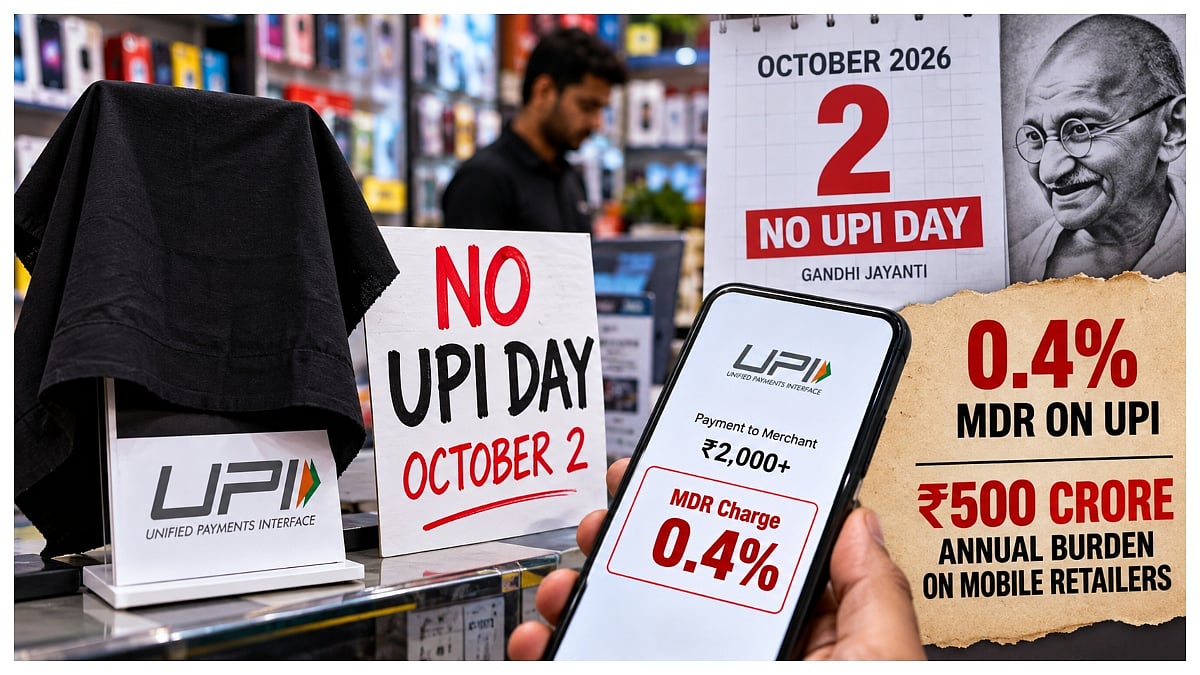
Mobile phone shops across India plan to stop accepting UPI for one day.
They have chosen October 2, 2026, and call it “No UPI Day.”
The protest is against a proposed fee on some UPI payments made to shops.
The fee would be 0.4% for merchant payments above ₹2,000 from October 15.
Person-to-person transfers and small merchant payments would not be charged.
Participating retailers plan to cover their QR codes with black cloth.
Retailers say the fee could reduce the earnings of small shops.
The government says the fee is not a tax and that the money would go to payment-system participants.

AIMRA says mobile retailers nationwide will stop accepting UPI payments on October 2, 2026, calling it “No UPI Day.”
Participating retailers plan to cover their UPI QR codes with black cloth during the Gandhi Jayanti protest.
A proposed 0.4% MDR would apply from October 15 to eligible merchant UPI transactions above ₹2,000.
AIMRA estimates the charge could cost individual retailers ₹2,000–₹12,000 monthly and small mobile retailers about ₹40 crore per month.
The government says MDR is not a tax, and its collections would be distributed among banks, payment gateways, the UPI app and the sponsoring bank.
- Who
- The All India Mobile Retailers Association (AIMRA), participating mobile retailers, the government and payment-system participants.
- What
- AIMRA plans a nationwide suspension of UPI acceptance to oppose a proposed 0.4% MDR on eligible merchant transactions.
- When
- The protest is planned for October 2, 2026; the proposed MDR would begin on October 15.
- Where
- Across India, at participating mobile retailers.
- Why
- AIMRA says the proposed MDR would add financial pressure on small retailers and wants merchant UPI payments to remain under a zero-MDR structure.
Retailers’ concerns
Government and payment-system framework
Whether merchant UPI should remain free
Retailers’ concerns
AIMRA wants merchant UPI payments to continue under the zero-MDR structure, arguing that the proposed charge would place additional pressure on small retailers’ earnings.
Government and payment-system framework
The government says the MDR is a charge within the payment ecosystem intended to support and expand payment infrastructure, rather than a tax, cess or surcharge.
Financial impact of the MDR
Retailers’ concerns
AIMRA estimates that retailers processing ₹5 lakh–₹30 lakh through UPI monthly could face an additional cost of ₹2,000–₹12,000, with a collective burden of about ₹40 crore per month for small mobile retailers.
Government and payment-system framework
The government says the collections would not go to it or the Consolidated Fund of India; they would be distributed among participating banks and payment-service providers.
Legal basis for the charge
Retailers’ concerns
A public interest litigation filed by advocate Anjan Datta alleges that the levy was introduced without adequate statutory safeguards, transparency or public consultation.
Government and payment-system framework
The MDR framework has been introduced, while the Supreme Court is scheduled to hear the legal challenge.
- Protest name
- “No UPI Day”
- Protest date
- October 2, 2026
- Proposed MDR
- 0.4% on eligible merchant UPI transactions above ₹2,000
- Exempt transactions
- Person-to-person transfers and small-value merchant payments
- Estimated individual impact
- ₹2,000–₹12,000 per month for retailers processing ₹5 lakh–₹30 lakh through UPI
- Estimated industry impact
- About ₹40 crore per month, or nearly ₹500 crore annually, according to AIMRA
- Revenue distribution
- 40% to customers’ banks, 30% to payment gateways, 20% to the UPI app and 10% to the sponsoring bank

