2 hrs ago
India’s IPO Boom Raises Questions About What Comes Next
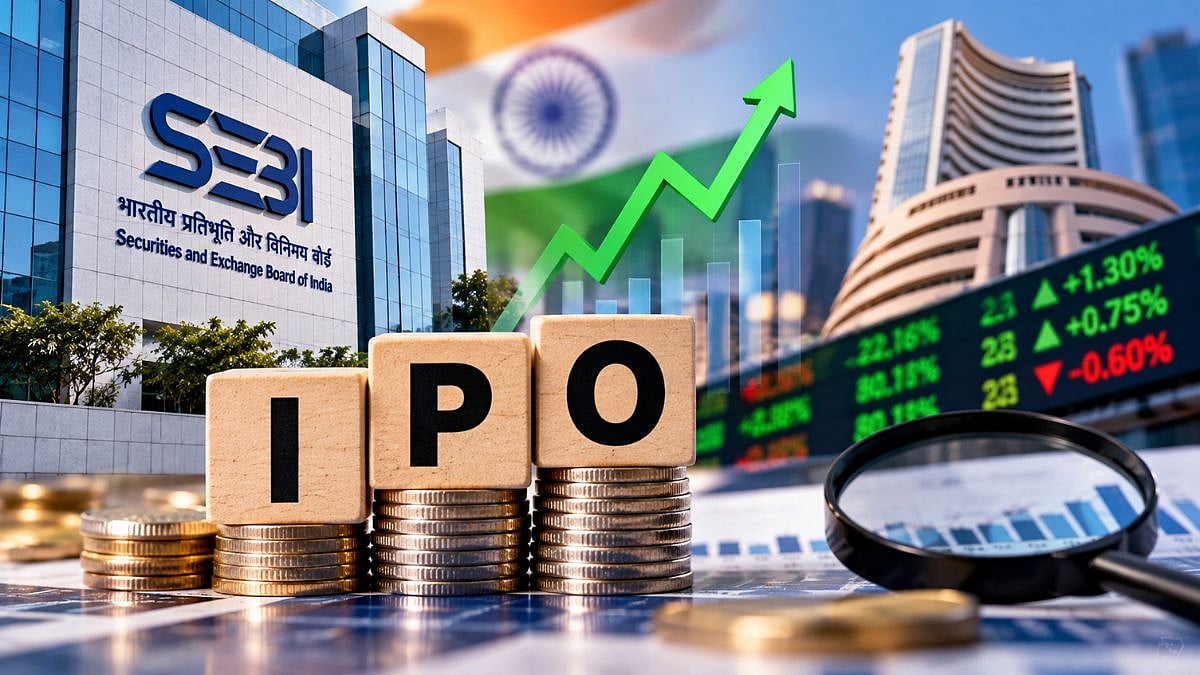
Many companies in India raised a record amount of money by selling shares to the public.
But not all that money goes to the companies: in an Offer for Sale, earlier investors receive the proceeds instead.
The article says big IPO demand and first-day price rises do not necessarily show that investors will hold shares for a long time.
It cites studies showing that many investors sell soon after shares are listed.
It also says that anchor investors, whose participation can look like a vote of confidence, may later sell substantial portions of their holdings.
The author wants investors to be able to see how companies perform after their IPOs.
A proposed one-year scorecard would track share returns, how new funds are used, company finances and who keeps or sells shares.
The article argues that judging an IPO should take more than a look at its first day on the market.

Companies raised a record Rs 2.4 lakh crore through public equity markets in the first half of FY27, 75 per cent more than a year earlier.
Mainboard IPOs raised Rs 94,200 crore across 78 issues, while the Nifty 50 gained 1.3 per cent over the same six months.
More than 60 per cent of mainboard IPO funds raised over the preceding 18 months came through Offer for Sale transactions, which pay selling shareholders rather than the company.
The article cites SEBI studies showing rapid sales of IPO shares by non-anchor investors and anchor investors after listing and lock-in periods.
The author urges SEBI and exchanges to publish a standardised one-year IPO scorecard covering performance, use of proceeds, company finances and investor holdings.
- Who
- Indian companies raising funds through IPOs, investors, and SEBI.
- What
- A record IPO fundraising boom is prompting calls for more scrutiny of how proceeds are used and how companies and investors perform after listing.
- Where
- India’s public equity markets.
- When
- The first half of FY27; the article also cites SEBI studies from 2024 and 2026.
- Why
- The author argues that fundraising totals, subscription levels and listing-day gains do not by themselves show whether IPOs fund business growth or deliver lasting value.
IPO activity as a sign of market strength
IPO activity needs post-listing scrutiny
What fundraising figures show
IPO activity as a sign of market strength
The article describes India’s IPO market as particularly vibrant and reports record fundraising and strong subscription demand.
IPO activity needs post-listing scrutiny
The author cautions that headline fundraising totals can include OFS proceeds paid to selling shareholders, not new capital for companies.
How to interpret investor demand
IPO activity as a sign of market strength
High subscription levels and average listing-day gains can indicate strong demand for IPO shares.
IPO activity needs post-listing scrutiny
The author says these measures may reflect short-term listing trades rather than durable investor conviction, and argues for tracking holdings and performance after listing.
Key facts
- First-half FY27 public equity fundraising
- Rs 2.4 lakh crore, 75 per cent higher than the corresponding period a year earlier.
- Mainboard IPOs
- Rs 94,200 crore raised across 78 issues in the first half of FY27.
- Nifty 50 performance
- Gained 1.3 per cent over the first six months of FY27, with a 6 per cent decline in September.
- Offer for Sale share
- More than 60 per cent of mainboard IPO funds raised over the preceding 18 months came through OFS, according to an analysis cited in the article.
- Non-anchor investor sales
- A SEBI study found 54 per cent of IPO shares allotted to non-anchor investors were sold within one week of listing.
- Anchor investor sales
- A SEBI study found anchors sold about 3.2 per cent of their allocation after the initial lock-in, 8 per cent within 60 days and 17.3 per cent within 90 days.
- Proposed scorecard
- The author proposes a one-year IPO scorecard covering returns, proceeds utilisation, financial delivery, investor holding behaviour, and promoter and anchor behaviour.
Quotes
SEBI chairman
The chairperson of India’s Securities and Exchange Board, as identified in the article.
“particularly vibrant”
 freepressjournal.in
Sources
Related news
India May Raise ₹2 Trillion Through Upcoming IPOs

India’s IPO Pipeline Holds ₹1.70 Lakh Crore Awaiting Approval

India’s Mainboard IPO Pipeline Reaches Rs 3.86 Lakh Crore

IPO Fundraising Hits Record High in FY27’s First Half

Recent Indian IPOs Rally as Broader Market Slumps

Capital-Market Stocks Rise Despite Broader Market Sell-Off

HD Fire Protect Sets ₹258-271 IPO Price Band for ₹712 Crore Offer

SEBI Shares Trade Logs as Jane Street Challenges Allegations
HDFC Mutual Fund Opens Hybrid Index Fund Offer