Archive · 16 Nov 2025
India Criticizes Developed Nations at COP30 for Climate Finance Shortfalls
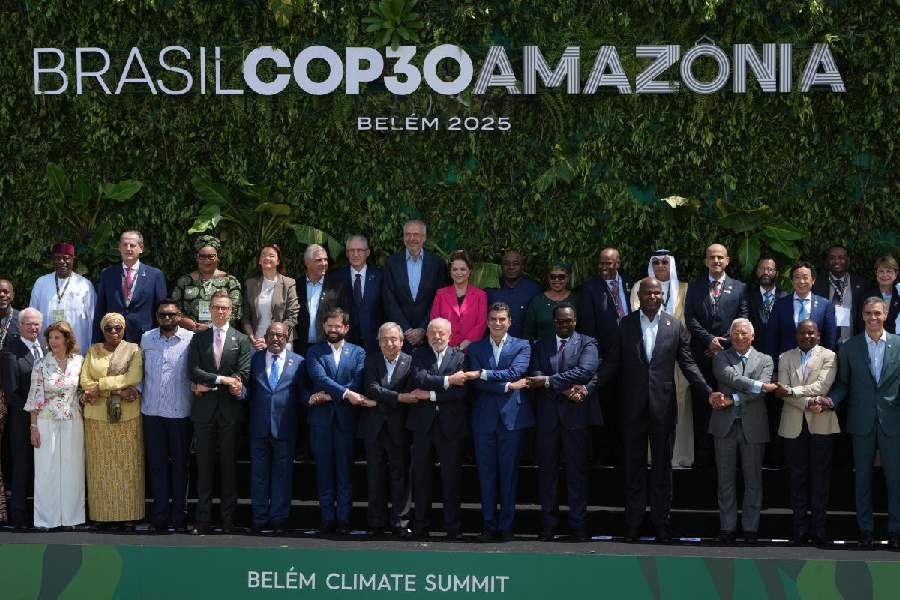
Imagine a big global meeting about taking care of our planet, called COP30.
A country named India, speaking for many poorer countries, told the richer countries that they haven't given enough promised money to help with climate change.
These poorer countries need this money to build things like solar farms and sea walls to stop climate change and protect themselves.
India said giving this money is a rule they all agreed on in a big plan called the Paris Agreement.
They also said that a new plan made last year, called the NCQG, isn't good enough because it doesn't make the richer countries promise specific amounts of money.
Without dependable help, India warned that poorer countries can't reach their goals to fight climate change.

India, representing LMDCs at COP30, criticized developed nations for failing to fulfill their climate finance obligations.
Lack of predictable, transparent, and reliable financial support from developed countries prevents developing nations from achieving their climate goals (NDCs).
India asserted that providing climate finance under Article 9.1 of the Paris Agreement is a legal obligation for developed countries, not a voluntary act.
The New Collective Quantified Goal (NCQG) adopted at COP29 was deemed inadequate and a deflection of responsibilities by developed nations.
India called for grants, highly concessional resources, and greater transparency in financial flows, emphasizing that innovative tools cannot replace legal obligations under Article 9.1.
- Who
- India, speaking on behalf of the Like-Minded Developing Countries (LMDCs)
- What
- Criticized developed nations for failing to meet their climate finance obligations, stating this failure hinders developing nations' ability to achieve their climate goals (NDCs) and warned that the New Collective Quantified Goal (NCQG) is inadequate.
- When
- At the COP30 climate conference, on Saturday, November 16, 2025, ahead of the submission of 'NDCs 3.0' for the 2031-2035 period.
- Where
- Belem, Brazil
- Why
- Developed nations are accused of not providing sufficient, predictable, transparent, and reliable financial resources as a legal obligation under the Paris Agreement (Article 9.1), which is essential for developing countries to implement their climate mitigation and adaptation plans.
Developed Nations
Developing Nations (represented by India)
Meeting Climate Finance Obligations
Developed Nations
The article implies developed nations are not meeting their obligations, with India stating they have neither honored their commitments nor ensured transparency or predictability in financial flows. Reductions in financial support by some developed countries are noted, ranging from 51% to 100%.
Developing Nations (represented by India)
India, speaking for LMDCs, asserts that financial resources from developed countries are a legal obligation under Article 9.1 of the Paris Agreement, not voluntary. They argue that without these resources, developing countries cannot meet their climate goals (NDCs). The New Collective Quantified Goal (NCQG) adopted at COP29 is criticized as inadequate and a deflection of responsibilities.
Transparency and Predictability of Finance
Developed Nations
Developed countries have not ensured transparency or predictability in reported financial flows, with some supplying outdated information. Reductions in financial support are also reported.
Developing Nations (represented by India)
India emphasizes the need for predictable, additional, and reliable climate finance. They call for multi-year, quantified projections from developed countries with clear methodologies, and for grants and highly concessional resources to be provided.
Definition and Mobilization of Climate Finance
Developed Nations
There is a lack of consistency among developed countries in defining what constitutes 'new and additional' climate finance and a failure to distinguish between development finance and climate finance.
Developing Nations (represented by India)
India stresses that grants and highly concessional resources are essential. While innovative tools like blended finance can help, they cannot replace the core legal obligations under Article 9.1. Financial support must be 'devoid of concerns of greenwashing'.
- Event
- COP30 Climate Conference
- Location
- Belem, Brazil
- Key Negotiator (India)
- Suman Chandra
- Speaking For
- Like-Minded Developing Countries (LMDCs)
- Agreement Cited
- Paris Agreement
- Relevant Articles
- Article 9.1, Article 9.3
- Key Term
- Nationally Determined Contributions (NDCs)
- Key Term
- New Collective Quantified Goal (NCQG)