

Archive · 30 Jul 2026
Rural Non-Farm Employment: Prosperity or Distress Drivers in India
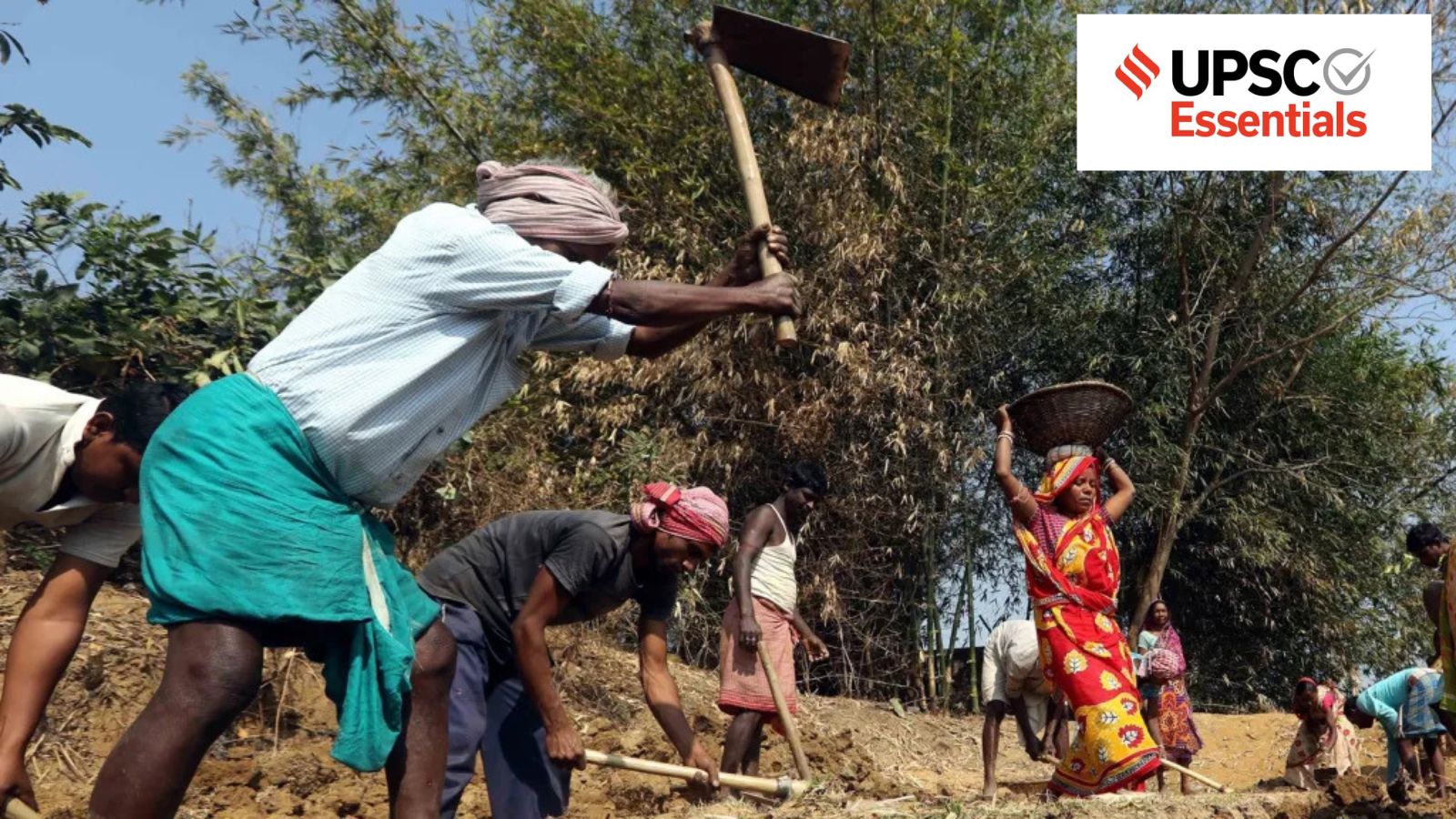
In India, most people live in villages and many work on farms.
Over the last decade, farm earnings have gone down while wages from other jobs have gone up.
Because of this, more villagers are taking jobs that are not farming, like construction or small businesses.
Some experts say this shift happened because farming became more productive and people could afford other jobs.
Others say it happened because farming became less profitable, so people had to find work elsewhere.
The government has also created programs like MGNREGA to give people jobs when they need them.
These changes show how rural life is changing in India.

India’s rural population is 65% of the country’s total, with 47% dependent on agriculture.
Crop income fell from Rs 3,081 to Rs 2,760 (2012‑13 to 2018‑19) while wage income rose from Rs 2,071 to Rs 2,953.
Non‑farm employment grew from 27.3% to 42.2% of rural jobs between 2004‑05 and 2018‑19.
Two explanations exist: prosperity‑led (Green Revolution) and distress‑driven (crop decline).
Key policies such as MGNREGA, IRDP, and land reforms have shaped rural employment patterns.
- Who
- Rural households in India
- What
- Rise of non-farm employment
- When
- 2004-05 to 2018-19 (income data 2012-13 to 2018-19)
- Where
- Rural areas of India
- Why
- Declining crop income, rising wages, and policy interventions
- Rural population share
- 65%
- Crop income (2012-13 to 2018-19)
- Rs 3,081 → Rs 2,760
- Wage income (2012-13 to 2018-19)
- Rs 2,071 → Rs 2,953
- Non-farm employment share (2004-05 to 2018-19)
- 27.3% → 42.2%
- Key policies
- MGNREGA, IRDP, land reforms
- Primary drivers
- Prosperity-led vs Distress-driven