8 months ago
Orban's Pre-Election Giveaways May Not Secure Victory

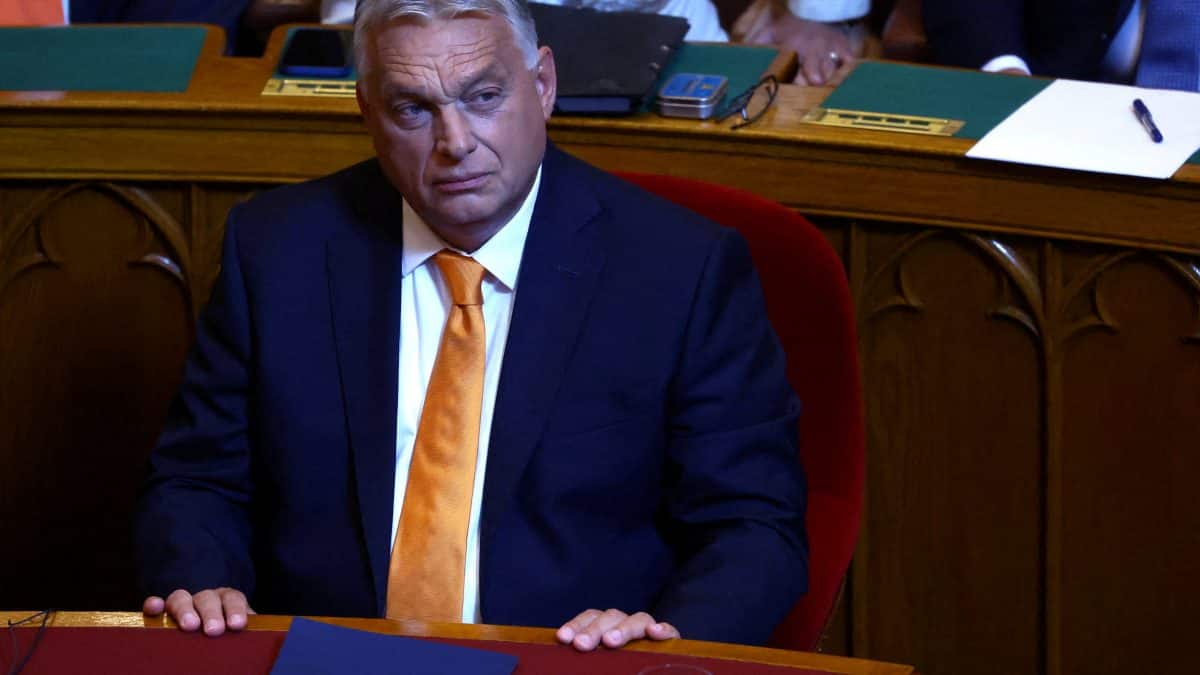
Viktor Orban, the leader of Hungary, is trying to win the upcoming election by giving extra money to retirees.
This is called a pension top-up.
Even though this helped him a little bit in the polls, many people are still worried about the high cost of living and the slow economy.
Orban's party, Fidesz, is behind in the polls compared to the opposition party, Tisza.
Some people think the extra money for pensions is not enough to make a big difference in their lives.
The economy is not doing as well as neighboring countries, and there are concerns about Hungary's growing debt.
Orban's spending plans have been criticized by some who think the money could be better used elsewhere.

Viktor Orban's Fidesz party is trailing opposition Tisza by a wide margin in polls ahead of April's election.
Pre-election pension top-ups costing $454 million in 2025 provided a brief poll boost but may not be enough to secure victory.
Hungary's economy is stagnating, with the lowest average full-time salary and among the lowest pension spending in the EU.
Inflation has dropped to the central bank's 2-4% tolerance band, but consumer sentiment remains low compared to neighbors Poland and Czech Republic.
IMF warns of 'explosive growth' in Hungary's borrowing beyond 2030 without pension system reforms, with public debt projected at 255% of output by 2054.
- Who
- Viktor Orban, Hungarian Prime Minister and leader of Fidesz party
- What
- Pre-election spending measures, including pension top-ups, to boost support
- Where
- Hungary
- When
- April 2024 election, with measures announced and implemented in 2023-2024
- Why
- To secure re-election by addressing voter concerns about cost of living and pensions
Key facts
- Leader
- Viktor Orban
- Party
- Fidesz
- Opposition Party
- Tisza
- Election Date
- April 2024
- Pension Top-Up Cost
- $454 million (2025)
- Inflation Rate
- 2-4% (November 2023)
- Public Debt Projection
- 255% of output by 2054 (IMF)
Quotes
David Szollosi
An 83-year-old retiree with an above-average pension.
“Such measures help people’s positive attitude. But we are facing rather uncertain years ahead.”
 theprint.in
Erzsebet Botlik
A former cashier and cleaner who relies on financial help from her adult children.
“I would barely have anything if not for my two (adult) children.”
theprint.in
Daniel Rona
Director of the 21 Research Centre.
“The problem is that (sentiment) is still negative and it cannot be changed dramatically in a few months. The time is too short and the amount of money to be distributed is limited.”
theprint.in