

Archive · 13 Aug 2026
Saudi Arabia, Turkey, Pakistan Sign Mecca Joint Defence Agreement
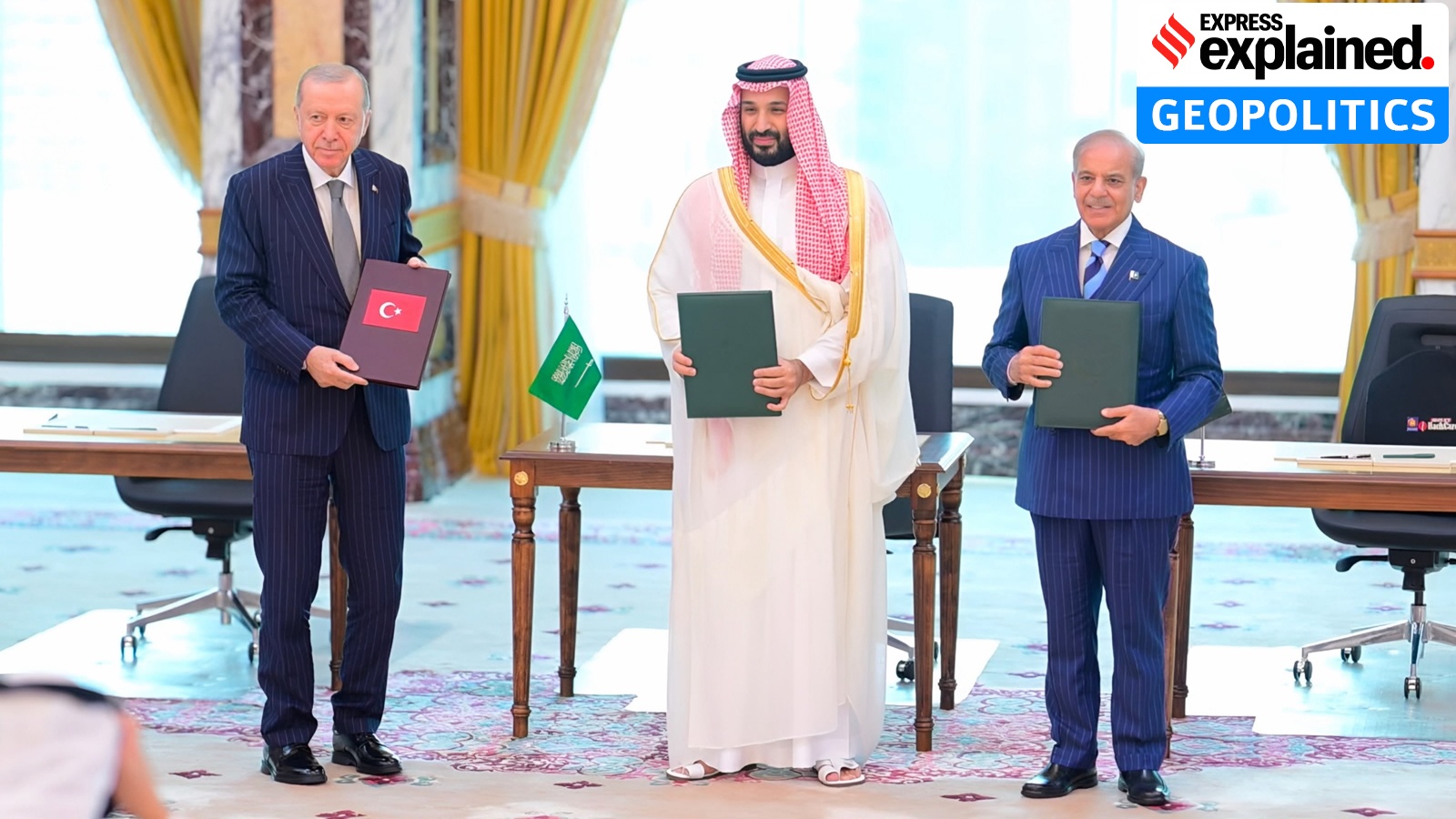
Three countries — Saudi Arabia, Turkey and Pakistan — signed a special agreement called the Mecca Joint Defence Agreement.
It is a promise that if one of them is attacked, the other two will help defend it.
This is similar to how NATO countries promise to protect each other.
The three countries decided to rely less on the United States for their safety.
Israel has been bombing places connected to Iran, and the United States said it will not always protect its friends in that region.
So the three countries teamed up to protect themselves.
But there is a problem: Turkey is also part of NATO.
If Israel attacked Saudi Arabia, Turkey would be expected to help Saudi Arabia, and that could start a fight between Turkey and Israel.
Then NATO members would have to decide whether to help Turkey too.
Many agreements that pull countries into each other's fights helped start World War I, and some people worry that this could happen again.

Saudi Arabia, Turkey and Pakistan signed the Mecca Joint Defence Agreement, a mutual defence pact with a NATO-style collective security clause.
The pact borrows elements of NATO's Article 5, treating an armed attack on any one member as an attack on all.
It marks a shift away from the US security umbrella and towards greater self-reliance for the three countries.
Brussels and Ankara have not clarified how Turkey's NATO duties would be reconciled with its Mecca Agreement duties.
The article warns that interlocking military alliances could repeat a dynamic that helped trigger World War I.
- Who
- The governments of Saudi Arabia, Turkey and Pakistan (Riyadh, Ankara and Islamabad).
- What
- They signed the Mecca Joint Defence Agreement, a mutual defence pact with a collective security clause modelled on NATO's Article 5.
- When
- Not specified in the article.
- Where
- The pact is named after Mecca; the signatories are Riyadh, Ankara and Islamabad.
- Why
- Israel's bombing campaign against Iran-linked targets and the US limiting its security guarantees to West Asian allies prompted the three countries to pursue self-reliance.
Pact supporters
Pact critics
Security strategy
Pact supporters
The pact moves Riyadh, Ankara and Islamabad away from dependence on the US security umbrella towards greater self-reliance.
Pact critics
A matrix of interlocking military alliances could pull the countries into each other's conflicts, as occurred before World War I.
Overlapping alliance obligations
Pact supporters
The NATO-style collective security clause gives members a stronger, more predictable mutual defence commitment.
Pact critics
It is unclear how a NATO member like Turkey would respond if its Mecca Agreement duties clash with its obligations to the 32 NATO countries.
- Agreement name
- Mecca Joint Defence Agreement
- Signatories
- Saudi Arabia, Turkey, Pakistan
- Core clause
- Collective security modelled on NATO's Article 5
- NATO members
- 32, including Turkey
- Context
- Israel's bombing campaign against Iran-linked targets
- US position
- Limits on security guarantees to West Asian allies
- Stated aim
- Shift from the US security umbrella to greater self-reliance
- Main concern
- Interlocking alliances could repeat pre-World War I dynamics