

2 weeks ago
Why Your Junk Drawer Can Be Surprisingly Useful
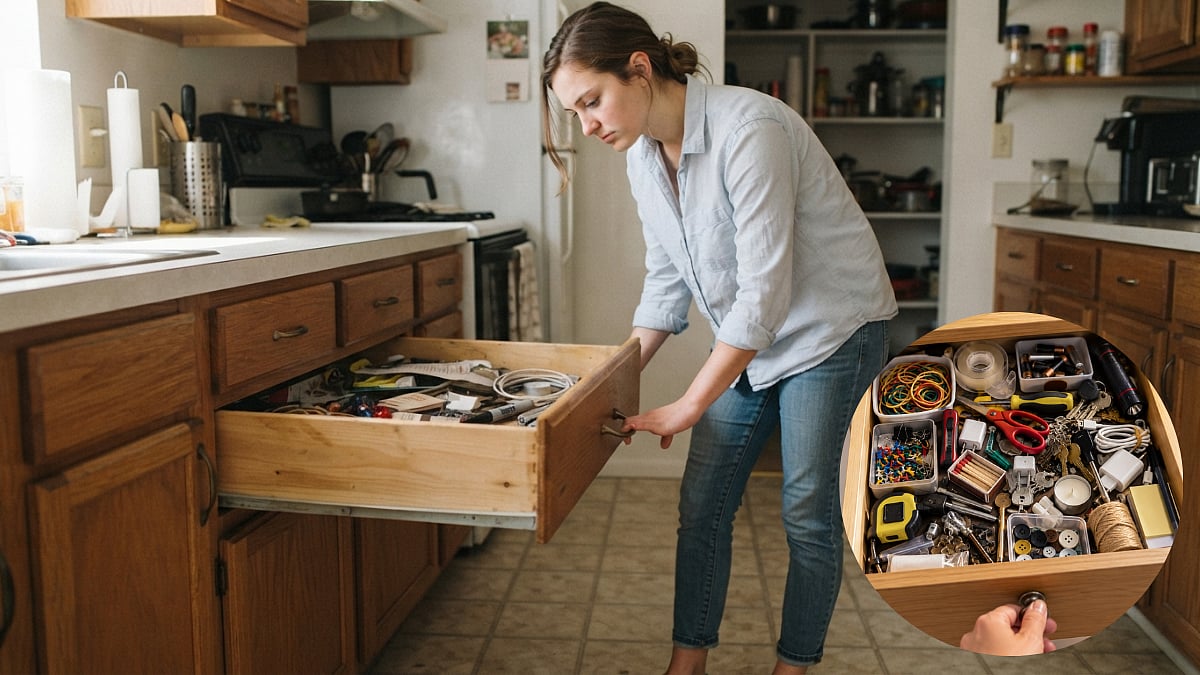
A junk drawer is a place for small things that are useful but do not fit anywhere else.
It might hold batteries, tape, keys, tools and rubber bands.
These items can help solve small household problems.
Looking in the drawer before buying something can stop you from buying a duplicate.
The drawer should not become a place for every object you do not understand.
Keeping similar things together makes items easier to find.
If you cannot find anything without digging through everything, the drawer needs a reset.
Strange objects can be thrown away if nobody has needed or recognized them for six months.
A little mess can be helpful when it makes useful things easy to find.

A junk drawer stores useful items that do not have another obvious home.
Common contents include batteries, safety pins, tape, tools, keys and rubber bands.
Checking the drawer before shopping may prevent unnecessary duplicate purchases.
The drawer works best when it has boundaries and loosely organized sections.
Unknown objects can be discarded after six months if nobody needs or recognizes them.
- Who
- Households and people managing everyday household items.
- What
- The article explains why a bounded, partly organized junk drawer can function as a useful household emergency kit.
- Where
- In homes, specifically in a junk drawer.
- When
- In everyday household situations, especially when a small item is suddenly needed.
- Why
- It keeps miscellaneous useful objects available, helps prevent duplicate purchases and provides quick solutions to small problems.
Key facts
- Purpose
- Store useful items that lack another obvious permanent home.
- Typical contents
- Batteries, safety pins, matchboxes, tape, screwdrivers, rubber bands, measuring tapes, spare buttons and keys.
- Shopping benefit
- Checking the drawer may reveal that an item has already been purchased.
- Organization goal
- Find needed items within about 20 seconds without emptying the drawer.
- Suggested sections
- Keep similar items together, such as batteries, stationery and tools.
- Mystery-object test
- Discard an object if six months pass without anyone needing it, recognizing it or remembering why it was saved.
Sources
Related news

Seven Things to Clear Before Moving House in Sydney

Readers Debate Whimsymaxxing, 9/11, Teachers, and Cricket’s Future

Why Private Libraries Hold More Than Just Books

Mint Lounge explores analogue travel, modaks, art, health, fiction

Five Luxuries Worth Spending On After Financial Goals
