Archive · 18 Sep 2026
India Warns US Russian Oil Tariffs Could Harm Ties
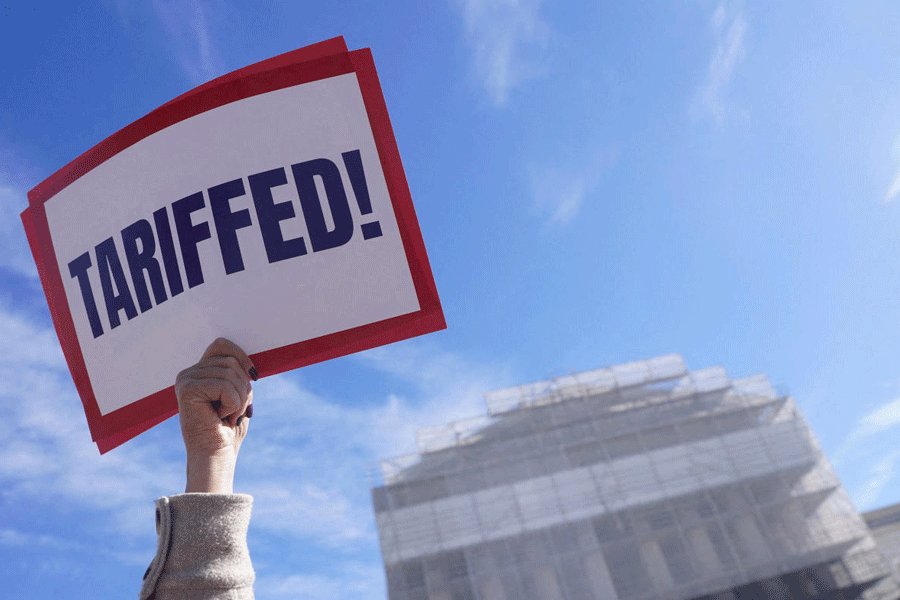
The United States has passed a bill that could let its president place very high tariffs on countries buying Russian oil.
India buys a large share of its oil from Russia.
India says it needs different oil suppliers to keep fuel available for its 1.4 billion people.
Indian officials warned that the US plan could hurt relations between the two countries.
They also said it could make oil more expensive around the world.
This could be difficult because India imports about 90% of the oil it uses.
The bill is meant to pressure Russia over its war against Ukraine.
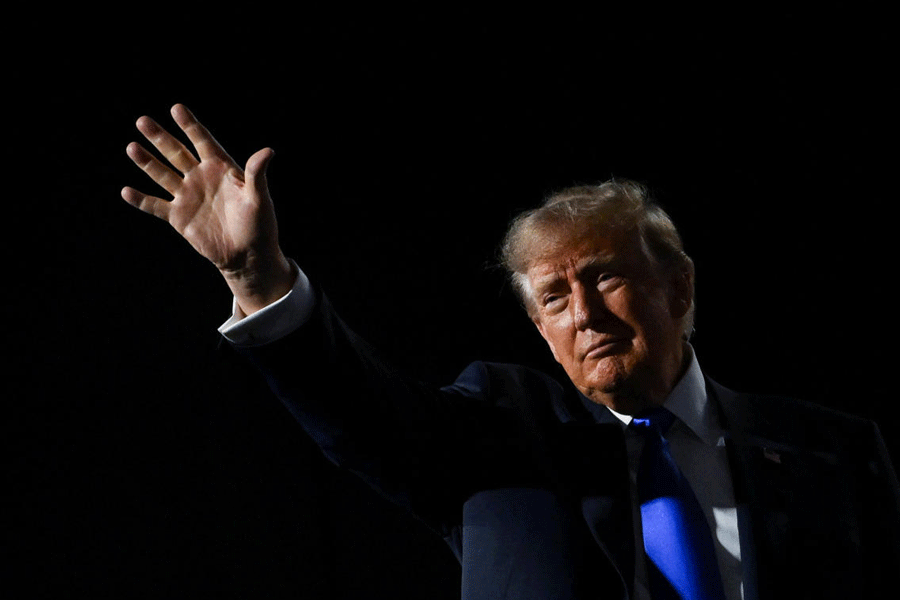
It still needs Donald Trump’s signature, and he may or may not use the tariff power.
India says buying Russian oil has helped keep energy markets supplied, while Ukraine and Western countries say the purchases support Russia’s war effort.

The US House passed a bipartisan bill allowing tariffs of up to 100% on countries buying Russian energy.
The measure still requires Donald Trump’s signature, and it remains unclear whether he would impose the tariffs.
India said it will continue diversified oil sourcing to protect energy security for its 1.4 billion people.
Russia supplied over one-third of India’s oil purchases, including about 45% of crude imports in August.
India warned the measure could damage bilateral ties, raise global oil prices, and increase inflationary pressure.
- Who
- India, the United States, Russia, China, Donald Trump, and US lawmakers are central to the dispute.
- What
- A US bill would allow tariffs of up to 100% on countries that continue buying Russian oil or gas, potentially affecting India and China.
- When
- The US House passed the bill on Wednesday, and India issued its response on Thursday; the Senate had passed it on August 7.
- Where
- The dispute concerns US-India relations, Russian energy trade, and global oil markets.
- Why
- US lawmakers seek to pressure Russia over the Ukraine war, while India says Russian oil and diversified sourcing are important to its energy security and economy.
India’s energy and economic concerns
US pressure on Russian energy buyers
Energy security versus sanctions
India’s energy and economic concerns
India says diversified oil supplies are necessary to provide energy for 1.4 billion people and that it will protect its trade and economic interests.
US pressure on Russian energy buyers
US lawmakers support tariffs and sanctions to pressure Russia and discourage major buyers such as India and China from purchasing Russian energy.
Effect on bilateral relations
India’s energy and economic concerns
Indian officials and US policy experts cited in the articles warn that the measure could damage US-India relations and amount to coercion or interference in Indian foreign policy.
US pressure on Russian energy buyers
Supporters of the bill argue that targeting Russian-energy buyers could increase pressure on Russia over the Ukraine war.
Impact on oil prices
India’s energy and economic concerns
India says restricting its access to Russian oil could raise international energy prices and increase inflationary pressure in importing developing countries.
US pressure on Russian energy buyers
The proposed tariffs are intended to change purchasing behavior, although the articles acknowledge that removing Russian oil from major markets could sharply increase prices.
- Potential tariff
- Up to 100% on goods imported into the United States from qualifying Russian-energy buyers
- Bill status
- Passed both chambers of Congress but still awaiting Donald Trump’s signature
- India’s oil dependence
- About 90% of India’s annual oil requirements are imported
- Russian share
- Russia supplied over one-third of India’s oil purchases; it accounted for about 45% of crude imports in August
- August Russian purchases
- India bought more than 1.9 million barrels per day from Russia
- Oil prices
- Benchmark Brent crude was reported at roughly $105 per barrel, after recently reaching about $108
- Import-cost estimate
- Bank of Baroda estimates that each sustained $1 rise in crude prices could add about ₹18,000 crore to India’s annual import bill