

Archive · 25 Jul 2026
Media Trials: When Narrative Overtakes Evidence
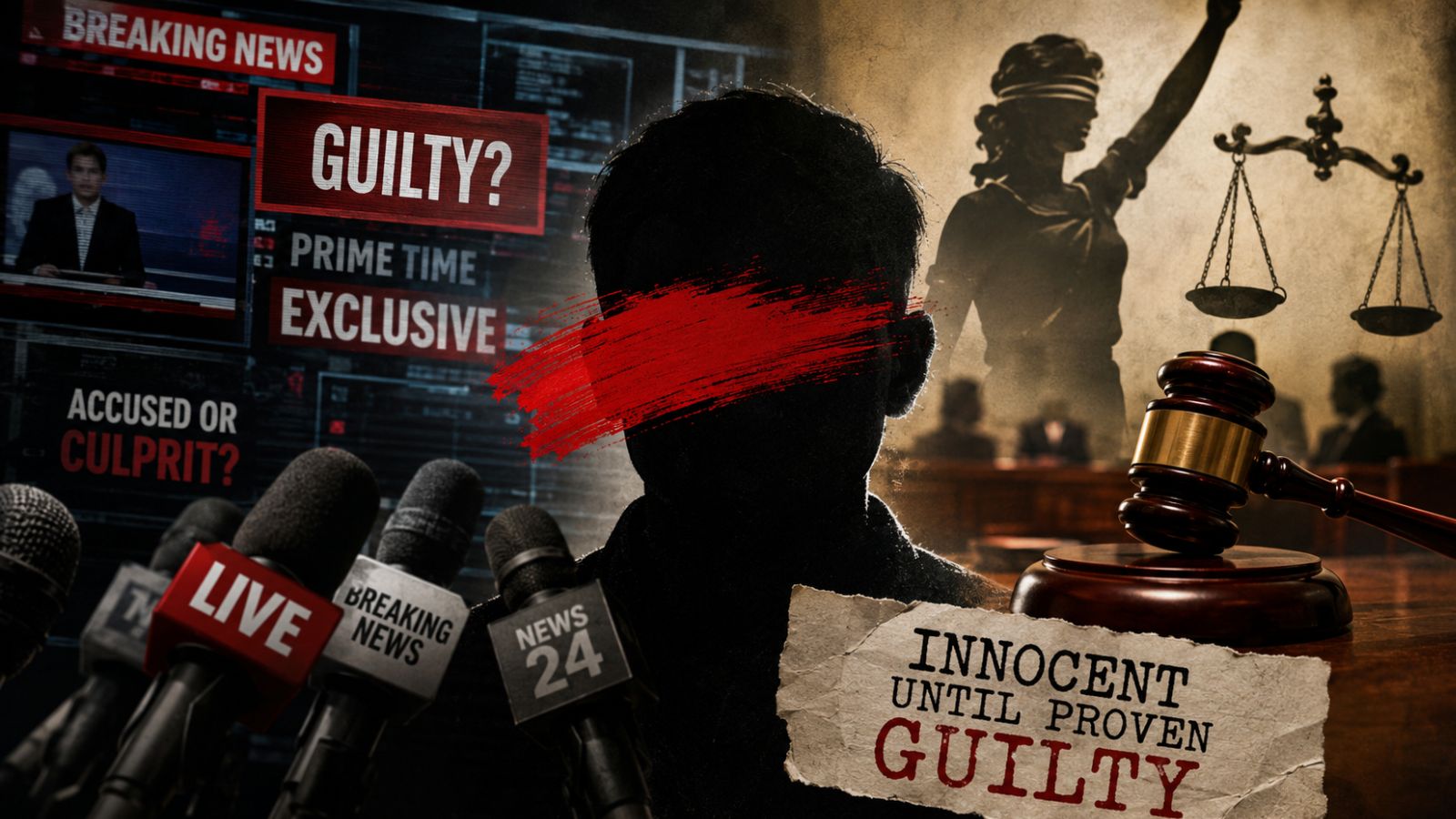
In India, the media plays a crucial role in informing the public about ongoing cases and government functions.
However, media trials, where cases are discussed and public opinion is formed before a verdict is delivered, can compromise the presumption of innocence and the integrity of investigations.
The judiciary has consistently drawn a line between the media's role in informing the public and its assumption of the role of an adjudicator.
Despite legal guidelines, the line is often crossed, leading to damage to the reputation of the accused and their families.
The problem is urgent and requires enforceable restraint to safeguard public trust in the rule of law.

Media trials can compromise the presumption of innocence and the integrity of investigations.
The judiciary has consistently drawn a line between the media's role in informing the public and its assumption of the role of an adjudicator.
Media narratives can contaminate evidence and pressure police into premature conclusions.
The Press Council of India urges restraint from sensationalism in media coverage.
Enforceable restraint is needed to safeguard public trust in the rule of law.
- Who
- The media, judiciary, and public in India.
- What
- The impact of media trials on the presumption of innocence and the integrity of investigations.
- When
- Ongoing issue, with recent cases highlighting the problem.
- Where
- India.
- Why
- To inform the public and hold authorities accountable, but often at the cost of the presumption of innocence and the integrity of investigations.
Media's Role in Informing Public
Presumption of Innocence
Role of Media
Media's Role in Informing Public
Media serves as the eyes and ears of the public, informing them about ongoing cases and government functions.
Presumption of Innocence
Media often assumes the role of an adjudicator, compromising the presumption of innocence and the integrity of investigations.
Impact on Investigations
Media's Role in Informing Public
Media coverage can pressure authorities to act swiftly, potentially leading to quicker resolutions.
Presumption of Innocence
Media narratives can contaminate evidence, pressure police into premature conclusions, and compromise investigations.
Public Opinion
Media's Role in Informing Public
Media can shape public opinion and hold authorities accountable.
Presumption of Innocence
Media trials can damage the reputation of the accused and their families before a verdict is delivered.
- Presumption of Innocence
- A foundational principle of criminal law stating that an accused person is innocent until proven guilty.
- Media Trials
- The practice of media outlets discussing and forming public opinion on cases before a verdict is delivered.
- Harijai Singh v. Vijay Kumar (1996)
- A Supreme Court case emphasizing that no individual or institution outside the judiciary can assume the role of an investigator.
- R. Rajagopal v. State of Tamil Nadu
- A case highlighting the right to privacy and the protection of an individual’s family life and personal matters from publication.
- Press Council of India
- An organization that urges restraint from sensationalism in media coverage.