1 week ago
Revanth Reddy Visit Denial Raises Federalism Concerns in India

Telangana Chief Minister A Revanth Reddy wanted to visit the United States.
The central government did not give him political clearance for the trip.
Reddy said this was unfair and showed favoritism toward Gujarat.
The article says other central governments have also stopped chief ministers from making foreign visits.
However, it argues that such a rule is not good for cooperation between India’s central and state governments.
Chief ministers are elected by people in their states.
They can visit other countries to promote their states’ investments and culture.
Security and diplomatic concerns may still need to be checked.
The article says those checks should use clear rules rather than a complete veto.

The Bharatiya Janata Party-led Centre denied Telangana Chief Minister A Revanth Reddy political clearance to visit the United States.
Reddy called the decision evidence of “Gujarat supremacy” and an attack on cooperative federalism.
The Centre has previously denied overseas visits by chief ministers, including Tarun Gogoi and Arjun Munda.
The decision has been criticized as politically damaging and reinforcing perceptions of excessive centralization.
The article calls for transparent guidelines on foreign visits instead of allowing the Centre to exercise a veto.
- Who
- Telangana Chief Minister A Revanth Reddy and the Bharatiya Janata Party-led central government.
- What
- The Centre denied Reddy political clearance to visit the United States, prompting criticism and accusations of political bias.
- Where
- The dispute involves the central government in New Delhi, Telangana, Gujarat, and a proposed visit to the United States.
- When
- The decision was made during the period when Gujarat Chief Minister Bhupendra Patel was permitted to visit the United States; no specific date is given.
- Why
- The article says the Centre technically has authority under existing practice, but argues that the decision damages cooperative federalism and may have involved political considerations.
State Autonomy and Federalism
Central Clearance and National Concerns
Authority over chief ministers’ foreign visits
State Autonomy and Federalism
A chief minister is accountable to the people of the state and the Constitution, not to the central government, and should not require a central veto for overseas visits.
Central Clearance and National Concerns
The article acknowledges that existing rules and practice technically give the Centre authority to deny political clearance, including for security, diplomatic, or international-commitment concerns.
Effect of the Revanth Reddy decision
State Autonomy and Federalism
The denial is viewed as politically damaging, potentially reinforcing accusations of over-centralization and favoritism toward Gujarat.
Central Clearance and National Concerns
The government’s technical authority and previous instances under earlier governments suggest the decision is not unprecedented or necessarily outside established practice.
Future policy
State Autonomy and Federalism
Foreign visits should be governed by transparent, objective, narrowly defined guidelines that allow states to promote investment and cultural interests.
Central Clearance and National Concerns
Any revised system would still need to preserve checks for national security, diplomatic sensitivities, and international commitments.
Key facts
- Chief minister affected
- A Revanth Reddy of Telangana
- Proposed destination
- United States
- Decision
- The Bharatiya Janata Party-led central government denied political clearance for the visit.
- Reddy’s allegation
- He described the decision as reflecting “Gujarat supremacy” and accused the Centre of an anti-Telangana approach.
- Comparison cited
- Gujarat Chief Minister Bhupendra Patel was permitted to visit the United States during the same period.
- Earlier examples
- The United Progressive Alliance government denied planned foreign visits by Assam Chief Minister Tarun Gogoi and Jharkhand Chief Minister Arjun Munda.
- Proposed reform
- Replace the Centre’s veto with transparent, objective, narrowly defined protocols addressing security and diplomatic concerns.
Sources
Related news

Revanth Reddy Challenges Denial of Telangana US Visit Clearance

Sovereign Prerogative or Federal Overreach? Telangana Tour Triggers India’s Federalism Debate

Telangana BJP Chief Rebuts Revanth Reddy’s Centre Discrimination Charges

Kishan Reddy Rejects Revanth’s Charge Over US Trip
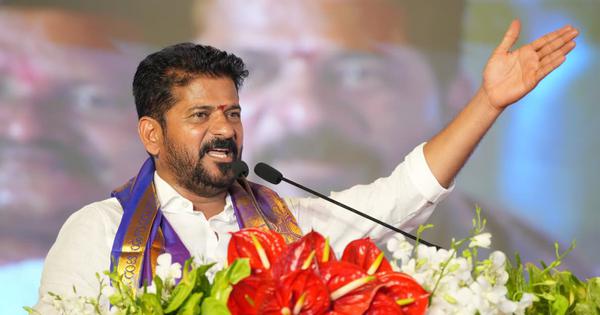
Centre Denies Clearance, Cancelling Revanth Reddy’s US Visit

Telangana Chief Minister’s United States Visit Cancelled After Clearance Denial
Ayodhya Temple CEO Appointment Faces Opposition Donation Allegations

Telangana BJP Alleges Congress, BRS Avoid Hyderabad Liberation Day
Haryana sanitation workers’ strike puts BJP government under pressure

Rival NC-BJP Protests Roil J&K as Police Halt Marches
Shivakumar Calls BJP Padayatra Cover-Up for Internal Crisis