

Archive · 23 Jul 2025
Chhattisgarh School Experiments with Rotating Classroom Seats
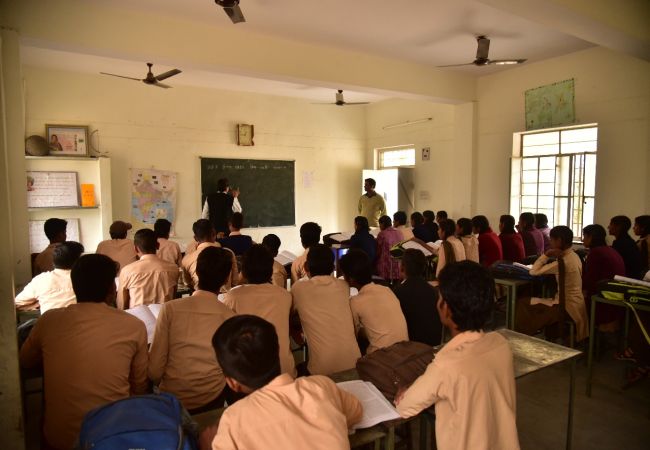
In Chhattisgarh, a school is trying a new idea: switching students' seats regularly.
This is to stop the usual 'backbencher' setup, where some kids sit in the back and might not pay attention.
By moving seats around, the school hopes everyone will be more involved and get a better view of the teacher.
Other states have tried this too.
It's meant to make sure all students get a fair chance and to change how kids learn in the classroom.

A government school in Chhattisgarh is implementing rotating seating arrangements.
The initiative aims to eliminate the concept of backbenchers and encourage student participation.
This follows similar implementations in other Indian states like Kerala and West Bengal.
The change is based on observations that backbenchers may disengage due to seating position.
The new seating system is intended to bring every student to the center of attention.
- Who
- A government school and its students.
- What
- A government school is implementing rotating seating arrangements in classrooms.
- When
- The implementation is current.
- Where
- Chhattisgarh, India.
- Why
- To encourage participation and give every student equal access.
Traditional Classroom
Revolutionary Classroom
Benefits of Backbenchers
Traditional Classroom
Traditional seating may create disparities in participation.
Revolutionary Classroom
Backbenchers develop important skills.
- School location
- Chhattisgarh
- Concept
- Rotating Seating
- Goal
- Increase participation
- Reason
- Address backbencher disengagement
- Similar implementations
- Kerala, West Bengal, Punjab and Tamil Nadu