

Archive · 22 May 2025
Fossil Discovery Reveals Earliest Known Bilaterian Animal
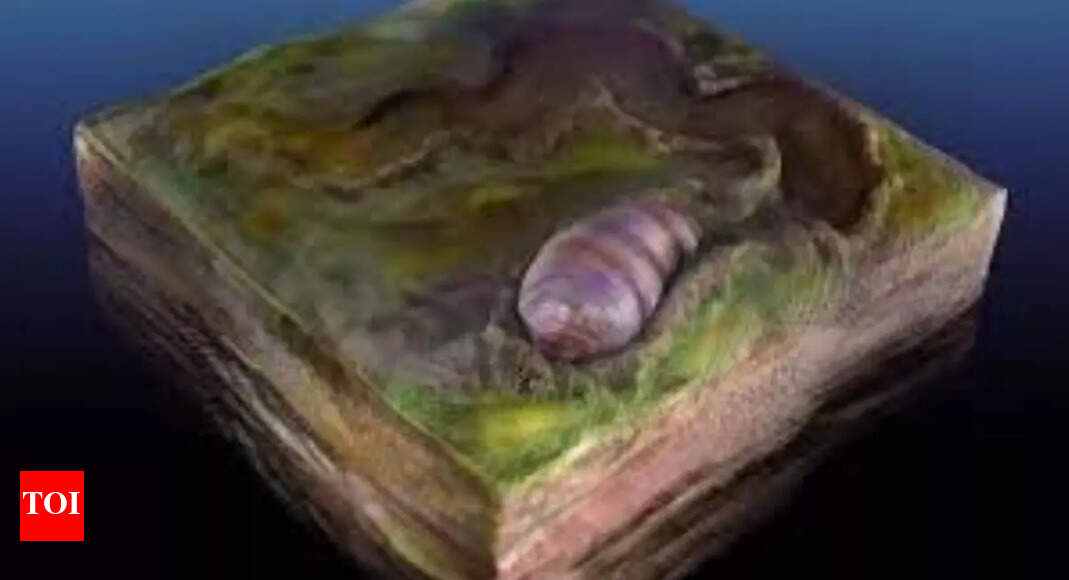
Imagine a tiny worm, the earliest ancestor of almost all animals, that lived over 555 million years ago!
Scientists found its fossil in South Australia.
This worm, named Ikaria wariootia, was only as big as a grain of rice, but it had a front, back, and sides, called bilateral symmetry, just like us.
It burrowed through the ocean floor looking for food.
This discovery helps us understand how animals with complex bodies like ours first evolved.
It proves that even tiny, simple creatures can do cool things like move around and burrow!

Scientists discovered the fossil of Ikaria wariootia, the earliest known bilaterian animal.
This worm-like creature lived over 555 million years ago in South Australia.
Ikaria wariootia had bilateral symmetry, with a front, back, and sides, a key feature of most modern animals.
The fossil is associated with burrows known as Helminthoidichnites, indicating purposeful movement.
This discovery provides insights into the origins of animal complexity and early evolution.
- Who
- Scientists
- What
- Discovery of Ikaria wariootia, the earliest known bilaterian fossil.
- When
- 555 million years ago (Ediacaran period)
- Where
- South Australia
- Why
- To understand the early evolution of animals.
- Age
- 555 million years ago
- Location of Discovery
- South Australia
- Size of Ikaria wariootia
- 2 to 7 millimeters
- Associated Burrows
- Helminthoidichnites
- Animal Type
- Bilaterian