

Archive · 16 Dec 2025
NASA's Roman Telescope to Map Cosmic Voids
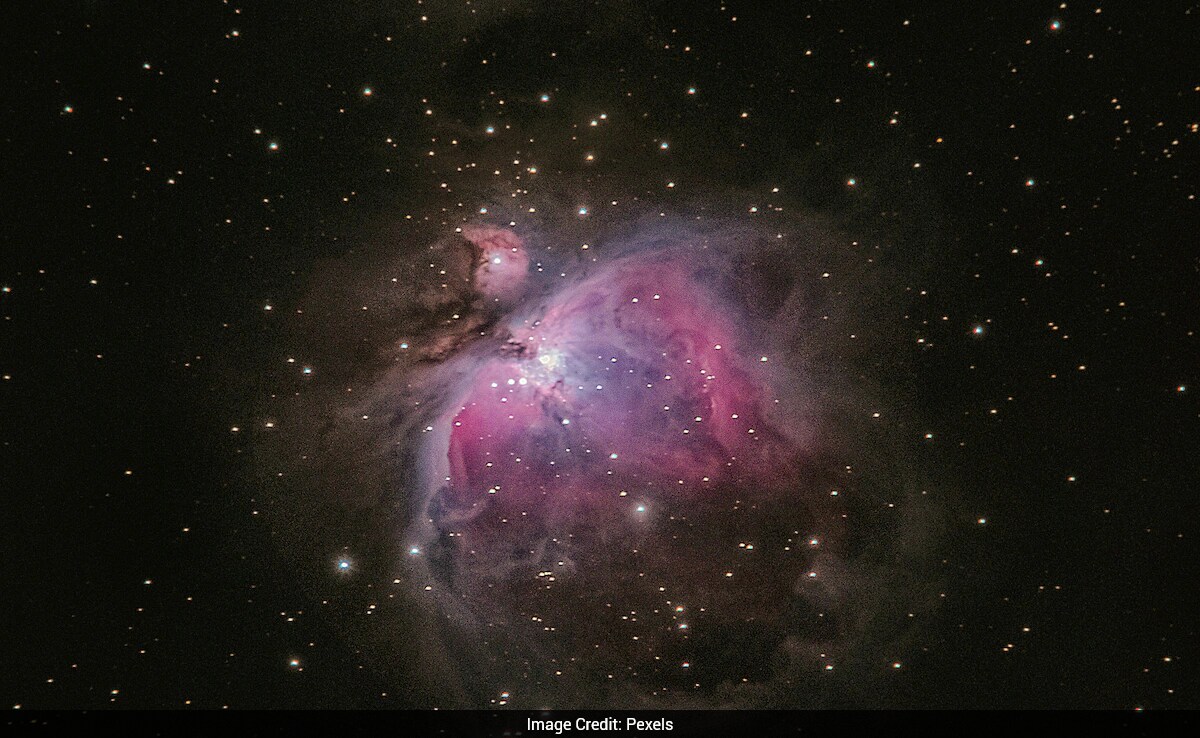
NASA's Nancy Grace Roman Space Telescope is going to help scientists study big empty spaces in the universe called cosmic voids.
These voids are important because they can tell us about something called dark energy, which makes the universe expand.
The telescope will look at a huge area of the sky and find thousands of these voids.
By studying their shapes, scientists can learn more about how the universe works.
The telescope is really good at seeing far-away and faint galaxies, which will help them understand these cosmic puzzles better.

NASA's Nancy Grace Roman Space Telescope will map cosmic voids to study dark energy and the universe's expansion.
Cosmic voids are large, empty spaces with few galaxies, governed by dark energy.
The Roman High-Latitude Wide-Area Survey will detect thousands of voids, some as small as 20 million light-years wide.
The telescope's ability to observe vast sky areas and detect faint galaxies will revolutionize the study of cosmic voids.
Studying void shapes will help scientists understand cosmological parameters like dark energy and the universe's structure.
- Who
- NASA, Giovanni Varza, Alice Pisani, Julia Degni
- What
- NASA's Nancy Grace Roman Space Telescope to map cosmic voids and study dark energy
- When
- Not specified
- Where
- Space, focusing on regions far from the plane of the Galaxy
- Why
- To understand the universe's expansion and the nature of dark energy
- Telescope
- Nancy Grace Roman Space Telescope
- Study Lead Author
- Giovanni Varza
- Study Journal
- Astrophysical Journal
- Survey
- Roman High-Latitude Wide-Area Survey
- Sky Coverage
- 2,400 square degrees
- Void Size
- 20 million to hundreds of millions of light-years
- Dark Energy
- Accelerates universe expansion
- Dark Matter
- Slows universe expansion