

Archive · 18 Sep 2026
New UPI MDR Will Charge Merchants GST From October 15
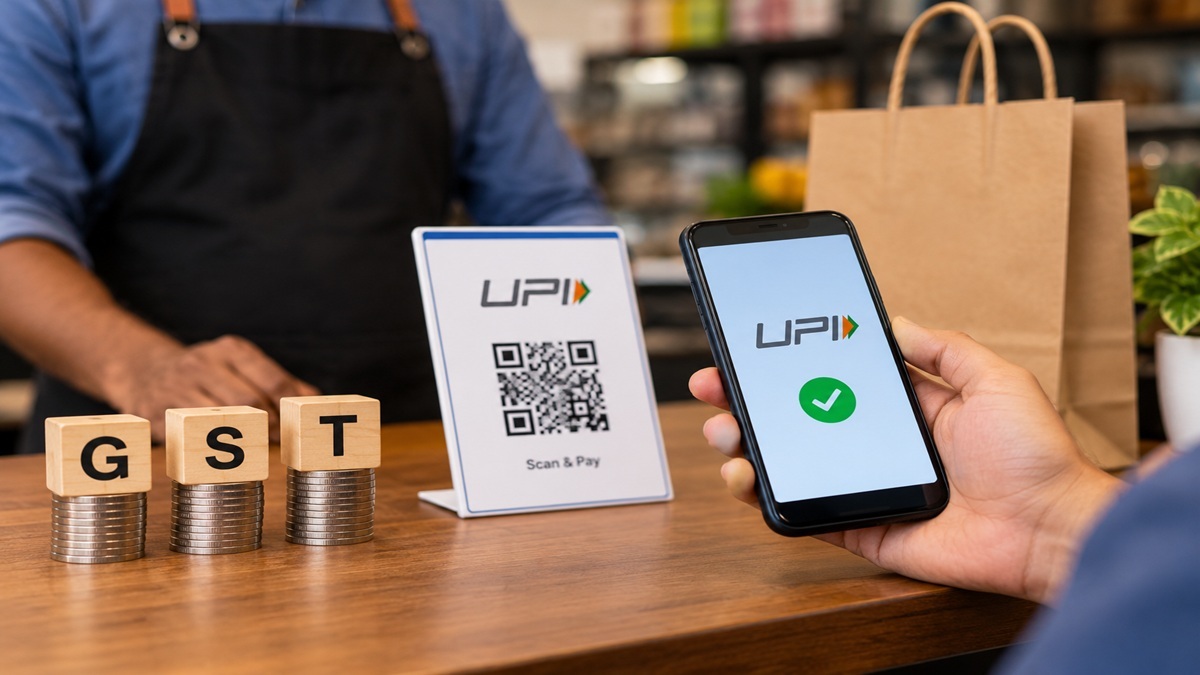
Starting October 15, 2026, some merchants will pay a fee when customers make larger UPI payments.
The fee is called the Merchant Discount Rate, or MDR.
Customers are not supposed to pay this fee themselves.
Usually, the MDR will be 0.4% of the payment, with a maximum of Rs 300.
GST will be charged on the fee, not on the entire amount the customer paid.
For example, a Rs 40 MDR would have Rs 7.20 in GST.
GST-registered businesses may usually claim that GST back as input tax credit.
Small merchants covered by the zero-MDR rules and most payments below Rs 2,000 will continue without MDR.

A new MDR on specified merchant UPI payments above Rs 2,000 begins October 15, 2026.
Customers will not pay the charge, while eligible merchants must bear the MDR.
The standard MDR is 0.4%, capped at Rs 300, with separate rates for some sectors.
GST at 18% applies only to the MDR, not to the customer’s full UPI payment.
Small merchants under the zero-MDR framework and most low-value UPI transactions will remain unaffected.
- Who
- Eligible merchants receiving specified high-value UPI payments, payment providers, customers, and GST-registered businesses are affected.
- What
- A new MDR will apply to certain merchant UPI payments above Rs 2,000, with 18% GST charged on the MDR.
- When
- The framework takes effect on October 15, 2026; the GST Council is scheduled to meet on October 7.
- Where
- The rules apply to eligible merchant payments made through UPI in India.
- Why
- The framework introduces a payment-processing charge for specified merchant transactions while keeping customers from being charged the MDR directly.
Government and customer protection
Merchant cost concerns
Who bears the charge
Government and customer protection
The government says customers will not pay MDR and has advised banks to prevent merchants from passing it on.
Merchant cost concerns
Merchants must bear the MDR and, for businesses unable to claim input tax credit, the GST on that MDR becomes an additional cost.
Effect on small businesses
Government and customer protection
The zero-MDR framework protects qualifying small merchants, while most UPI payments are below the Rs 2,000 threshold.
Merchant cost concerns
An unregistered seller below the Rs 40 lakh turnover threshold but receiving more than Rs 1 lakh monthly through UPI may not qualify for zero MDR and could face MDR plus GST.
Whether GST is a major burden
Government and customer protection
GST applies only to the payment-processing fee, and GST-registered businesses can ordinarily claim it as input tax credit.
Merchant cost concerns
Businesses that are not eligible for input tax credit cannot recover the GST, making it a direct additional expense.
- Effective date
- October 15, 2026
- Standard MDR
- 0.4%, capped at Rs 300 per transaction
- GST rate
- 18% of the MDR amount
- Example
- A Rs 10,000 payment with Rs 40 MDR incurs Rs 7.20 GST, for a total processing cost of Rs 47.20
- Small-merchant protection
- Merchants receiving up to Rs 1 lakh per month through UPI QR codes under the P2PM category continue to receive zero MDR
- Transaction impact
- Around 96% of P2M UPI transactions are expected to remain unaffected
- Input tax credit
- GST-registered businesses can ordinarily claim GST paid on MDR as input tax credit, subject to statutory conditions