Archive · 31 Oct 2025
US-China Trade Truce, India's Tariff Concerns, and ASEAN Summit Significance
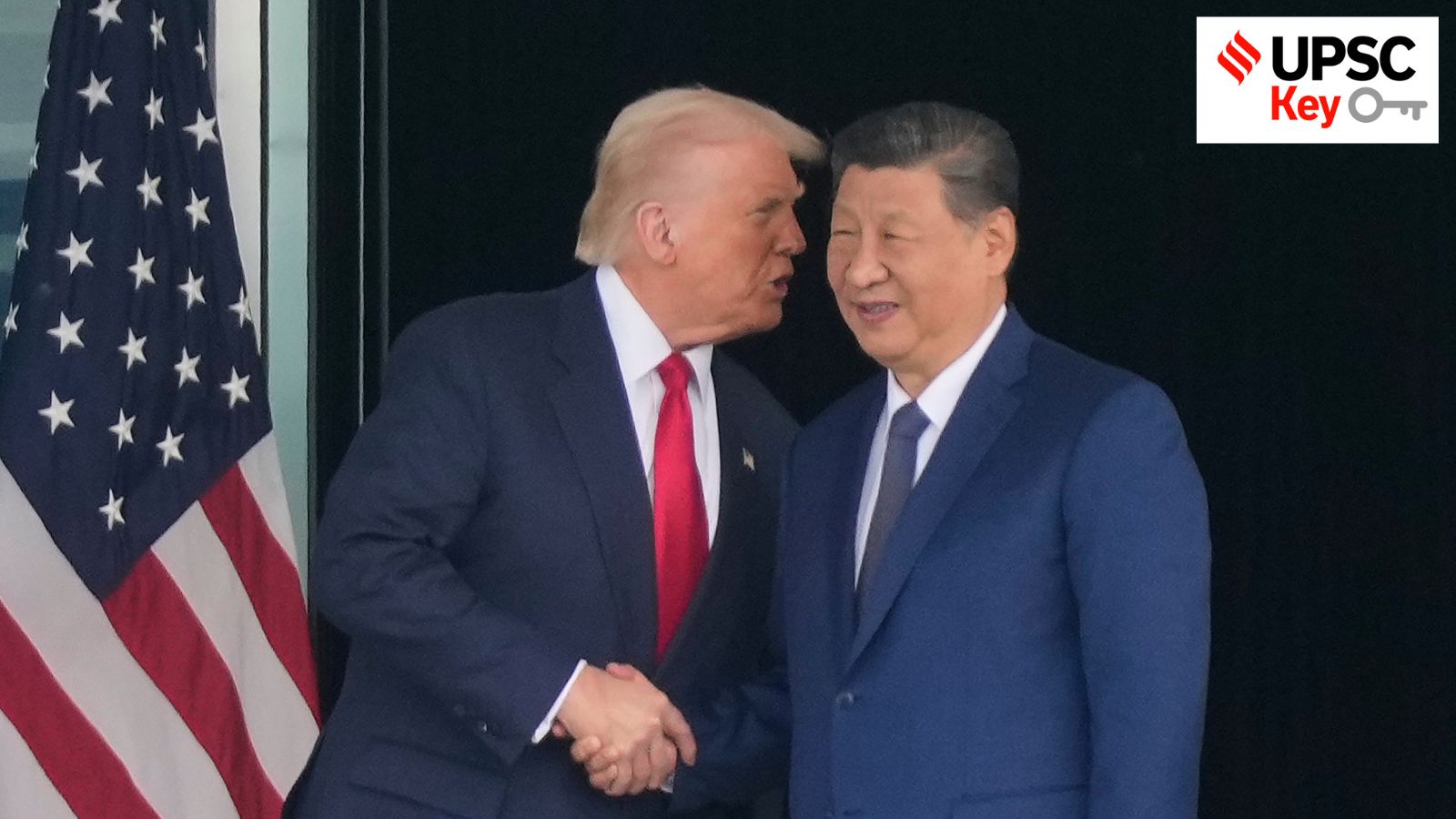
Two big countries, the US and China, decided to stop arguing so much about trade for now.
They met and agreed that they would talk about their trade rules every year instead of having long-term deals.
This is good because it means fewer big arguments, but it's a bit like a temporary peace treaty.
Because of this, India might have to pay higher taxes on its goods when selling to the US.
Meanwhile, a group of countries called ASEAN met, and leaders talked about how important this region is for trade and business, especially for India.
Also, in India, the way they measure prices for things people buy is going to change.
They will start looking at rent every month instead of every few months, to get a better idea of how much things are costing people.

US President Donald Trump and Chinese President Xi Jinping agreed to a trade truce, with annual renegotiations of their trade agreement.
The US reduced tariffs on China from 57% to 47%, while China agreed to resume purchases of US agricultural products.
India faces increased tariff rates, potentially making its products less competitive and incentivizing businesses to reroute products via other countries.
The 47th ASEAN Summit concluded, emphasizing the geopolitical and economic significance of the Indo-Pacific region for India.
Proposed changes to India's Consumer Price Index (CPI) include monthly collection of rent data for both rural and urban areas.
- Who
- US President Donald Trump and Chinese President Xi Jinping; India faces new tariff dynamics; ASEAN leaders convened at the summit; Ministry of Statistics and Programme Implementation (MoSPI).
- What
- A truce was reached in the US-China trade war, with renegotiations annually. India faces higher tariffs, impacting its exports. The ASEAN Summit highlighted the region's economic and geopolitical importance for India. Proposed changes to India's CPI methodology include monthly rent data collection.
- When
- October 31, 2025 (US-China meeting and publication of UPSC Key); October 28, 2025 (ASEAN Summit); Proposed CPI changes for February 2026.
- Where
- South Korea (US-China meeting); Kuala Lumpur (ASEAN Summit); India (CPI data collection).
- Why
- The US-China trade war truce aims to de-escalate tensions, though long-term certainty is lacking. India is impacted by shifting global trade dynamics. The ASEAN Summit reinforces the Indo-Pacific's growing economic importance. CPI revisions aim to improve inflation measurement accuracy.
US Position
China Position
Trade Agreement Structure
US Position
Decided on annual renegotiations, signaling a less certain, more flexible approach.
China Position
Agreed to annual renegotiations, suggesting openness to ongoing adjustments.
Tariff Reductions
US Position
Reduced tariffs on China from 57% to 47% as part of the truce.
China Position
Secured a reduction in US tariffs on its goods.
- US-China Trade Truce Date
- October 31, 2025
- US Tariff on China (Pre-Truce)
- 57%
- US Tariff on China (Post-Truce)
- 47%
- China's Purchase Commitment
- US agricultural products
- ASEAN Summit Location
- Kuala Lumpur
- ASEAN Summit Date
- October 28, 2025
- Revised CPI Base Year
- 2024
- New CPI Series Publication Start
- February 2026