

Archive · 4 Sep 2026
Tesla Launches Steering-Wheel-Free Cybercabs Amid Safety and Trust Concerns
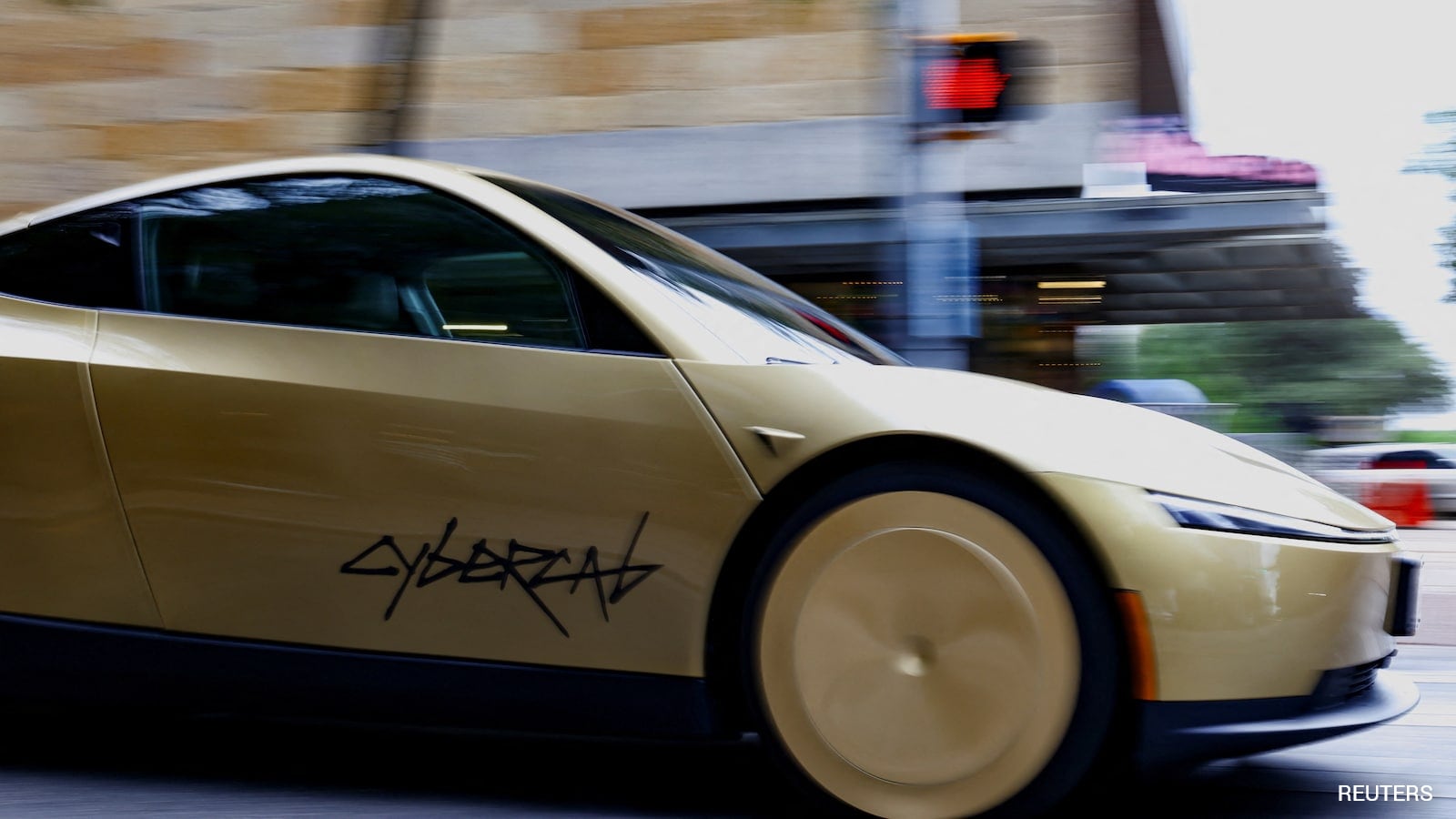
Tesla has put special self-driving taxis on Austin’s streets.
These Cybercabs do not have steering wheels or brake pedals.
That means passengers cannot take control if the car has a problem.
Tesla hopes people will use the taxis and that the service will expand to other cities.
The company is trying to catch Waymo, which already operates many more self-driving vehicles.
Surveys show that most Americans are still uncomfortable riding in driverless cars.
Tesla’s leader, Elon Musk, also faces low public favorability in one survey.
Regulators are investigating crashes, traffic violations and whether Tesla reported some crashes quickly enough.
Tesla hopes future software could let owners use their own cars as taxis when they are not driving them.

Tesla deployed dozens of gold-colored Cybercabs without steering wheels or brake pedals in Austin on September 4, 2026.
The vehicles give passengers no way to take control during an emergency, as Tesla prepares launches in other cities.
Tesla shares rose more than 5% amid hopes the new taxis will gain public acceptance.
Tesla has more than 200 unsupervised robotaxis in six cities, compared with Waymo’s more than 4,000 in 14 cities.
Public skepticism and regulatory investigations over crashes, traffic violations and delayed reporting remain challenges for Tesla.
- Who
- Tesla and Chief Executive Elon Musk launched the Cybercabs, competing with self-driving taxi operator Waymo.
- What
- Tesla deployed steering-wheel-free and brake-pedal-free Cybercabs for rides in Austin.
- When
- September 4, 2026; Tesla’s earlier Austin robotaxi service began in June of the previous year.
- Where
- Austin, Texas; Tesla’s existing robotaxi service also operates in five other Texas and Florida cities.
- Why
- Tesla is seeking to expand autonomous taxi operations, catch up with Waymo and persuade the public to use vehicles without human controls.
Autonomous-Taxi Expansion
Safety and Trust Concerns
Business and market prospects
Autonomous-Taxi Expansion
The Cybercab rollout could help Tesla expand its robotaxi service and narrow Waymo’s lead; Tesla shares rose more than 5% after the launch.
Safety and Trust Concerns
Tesla trails Waymo in deployed vehicles and completed trips, while Tesla’s vehicle sales and profits have declined and public acceptance remains uncertain.
Vehicle-control design
Autonomous-Taxi Expansion
Removing the steering wheel and pedals supports Tesla’s vision of fully autonomous taxis and eliminates the need for passengers to drive.
Safety and Trust Concerns
Passengers have no way to take control in an emergency, and Tesla must show that its camera-only system can safely navigate streets and avoid pedestrians.
Safety and regulation
Autonomous-Taxi Expansion
Tesla already operates more than 200 unsupervised robotaxis and hopes software updates will eventually let hundreds of thousands of owners use their cars as taxis.
Safety and Trust Concerns
Regulators are investigating crashes in difficult visibility conditions, red-light and wrong-side driving incidents, injuries and possible failures to report crashes promptly.
- Vehicle controls
- The Cybercabs have no steering wheels or brake pedals.
- Launch location
- Austin, Texas.
- Tesla deployment
- More than 200 unsupervised robotaxis operate across six cities in Texas and Florida, according to RobotaxiTracker.
- Waymo deployment
- Waymo has more than 4,000 unsupervised vehicles in 14 cities.
- Public opinion
- A February Pew Research Center survey found that 70% of U.S. adults were not too or not at all comfortable riding in a driverless car.
- Stock reaction
- Tesla shares rose more than 5% on September 4, 2026.
- Regulatory scrutiny
- U.S. investigations are examining crashes, traffic violations and whether Tesla promptly reported crashes.
