

Archive · 22 Sep 2026
India's Forest Movements Defend Livelihoods, Memory, and Community Rights
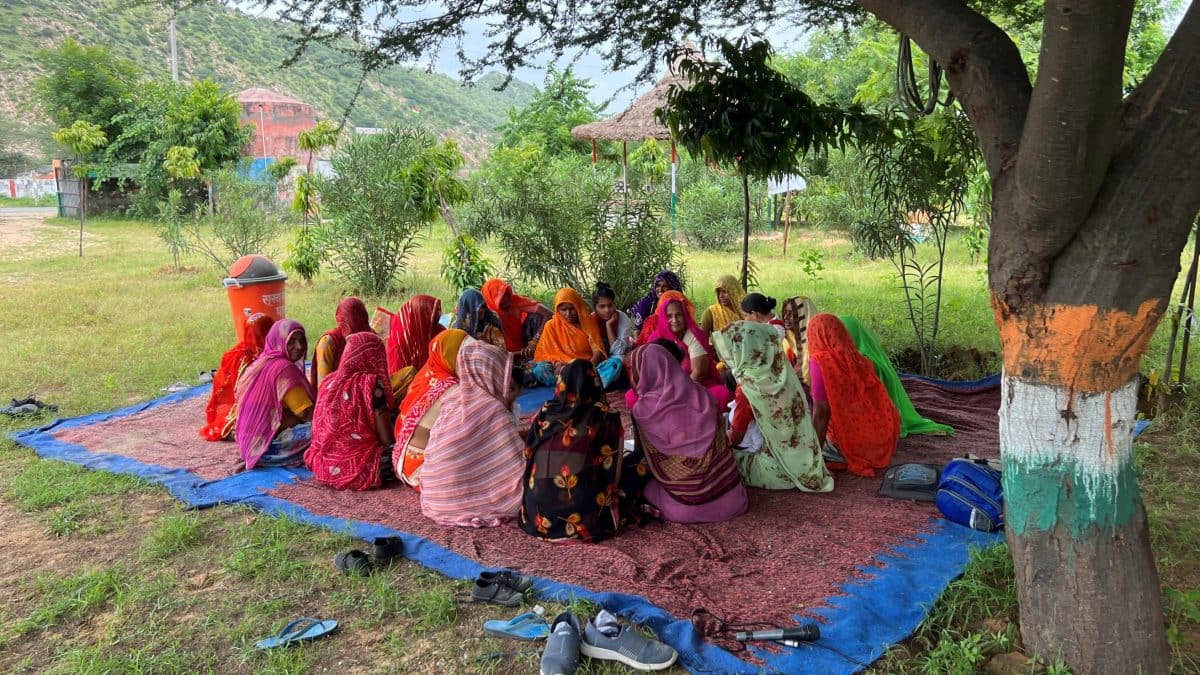
The article says forests are much more than collections of trees.
For many communities, forests provide food, fuel, water, fodder, soil protection, and cultural memory.
In 1730, Amrita Devi Bishnoi and 362 other Bishnois died while protecting trees in Khejarli.
Later, people in Bastar resisted colonial rules that restricted their traditional forest practices.
Women in the Chipko movement hugged trees because commercial logging threatened their daily lives.
The Appiko movement in Karnataka called for forests to be saved, expanded, and used carefully.
Sacred groves in Meghalaya show how communities can protect nature through shared customs.
The article argues that government plans should respect local people’s knowledge and relationships with forests.
It also warns that replacing living forests with plantations, mines, roads, or carbon projects can destroy memories and livelihoods.

The article argues that India’s forest movements defended livelihoods and social relationships, not merely trees as resources.
It traces this history from the 1730 Khejarli sacrifice of Amrita Devi Bishnoi and 362 other Bishnois.
The Bhoomkal rebellion of 1910 opposed colonial restrictions on customary forest use in Bastar.
Chipko and Appiko challenged commercial forestry by emphasizing soil, water, air, regeneration, and community survival.
The article warns that highways, mines, dams, and carbon-focused policies can repeat earlier extractive approaches.
- Who
- Indigenous and local forest communities, including the Bishnois, Bastar’s adivasi communities, Chipko activists, and Appiko participants.
- What
- A historical account of Indian forest-protection movements as struggles for livelihood, cultural identity, ecological balance, and community control.
- When
- From the Khejarli sacrifice on September 11, 1730, through the 1910 Bhoomkal rebellion, Chipko, Appiko, and present-day development debates.
- Where
- Across India, including Khejarli in Rajasthan, Bastar, the central Himalayas, Karnataka’s Western Ghats, and Meghalaya.
- Why
- Communities resisted state and commercial control because forests supported their survival, traditions, and local ecological systems.
Community-centered forest protection
State and commercial forest management
Meaning of the forest
Community-centered forest protection
Forests are lived systems providing livelihoods, water, soil stability, cultural memory, and intergenerational survival.
State and commercial forest management
The article says officials and commercial interests have often treated forests as timber, resin, trade, state property, or land for development.
Who should control forest use
Community-centered forest protection
Indigenous and local communities should retain customary relationships, knowledge, and a meaningful role in managing forests.
State and commercial forest management
Colonial and post-independence state frameworks have asserted authority through regulations, boundaries, contracts, and development projects.
How conservation should work
Community-centered forest protection
Community customs, taboos, local participation, and sustainable regeneration can protect diverse living forests.
State and commercial forest management
Government agencies may rely on notifications, forest guards, working plans, plantations, and administrative protection, while development projects prioritize infrastructure or industrial goals.
- Khejarli sacrifice
- On September 11, 1730, Amrita Devi Bishnoi and 362 fellow Bishnois died defending trees.
- Bhoomkal rebellion
- The 1910 rebellion in Bastar opposed colonial restrictions on customary forest collection and territorial control.
- Chipko movement
- Women in Reni and surrounding Himalayan communities opposed commercial logging that threatened fuel, fodder, water, and soil stability.
- Appiko movement
- The Karnataka movement promoted the slogan “Ulisu, Belesu, Balusu,” meaning “Save, Grow, and Use Rationally.”
- Sacred groves
- Meghalaya’s Law Kyntang and Law Lyngdoh groves are presented as examples of community-based biodiversity protection.
- Modern concerns
- The article connects earlier extraction policies with current highways, open-cast mines, dams, industrial corridors, and carbon-focused policies.