

Archive · 7 Dec 2025
Interstellar Comet 3I/ATLAS Releases Life-Linked Molecules
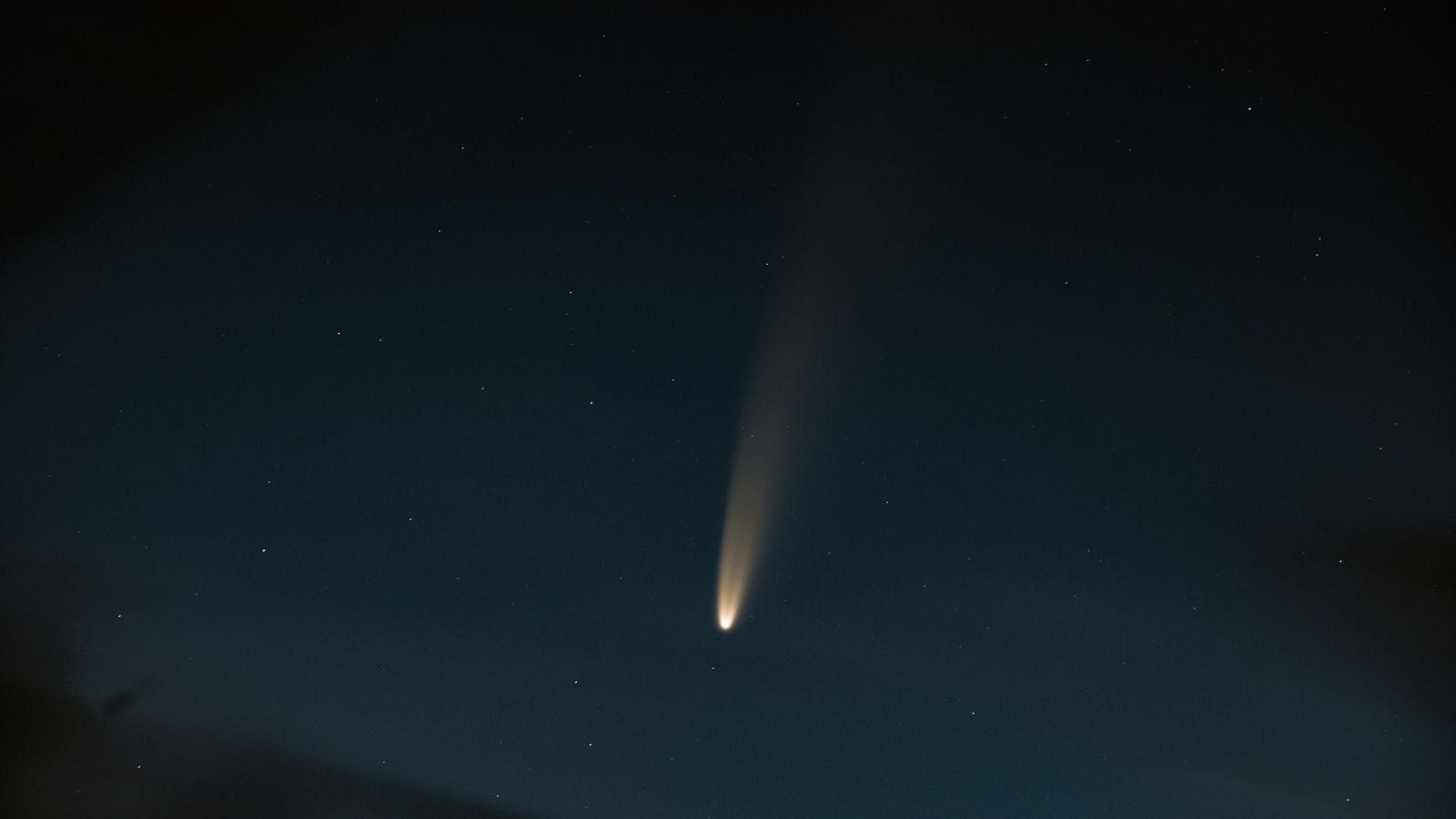
Scientists have found a comet named 3I/ATLAS that came from outside our Solar System.
This comet is special because it has a lot of chemicals that are important for life, like hydrogen cyanide and methanol.
These chemicals were found near the comet's rocky center.
The comet also has more carbon dioxide than usual and looks redder, which means it might have a different surface.
It started releasing gas even when it was far from the sun, which suggests it might not have been close to another star for a very long time.
This comet is different from the ones we usually see in our Solar System.

Interstellar comet 3I/ATLAS is releasing hydrogen cyanide near its nucleus at rates of 250-500 grams per second.
Unusually high levels of methanol, a key molecule for early prebiotic chemistry, have been detected in the comet.
The comet has higher carbon dioxide levels and a redder appearance compared to typical solar system comets.
3I/ATLAS began shedding gas while still far from the sun, suggesting it may not have approached another star for hundreds of millions of years.
This comet is the third known interstellar visitor and exhibits striking differences from comets born in our solar system.
- Who
- Scientists observing the interstellar comet 3I/ATLAS
- What
- Detection of hydrogen cyanide and unusually high levels of methanol in the comet
- When
- As the comet moved toward the sun
- Where
- In space, beyond the Solar System
- Why
- To study the composition and origins of interstellar objects
- Comet Name
- 3I/ATLAS
- Origin
- Beyond the Solar System
- Key Molecule Detected
- Hydrogen Cyanide
- Methanol Detection
- First Time in an Interstellar Object
- Carbon Dioxide Levels
- Higher Than Typical Solar System Comets
- Gas Shedding Distance
- Far from the Sun
- Possible Last Star Approach
- Hundreds of Millions of Years Ago