

Archive · 20 Jul 2026
Mars Exploration Evolution Over 50 Years
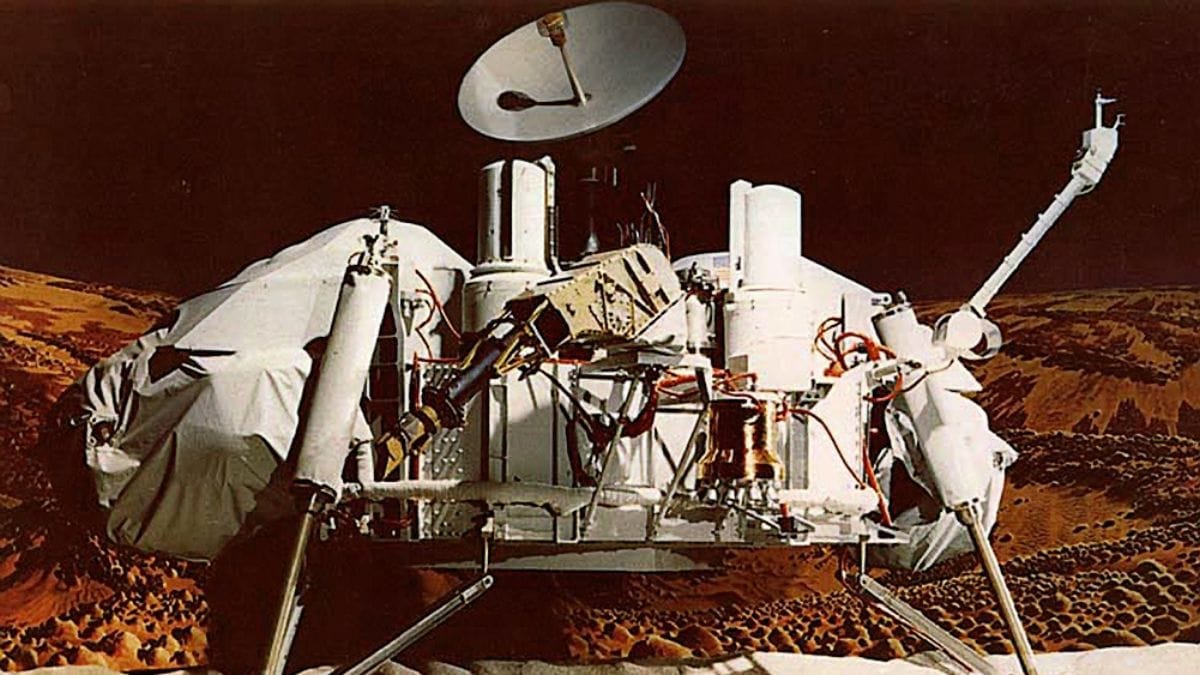
Mars exploration has come a long way since the Viking 1 mission in 1975.
Viking 1 was the first spacecraft to land on Mars, capturing over 52,000 pictures and conducting experiments to search for signs of life.
Over the years, Mars has remained a challenging destination due to its harsh conditions, including extreme temperatures and dust storms.
NASA has continued to send missions to Mars, with the latest being the ESCAPADE mission in 2025.
Other countries like India, China, and the UAE have also shown interest in Mars exploration.
India's Mangalyaan mission was one of the most cost-effective interplanetary missions, while China's Tianwen-1 mission successfully deployed the Zhurong rover.
The UAE's Hope orbiter studies the Martian atmosphere and climate.
These missions have revealed that Mars once had liquid water, but lost its atmosphere due to the solar wind.
Mars remains a busy destination for space exploration, with future missions planned by various space agencies.

Viking 1 was the first spacecraft to successfully land on Mars in 1976.
Mars is a challenging destination with extreme temperatures and dust storms.
NASA has launched 17 missions to Mars since the Viking 1 mission.
India's Mangalyaan mission was one of the most cost-effective interplanetary missions.
China's Tianwen-1 mission successfully deployed the Zhurong rover to search for water ice.
- Who
- NASA, ISRO, China, UAE
- What
- Mars exploration missions
- When
- 1975 to present
- Where
- Mars
- Why
- To study Mars' atmosphere, geology, and potential for life.
Traditional Space Agencies
Emerging Space Programs
Mission Objectives
Traditional Space Agencies
Focus on comprehensive scientific research and long-term exploration.
Emerging Space Programs
Prioritize cost-effectiveness and technological milestones.
Technological Approach
Traditional Space Agencies
Utilize established methods and proven technologies.
Emerging Space Programs
Innovate with cost-effective solutions and new technologies.
- Launch Date
- 20 August 1975
- Landing Date
- 20 July 1976
- Mission Duration
- 1982 (orbiter), 1983 (lander)
- Distance from Earth
- 53 million km to 400 million km
- Temperature Range
- -140°C to 20°C
- Atmospheric Composition
- 96% carbon dioxide
- Gravity
- 38% of Earth's gravity
- ESCAPADE Mission Cost
- $75 million