

Archive · 19 Dec 2025
Debate on Macaulay Mindset and Multilingual Education in India
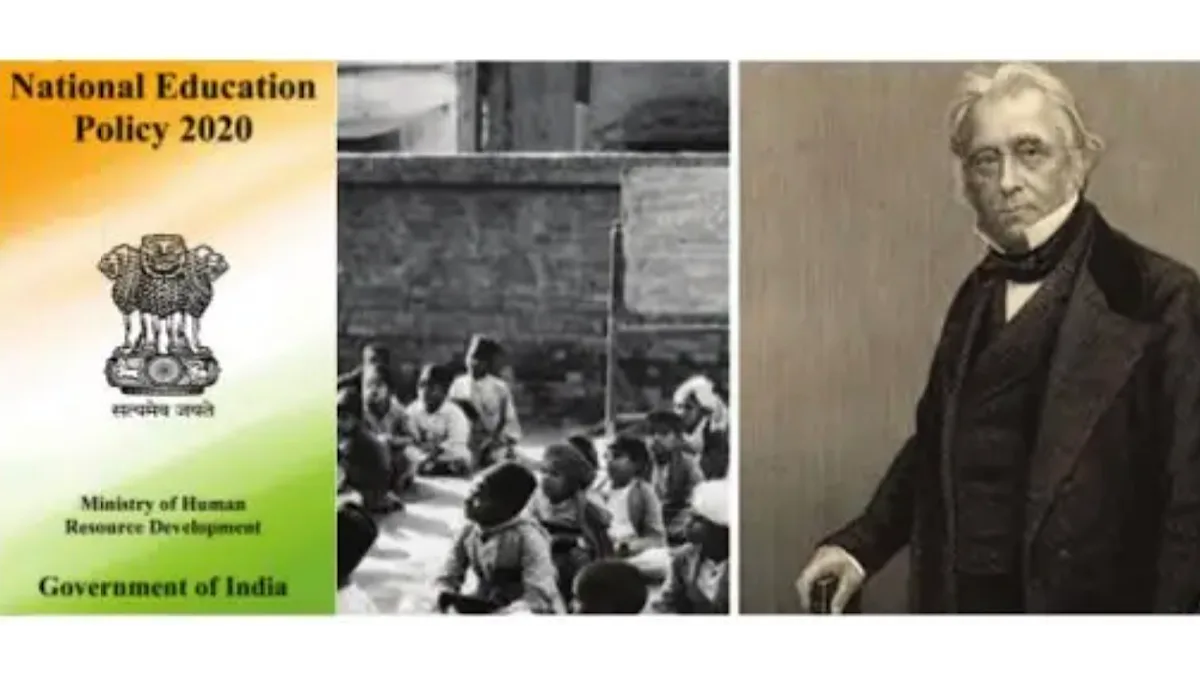
There is a big discussion in India about whether English should be the main language used in schools.
Some people think that English is important for India to stay connected with the modern world.
Others believe that children should first learn in their own language, or mother tongue, because it helps them understand things better.
The National Education Policy (NEP) 2020 suggests that schools should teach children in their mother tongue first, and then add other languages like English later.
This is because research shows that learning in your own language can make you smarter and help you understand things better.
Some people worry that if India doesn't use English a lot in schools, the country might fall behind.
But other countries, like Japan and Germany, use their own languages in schools and still do well.
The NEP 2020 also wants to make sure that all children, even those from rural areas, have a fair chance to learn.
To make this happen, India needs to create good learning materials and train teachers in different Indian languages.
The goal is to help children become smart, confident, and ready to succeed in the world.

The debate around the 'Macaulay mindset' focuses on the role of English in Indian education and the implementation of the National Education Policy (NEP) 2020.
NEP 2020 recommends multilingual education with mother tongue as the medium of instruction until at least Grade 5.
Research shows that learning in the mother tongue can enhance cognitive development and conceptual understanding.
Countries like Japan, South Korea, Germany, and France have advanced economies despite not using English as the primary medium of instruction.
Implementation of multilingual education requires coordinated investments in learning materials, teacher training, and digital content in Indian languages.
- Who
- Indian policymakers, educators, and the public are debating the role of English and multilingual education in India.
- What
- The debate centers around the 'Macaulay mindset' and the implementation of the National Education Policy (NEP) 2020, which advocates for multilingual education with a focus on mother tongue instruction.
- When
- The debate is ongoing, with recent discussions sparked by the NEP 2020.
- Where
- The debate is taking place in India, involving various stakeholders in the education sector.
- Why
- The debate aims to address the role of English in Indian education, the benefits of multilingual education, and the need to move away from colonial educational legacies.
- National Education Policy (NEP) 2020
- Recommends multilingual education with mother tongue as medium of instruction until at least Grade 5.
- UNESCO
- Advocates for mother tongue instruction for inclusion and quality learning.
- RTI International
- Finds comprehensive linguistic and cognitive development is possible when children become literate in their mother tongue first.
- Cognitive Benefits
- Bilingual and multilingual individuals exhibit better attention control, task-switching abilities, cognitive flexibility, problem-solving skills, and creativity.
- Global Competitiveness
- Countries like Japan, South Korea, Germany, and France have advanced economies despite not using English as the primary medium of instruction.
- Equity Implications
- Students underperform when they face a language barrier, disproportionately affecting rural students and first-generation learners.
- Implementation Framework
- Requires coordinated investments in learning materials, teacher training, and digital content in Indian languages.