

Archive · 24 Jul 2025
Google's AI Aeneas Aids Study of Ancient Roman Inscriptions
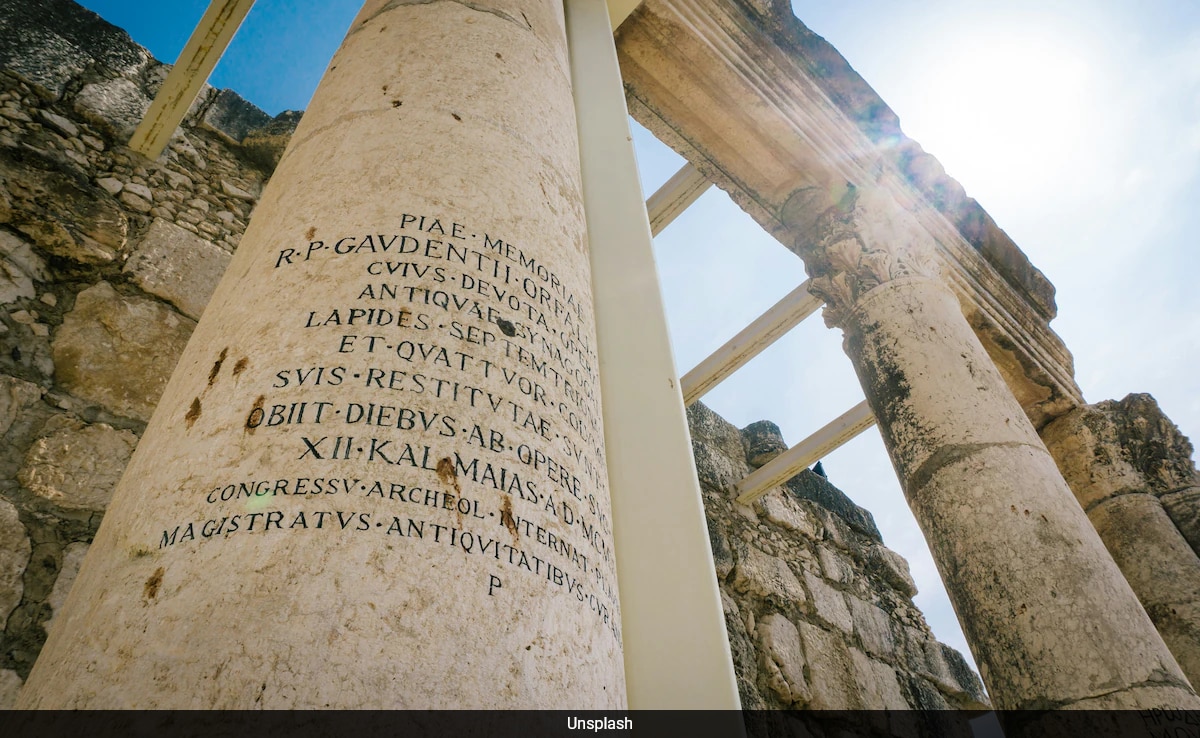
Imagine a super-smart computer program called Aeneas, named after a hero from old Roman stories.
This program can read ancient Roman writings, like those on old stones and buildings.
These writings are often broken or hard to read, but Aeneas can help.
It figures out where the writings came from, when they were written, and even guesses what the missing words might be.
It does this by looking at lots of other writings from the same time period.
Historians who study the Romans can now use Aeneas to learn more about what life was like a long, long time ago, even if they're not experts!

Google's new AI, Aeneas, helps analyze ancient Roman inscriptions.
Aeneas can identify the origin, date, and suggest missing words in texts.
The AI was trained on a database of nearly 200,000 Latin inscriptions.
Aeneas analyzes text and images, using linguistic and historical patterns.
Experts believe it will open new opportunities for studying Latin inscriptions.
- Who
- Google DeepMind developed the AI Aeneas in collaboration with historians.
- What
- Google's AI, Aeneas, helps analyze ancient Roman inscriptions.
- When
- The AI assists in identifying origin, date, and missing words.
- Where
- Aeneas is used to study Roman inscriptions.
- Why
- To assist historians in studying ancient Roman inscriptions.
- AI Name
- Aeneas
- Developed By
- Google DeepMind
- Primary Function
- Analyze Roman Inscriptions
- Training Data
- Nearly 200,000 Latin inscriptions
- Time Span of Inscriptions
- 7th century BC to 8th century AD
- Accuracy of Date Estimation
- Within about 13 years