Archive · 26 Jul 2025
Oldest Evidence of Cannibalism Found in Spain

Scientists have found proof that humans ate other humans a very long time ago.
They found a child's bones in a cave in Spain, that lived about 850,000 years ago.
The scientists could tell the child was eaten because they found cut marks on the bones.
This is similar to how humans processed animals for food.
This discovery shows us that early humans sometimes ate other humans.

Archaeologists found evidence of human cannibalism in Spain.
The discovery dates back approximately 850,000 years.
Researchers found butchery marks on a child's neck bone.
The remains belonged to a Homo antecessor.
The evidence suggests the child was processed like any other prey.
- Who
- Homo antecessor, a human ancestor.
- What
- Evidence of cannibalism, including butchered remains of a child.
- When
- Approximately 850,000 years ago.
- Where
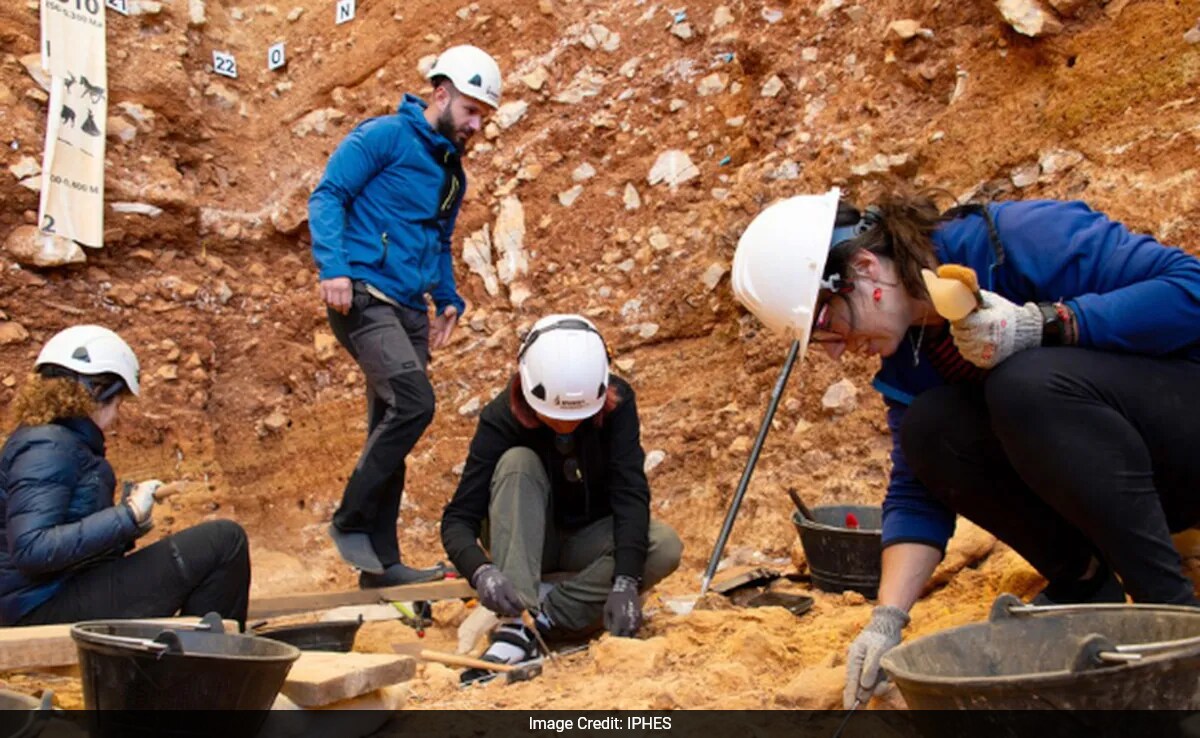
- Gran Dolina cave site in Atapuerca, northern Spain.
- Why
- To be a food resource
Historical Context
Archaeological findings
Possible Reasons for cannibalism
Historical Context
Suggests a food source or lack of burial practices
Archaeological findings
Suggests exploitation of others for resources.
- Location
- Gran Dolina cave site, Spain
- Date
- 850,000 years ago
- Species
- Homo antecessor
- Evidence
- Butchery marks on child's neck bone