

Archive · 24 May 2025
Ray Kurzweil Predicts Immortality by 2030 Through Technology
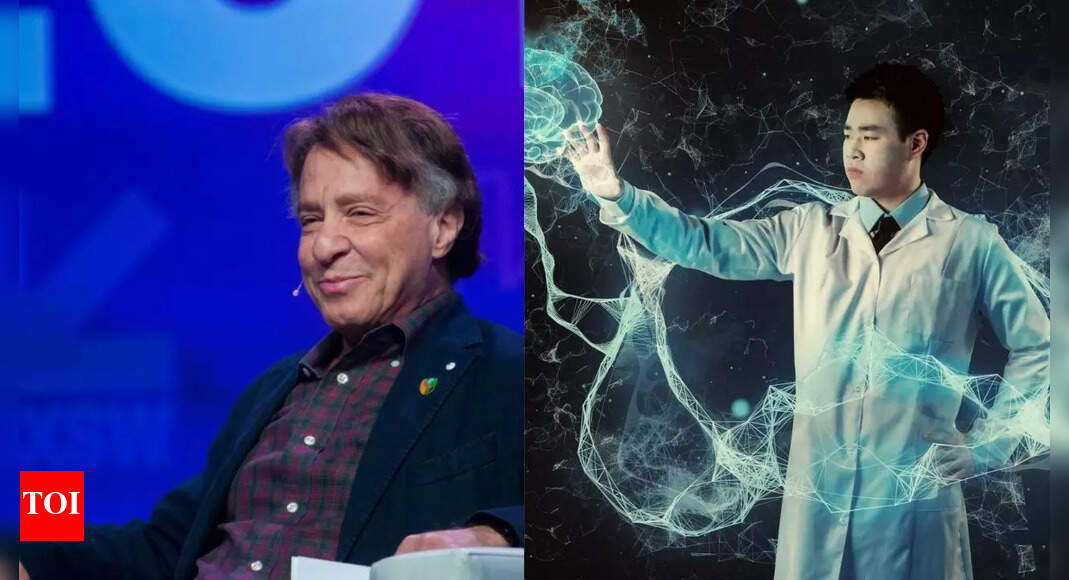
Ray Kurzweil thinks humans will live forever starting around 2030.
This is because tiny robots called nanobots could fix our bodies, reversing aging.
AI is getting smarter, and soon machines may think like humans.
By combining human brains with AI, we could boost our intelligence.
Around 2045, humans might integrate fully with our technology, changing life as we know it.
But, this raises questions about how society would work with longer lifespans and how it would affect things like population, resources, and what life is all about.

Ray Kurzweil predicts humans could achieve immortality by 2030 via nanotechnology.
Nanobots could continuously check the body, heal cells, and reverse aging.
Kurzweil anticipates AI will reach human-level intelligence by 2029.
Humans and machines will merge, potentially enhancing human capabilities.
The Singularity, where tech radically changes civilization, is predicted around 2045.
- Who
- Futurist Ray Kurzweil predicts human immortality.
- What
- Immortality may be achieved through nanobots, AI and merging human consciousness with AI.
- When
- Kurzweil predicts humans could achieve biological immortality by 2030.
- Where
- N/A
- Why
- Technological advancement in fields such as AI, genetics and robotics
Critical Concerns
Optimistic Outlook
Ethical and Societal Implications
Critical Concerns
Immortality raises serious ethical and philosophical issues including managing population growth, resource distribution, and economic balance.
Optimistic Outlook
Immortality could be achieved through technological advancements, potentially leading to unprecedented human capabilities and a new type of existence.
Technological Development vs. Societal Risk
Critical Concerns
AI systems may pose a serious threat to society and require proper regulation.
Optimistic Outlook
Rapid advancement of AI, genetics, and robotics make immortality a scientific possibility.
- Predictor
- Ray Kurzweil
- Prediction Year for Immortality
- 2030
- Key Technologies
- Nanobots, AI, genetic engineering
- AI benchmark
- Human-level intelligence by 2029
- Singularity
- Predicted around 2045