Archive · 29 Sep 2026
Supreme Court Upholds Telangana Four-Year Local Study Rule
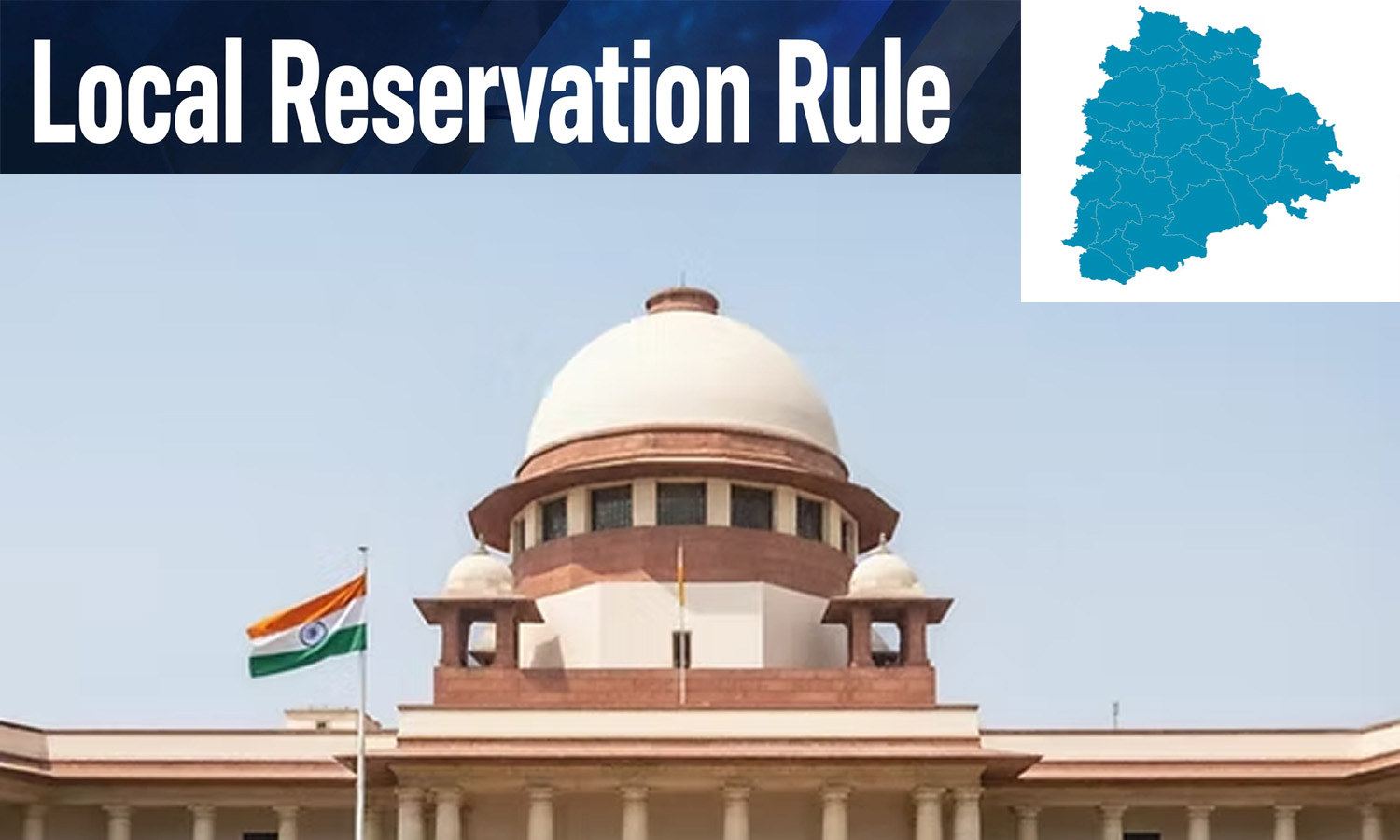
The Supreme Court has supported Telangana’s rule for deciding who counts as a local student.
A student usually must study in Telangana for four years in a row.
These years must be connected to the time when the student takes the qualifying examination.
The rule affects admissions to medical and dental courses.
It applies to courses such as MBBS and BDS under the relevant state admission quota.
One student named Ankita had challenged the rule, but the court rejected her petition.
The court said the rule is not an improper decision made only by the state government.
Some students may qualify for exceptions, such as children of certain government employees who move between states for work.
There is also a separate residence-based provision for some students who did not attend school during the required period.

The Supreme Court upheld Telangana’s mandatory four-year study requirement for claiming local status in medical admissions.
Candidates generally must study in Telangana for four consecutive academic years before or through the relevant qualifying examination period.
The rule applies to MBBS and BDS admissions under the Competent Authority or State quota.
The court said local reservations must follow applicable Presidential Orders and Telangana admission rules.
Courts have rejected challenges to the rule while recognising specified exceptions, including some children of transferable government employees.
- Who
- The Supreme Court, the Telangana government, Telangana High Court, and petitioner Ankita.
- What
- The Supreme Court upheld the four-year local-study requirement for Telangana medical and dental admissions.
- When
- In the latest ruling; the Supreme Court had also upheld the rule in September of the previous year.
- Where
- The rule concerns educational institutions and admissions in Telangana; the latest case was decided by the Supreme Court in New Delhi.
- Why
- The court said local reservations must follow the applicable Presidential Orders and Telangana admission rules.
Petitioner’s Challenge
Courts and Government’s Position
Validity of the four-year requirement
Petitioner’s Challenge
Ankita challenged Telangana’s decision and disputed the requirement, including the argument that it was unilateral.
Courts and Government’s Position
The Supreme Court rejected the challenge and held that the four-year local-study requirement must be followed.
Students with study outside Telangana
Petitioner’s Challenge
Candidates affected by study in another state challenged being denied local status despite having studied for longer periods in Telangana during a broader seven-year period.
Courts and Government’s Position
The courts held that study outside Telangana during the relevant four-year period can prevent local status, while recognising specified exceptions under the rules.
Basis for local reservation
Petitioner’s Challenge
The challenge sought to contest the use of the education requirement for determining local eligibility.
Courts and Government’s Position
The Supreme Court said local reservations must be applied under the Presidential Orders and Telangana’s admission rules.
- Required study period
- Four consecutive academic years in Telangana are generally required to claim local status.
- Relevant examination
- The qualifying study period is linked to the academic year in which the candidate appeared, or first appeared, for the relevant qualifying examination.
- Affected courses
- The rule applies to undergraduate MBBS and BDS admissions.
- Admission route
- The criterion applies under the Competent Authority Quota, also described in the reports as the State quota.
- Legal basis
- Local reservations must be implemented according to applicable Presidential Orders and Telangana admission rules.
- Challenge
- The Supreme Court dismissed Ankita’s petition challenging the Telangana government’s four-year requirement.
- Exceptions
- The Telangana rules recognise specified exceptions, including certain students whose parents had transferable government service.