Archive · 29 Sep 2026
India 52% Ready for Sustainable Aviation Fuel Adoption
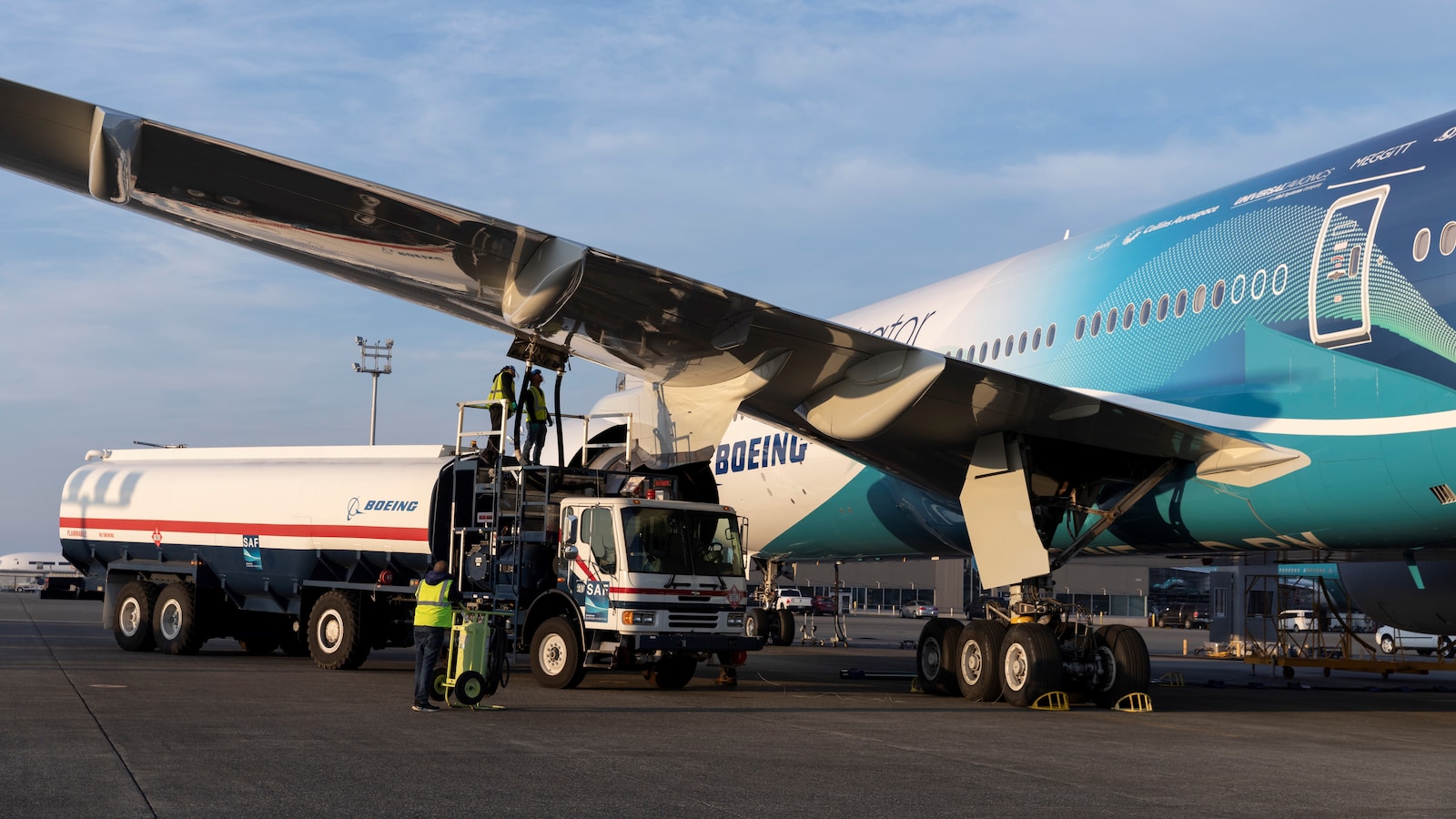
India is preparing to use more sustainable aviation fuel, or SAF, in airplanes.
SAF is meant to help reduce the carbon impact of flying.
A report by Boeing and the Roundtable on Sustainable Biomaterials says India is 52% ready for wider SAF adoption.
India plans to blend 1% SAF into aviation fuel by 2027.
The target rises to 2% in 2028 and 5% in 2030.
At the 2030 target, airlines may need about 720 million litres of SAF each year.
India may be able to produce much more SAF than that, but it still needs better financing, infrastructure, transport systems, and demand.
The report says governments, airlines, investors, researchers, and other industries must work together to build a reliable SAF supply.

A Boeing and Roundtable on Sustainable Biomaterials assessment gives India an overall SAF readiness score of 52%.
India plans SAF blending targets of 1% in 2027, 2% in 2028, and 5% in 2030.
SAF demand under the 2030 target is projected at about 720 million litres annually.
India’s estimated SAF production potential is 14–33 million tonnes per year, far above projected near-term demand.
The report identifies financing, infrastructure, logistics, market demand, policy, and industry coordination as key adoption challenges.
- Who
- India, assessed by Boeing and the Roundtable on Sustainable Biomaterials.
- What
- India received a 52% readiness score for adopting sustainable aviation fuel and is developing targets for increased SAF blending.
- When
- The assessment was released on Tuesday and describes conditions around the middle of 2026; blending targets run from 2027 to 2030.
- Where
- India, including domestic and international aviation.
- Why
- To support sustainable aviation and emissions-reduction goals as India enters the mandatory phase of the International Civil Aviation Organization’s Carbon Offsetting and Reduction Scheme for International Aviation from 2027.
- Overall SAF readiness
- 52%
- 2027 blending target
- 1%
- 2028 blending target
- 2%
- 2030 blending target
- 5%
- Projected 2030 SAF demand
- About 720 million litres, or roughly 0.6 million tonnes, annually
- Estimated production potential
- 14–33 million tonnes annually
- Lowest-scoring areas
- Market demand at 30%; investment and financing and enabling infrastructure and services at 40% each