

Archive · 14 Aug 2026
How Old Delhi's kite market comes alive for August 15
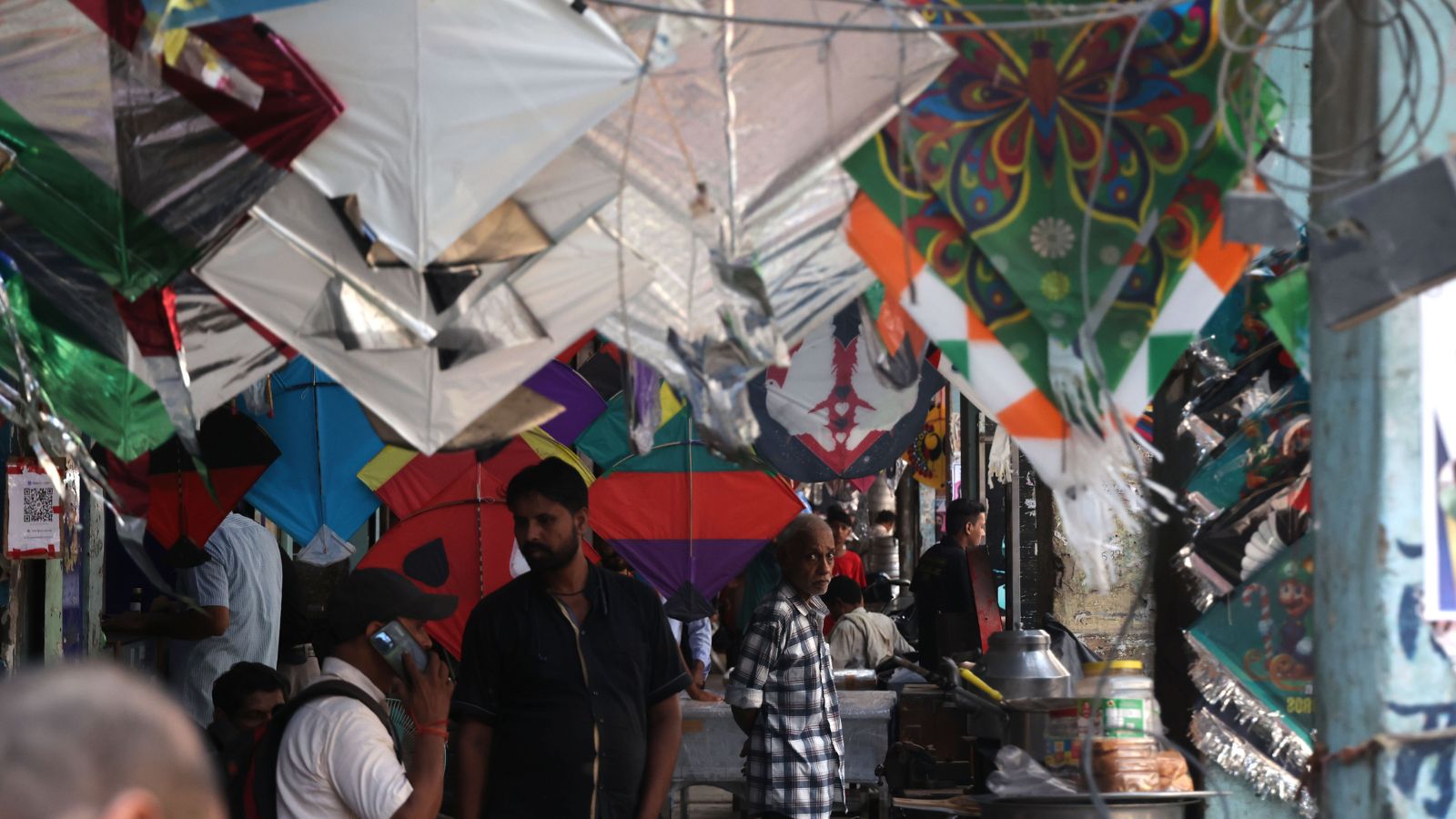
Every year before India's Independence Day, a market called Lal Kuan in Old Delhi gets filled with colourful paper kites.
Shops hang kites showing cartoon characters like Doraemon, Super Mario, Spider-Man and Chhota Bheem.
People come to buy kites to fly on August 15, when the sky is full of them.
The kites come from different cities — those from Bareilly are the most wanted, Rampur kites are cheapest, and Moradabad makes the finest ones.
Prices are as low as one rupee and can go up to 1,500 rupees, rising as August 15 gets closer.
Kites come in sizes such as Majholi, Addhi, Pauni and Tawa, and the largest, 6 Tawa, is used in competitions.
A strong cotton thread called saddi is used to fly them, wound on wooden spools called charkhis.
Dangerous glass-coated string called manja is banned because it hurts people, birds and animals, but traders complain their safe cotton thread is sometimes mistaken for it during raids.
There is even a rooftop festival called Patang Aur Pech where families fly kites and watch fireworks over Chandni Chowk and Jama Masjid.
The kite tradition makes Independence Day in Old Delhi feel like Diwali.

Lal Kuan in Old Delhi, described as one of India's biggest wholesale kite markets, fills with kites ahead of Independence Day.
Kite prices range from Re 1 to Rs 1,500 and rise as August 15 approaches.
Kites from Bareilly are the most in demand, Rampur kites are cheapest, and Moradabad kites are considered the finest but expensive.
Nylon and glass-coated manja is banned, but traders at Lal Kuan say traditional cotton saddi is often swept up in anti-manja raids.
Abu Sufiyan Khan's Patang Aur Pech Festival, a rooftop kite-and-fireworks event in Old Delhi, has grown from 30 guests to nearly 200.
- Who
- Traders such as Jamal Ahmed, Mohammad Khalid, Mohammed Adil and Utkarsh Gupta, along with shoppers and kite enthusiasts at Lal Kuan market in Old Delhi.
- What
- Old Delhi's Lal Kuan wholesale kite market comes alive before Independence Day, with shops overflowing with kites and cotton saddi thread for the August 15 festivities.
- When
- For a few weeks each year leading up to August 15, with the sales season beginning around the summer holidays.
- Where
- Lal Kuan market in Old Delhi, India, near the Chawri Bazar Metro station.
- Why
- Kite flying is a popular Independence Day tradition in India, so demand for kites and thread surges as August 15 approaches.
Regulators and safety advocates
Kite traders and enthusiasts
Ban on dangerous kite string
Regulators and safety advocates
Nylon and glass-coated manja causes injuries and deaths involving people, birds and animals, so it must be banned and enforcement carried out through raids.
Kite traders and enthusiasts
Traders say harmless traditional cotton saddi is often swept up in raids meant for nylon threads and manja, punishing legitimate kite sellers.
Kite flying versus safety
Regulators and safety advocates
Restrictions on abrasive kite string protect human life, birds and animals from serious harm.
Kite traders and enthusiasts
Kite flying is a beloved Independence Day tradition with strong cultural pull, and competitive flyers still reserve manja for the cutting edge of their setups.
- Market
- Lal Kuan, Old Delhi — one of India's biggest wholesale kite markets
- Price range
- Re 1 to Rs 1,500, rising as August 15 nears
- Kite sources
- Bareilly (most in demand), Rampur (cheapest), Moradabad (finest)
- Kite sizes
- Majholi, Addhi, Pauni and Tawa (largest); biggest is 6 Tawa, used in competitions
- Charkhi thread length
- 250–500 m for beginners; 1,000–2,000 m for festival charkhis
- Manja ban
- Nylon and glass-coated kite string banned by National Green Tribunal in 2017; Delhi ban since January 2017
- Penalty for ban violation
- Fines and up to five years of imprisonment
- Patang Aur Pech Festival
- Rooftop kite-and-fireworks gathering that grew from 30 to nearly 200 guests