11 months ago
India's Banking Summit Charts Path to Global Financial Leadership
Imagine India's banks as strong muscles helping the country grow.
At a big meeting, experts talked about how these banks can get even stronger and help everyone.
They discussed how to lend more money, especially to small businesses and people who need it.
The goal is to make sure everyone has access to money and financial services.
India already leads in digital payments, and the plan is to become a global leader in banking, making it easier for all citizens to thrive financially.

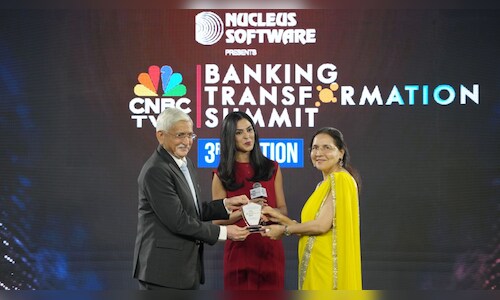
The 3rd Banking Transformation Summit convened leaders to discuss the future of India's banking sector.
India's banking sector has shown strong growth, with credit expanding.
Indian banks are encouraged to aim for global recognition by being among the world’s top 10.
The summit highlighted the importance of retail and MSME lending in inclusive growth.
India is a global leader in digital banking, with UPI leading the way.
- Who
- Regulators, bank leaders, fintech innovators, and industry experts
- What
- The 3rd Banking Transformation Summit discussed the future of India's banking sector, aiming for global recognition and inclusive growth.
- Where
- India
- When
- The summit took place; specific dates not mentioned.
- Why
- To chart the future of the banking sector, discuss strategies for growth, and address key issues like lending, fintech, and inclusivity.
Key facts
- Summit Name
- 3rd Banking Transformation Summit
- Organizers
- CNBC-TV18, Nucleus Software
- Key Theme
- India's banking sector growth & global recognition
- Retail Lending
- 32% of total credit
- MSME Credit
- 18% of total lending (March 2025)
- UPI Transactions (August 2025)
- Over 2,000 crore
- UPI Transaction Value (August 2025)
- ₹24.85 lakh crore
Quotes
M. Nagaraju
Secretary (FS), Ministry of Finance
“As we transition from the world’s fourth-largest economy to the third, Indian banks must aim for global recognition by featuring among the world’s top 10. This requires building larger institutions with secure capital bases and sustained credit growth.”
 CNBC TV 18
“India’s economic rise demands banking muscle.”
CNBC TV 18
RBI Deputy Governor M Rajeshwar Rao
RBI Deputy Governor
“The rise in retail and MSME lending reflects how the sector is deepening its reach and supporting productive growth. The goal is not just universal bank accounts, which Jan Dhan Yojana has largely achieved, but affordable credit, insurance, and investment options for every citizen. Credit directed toward MSMEs, infrastructure, and rural India ensures a Samaveshi Viksit Bharat.”
CNBC TV 18
“While 40% of MSME credit needs are currently met, this also represents a huge potential for expansion. Banks and financial institutions have an opportunity to bridge this gap, bringing access to productive sectors and contributing to Bharat’s next phase of inclusive growth.”
CNBC TV 18
Parag Bhise
CEO & Executive Director, Nucleus Software
“Banking today must be more than digital-it must be AI-powered, credit-driven, and purpose-built for Bharat. The future belongs to banks that can combine technology, resilience, and inclusivity to build trust at scale. Together with regulators and financial institutions, we are shaping banking that not only powers India but globalises Bharat.”
CNBC TV 18
Vishnu R. Dusad
Managing Director & Co-founder, Nucleus Software
“India’s contribution to global real-time payments is a testament to our leadership in digital banking. With UPI processing over 2,000 crore transactions worth ₹24.85 lakh crore in August 2025, India is not just adopting technology - we are driving the future of global finance. Our journey is about more than growth; it’s about reshaping banking for both urban and rural India, making financial services truly inclusive and accessible for all.”
CNBC TV 18

Shereen Bhan
Managing Editor, CNBC-TV18
“The summit has become a critical platform for discussing how India can harness technology, credit, and innovation to drive inclusive growth. With banks playing an increasingly central role in the economy, dialogues like these are essential to shaping policies and strategies for a Viksit Bharat.”
CNBC TV 18