

Archive · 29 Oct 2025
Falling Elephant Numbers Demand Urgent Conservation Measures
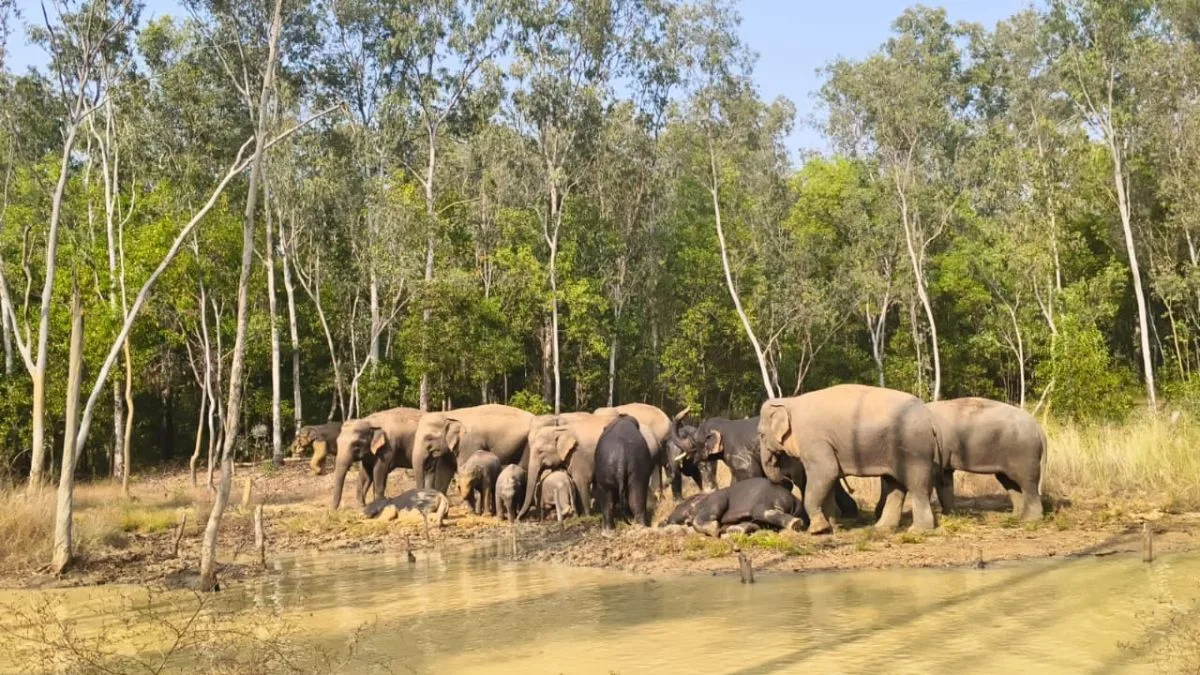
Imagine we did a headcount of elephants across India.
The new headcount shows there are fewer elephants now than there were a few years ago.
Scientists used a new, high-tech method for this headcount, kind of like using DNA to identify each elephant, which is more accurate than older ways.
Some places, like the northeast and western parts of India, have lost a lot of elephants.
Many elephants are getting hurt or dying because their homes are shrinking due to roads and railways being built.
Also, many elephants are electrocuted, and some get hit by trains.
This means we need to do more to protect their homes and make sure they are safe.

India's Asian elephant population has decreased from 29,964 in 2017 to 22,446 in 2025, a decline of nearly 25%.
A new DNA-based mark capture-recapture methodology was used, considered more accurate than previous methods like block counts and dung counts.
Significant population drops were observed in the Northeastern hills, Brahmaputra floodplains, central Indian Highlands, Eastern Ghats, and Western Ghats landscapes.
Habitat degradation, fragmentation due to infrastructure development, electrocution (70% of unnatural deaths), and train collisions are major threats.
Conservationists are urging for the restoration of elephant corridors and habitats, stricter enforcement of forest laws, and more humane handling of human-elephant conflict.
- Who
- Wildlife Institute of India, state forest departments, and wildlife conservationists
- What
- A recent census reveals a significant decline in the Asian elephant population, prompting calls for conservation action.
- When
- The census results were released based on data collected between 2021-2025, with comparisons to the 2017 census.
- Where
- Across India, with notable declines in the Northeastern hills, Brahmaputra floodplains, central Indian Highlands, Eastern Ghats, and Western Ghats.
- Why
- Habitat degradation and fragmentation, retaliatory fencing, electrocution, train collisions, and potentially flawed past census methodologies are cited as contributing factors.
Past Census Methods
Current Census Methods
Accuracy
Past Census Methods
Older methods like block count and dung count, when used individually, tended to overestimate elephant numbers.
Current Census Methods
The DNA-based mark capture-recapture methodology is scientifically peer-reviewed and provides a more accurate population estimate.
Population Figures
Past Census Methods
Prior to 2007, tiger census using pug-marks reported inflated numbers (over 20,000), which drastically dropped to 1,411 with peer-reviewed methods.
Current Census Methods
The current elephant census reflects a real decline, though the previous methods may have masked earlier population trends.
- Estimated Elephant Population (2025)
- 22,446
- Estimated Elephant Population (2017)
- 29,964
- Population Decline
- Approximately 25% in eight years
- New Census Methodology
- DNA-based mark capture-recapture
- Primary Cause of Unnatural Deaths
- Electrocution (70%)
- Other Causes of Death
- Train collisions, poaching