

Archive · 28 Jul 2026
AI Tokenization: The New Economic Divide
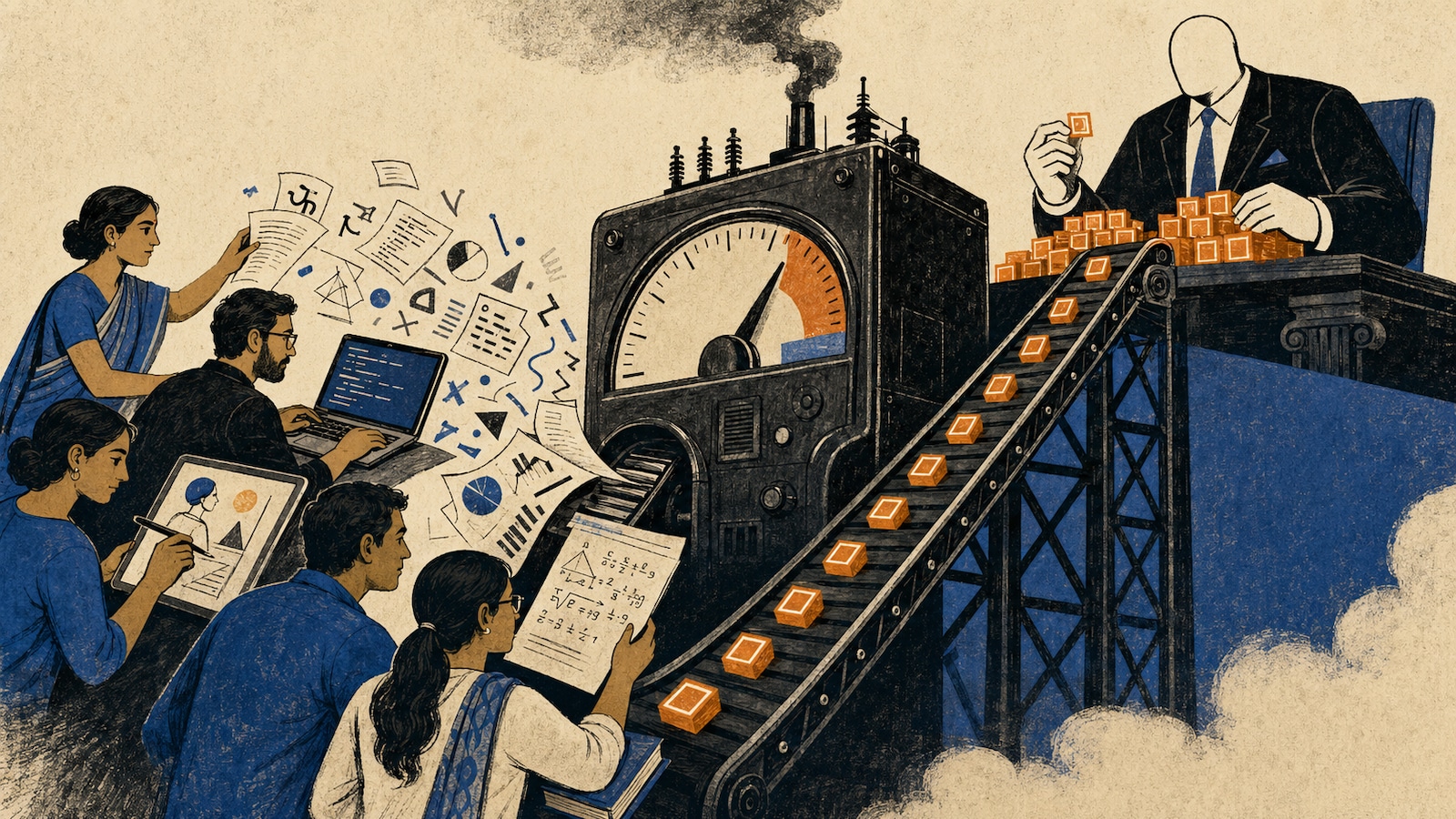
AI is changing how skills are used and paid for.
Instead of hiring people, companies can now use AI to do tasks like writing, coding, and designing.
This is done by breaking down skills into small pieces called tokens, which are then counted and billed.
While this makes things cheaper and more efficient for businesses, it also means that many workers might lose their jobs or find it harder to get ahead.
Some people think this is good because it makes advanced skills available to more people.
Others worry that it puts too much power in the hands of a few companies that control the AI systems.
The big question is who will benefit the most from this new way of using skills.

AI tokenization converts human skills into small, billable units of work.
Companies can now rent AI-generated approximations of human skills instead of hiring people.
AI does not need to replace entire professions to disrupt their economics.
The economic benefits of AI are concentrated in the hands of a few companies.
AI adoption is growing faster in the Global North than in the Global South.
- Who
- Businesses, workers, and AI companies.
- What
- The tokenization of human skills by AI systems.
- When
- Currently and projected into the future.
- Where
- Globally, with varying adoption rates.
- Why
- To increase productivity, reduce costs, and control access to skills.
Pro-AI Tokenization
Anti-AI Tokenization
Economic Efficiency
Pro-AI Tokenization
AI tokenization increases productivity and reduces costs, benefiting businesses and consumers.
Anti-AI Tokenization
AI tokenization devalues human labor and exacerbates economic inequality.
Access to Skills
Pro-AI Tokenization
AI makes advanced skills accessible to a broader range of people and businesses.
Anti-AI Tokenization
AI concentrates control of skills in the hands of a few, reducing opportunities for individual workers.
Job Displacement
Pro-AI Tokenization
AI augments human capabilities, creating new jobs and industries.
Anti-AI Tokenization
AI displaces workers, particularly in routine and entry-level positions, narrowing pathways to expertise.
- Token
- Small pieces of data processed by AI systems, counted and priced.
- AI Work Unit
- The fundamental unit of AI work, according to Deloitte.
- AI Adoption Growth
- 50% increase in worker access to approved AI tools in a year.
- Global AI Adoption
- Growth in the Global North is nearly twice as fast as in the Global South.
- AI Productivity Growth
- Stronger productivity growth at companies most exposed to AI.