

Archive · 28 Jul 2025
Scientists Disagree on Potential Life Signs on K2-18b
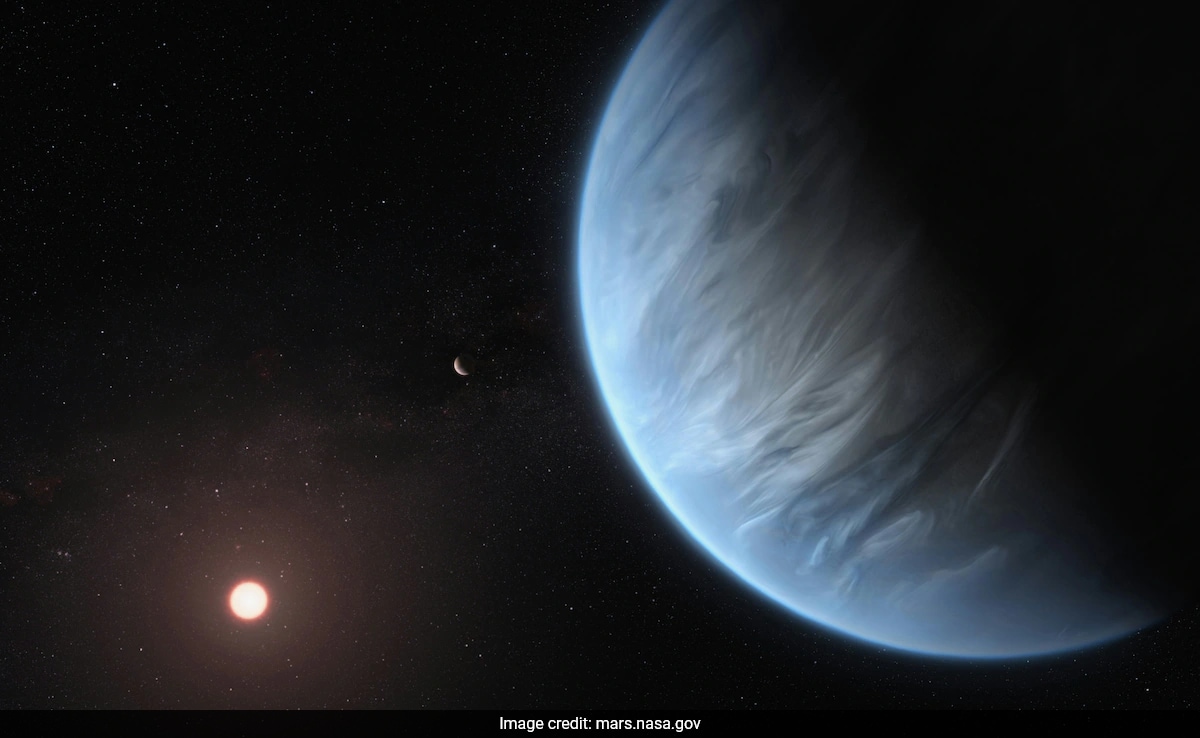
Scientists are studying a planet called K2-18b, which is very far away.
They looked for signs of life using a special telescope.
At first, they thought they saw a gas called dimethyl sulphide (DMS), which on Earth is made by tiny sea creatures.
However, other scientists used different methods and didn't find enough proof of DMS.
Now they aren't sure if DMS is really there.
The planet might be a 'Hycean world,' which means it has a lot of water and a hydrogen-rich atmosphere.

Scientists investigated exoplanet K2-18b for potential signs of life.
Initial research suggested the presence of dimethyl sulphide (DMS).
Follow-up analyses using different models found no conclusive evidence of DMS.
Researchers disagree on the existence of DMS, a weak signal at best.
K2-18b is a 'Hycean world' with a hydrogen-rich atmosphere and vast ocean.
- Who
- Scientists at various institutions, including the University of Cambridge and the California Institute of Technology.
- What
- Researchers are investigating the potential for life on exoplanet K2-18b.
- When
- Recent analysis using JWST data.
- Where
- K2-18b, located 124 light-years away in the constellation Leo.
- Why
- To determine if signs of life exist on exoplanet K2-18b.
Initial Findings
Revised Findings
DMS Presence
Initial Findings
Initial data analysis suggested potential presence of dimethyl sulphide (DMS) in the atmosphere.
Revised Findings
No statistical evidence for the existence of dimethyl sulphide (DMS).
- Planet Name
- K2-18b
- Distance from Earth
- 124 light-years
- Constellation
- Leo
- Telescope
- James Webb Space Telescope (JWST)
- Diameter
- Approximately 2.6 times Earth's
- Mass
- Approximately 8.6 times Earth's