Archive · 6 Jan 2026
NASA Hubble Discovers Unique Dark Matter Cloud

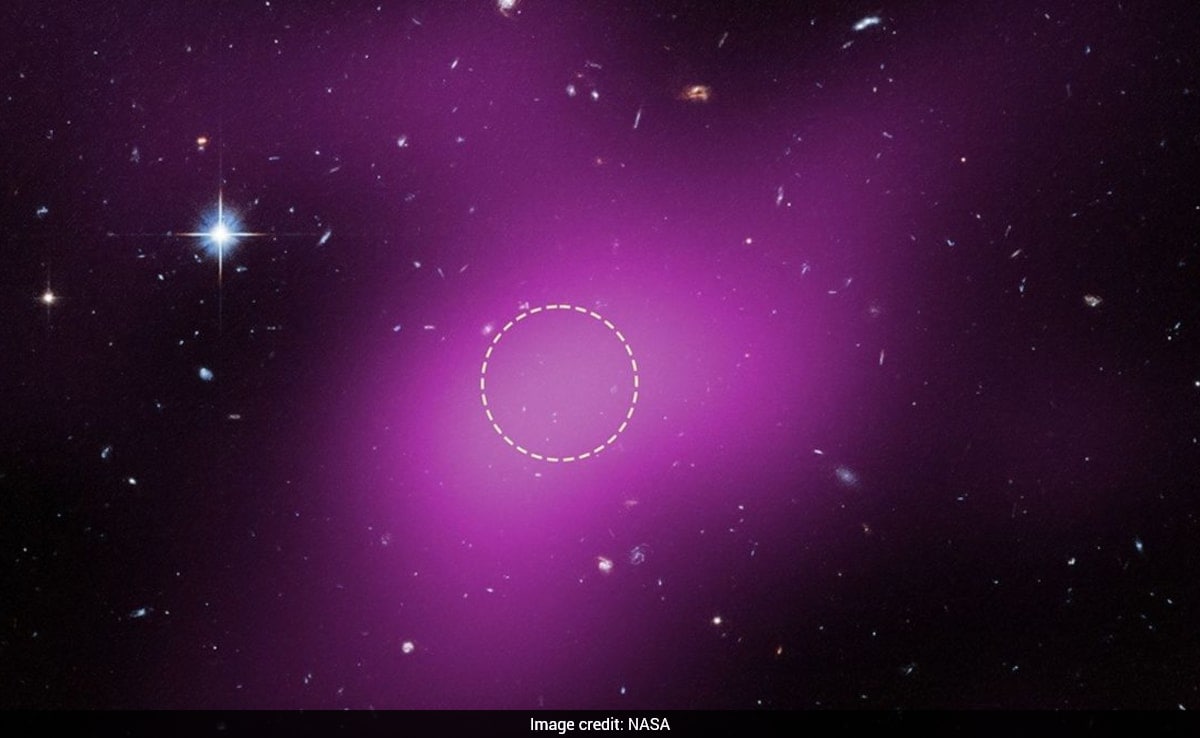
NASA's Hubble telescope found a special cloud in space called Cloud-9.
It's very far away, about 14 million light-years from Earth.
This cloud is different because it doesn't have any stars, but it has a lot of gas and something called dark matter.
Scientists think it's a leftover piece from when galaxies were forming a long time ago.
They call it a 'failed galaxy' because it didn't gather enough gas to make stars.
This discovery is important because it helps us learn about how galaxies are made and what the early universe was like.
It also gives us a rare look at dark matter, which is hard to study.
The Hubble telescope took pictures and found no stars in the cloud, which proves their theory right.
Scientists believe there might be many more of these dark matter clouds in the universe.

NASA's Hubble telescope discovered a unique, starless cloud named Cloud-9, located 14 million light-years from Earth.
Cloud-9 is a 'Reionisation-Limited H I Cloud' and is considered a relic of early galaxy formation, dominated by dark matter.
The discovery was published in The Astrophysical Journal Letters and is the first such object seen in the Universe.
Hubble's Advanced Camera for Surveys confirmed the absence of stars, supporting the theory of a 'failed galaxy'.
Scientists believe Cloud-9 provides a 'window into the dark universe' and may help understand galaxy formation and dark matter.
- Who
- NASA's Hubble Space Telescope and research team including Alejandro Benitez-Llambay and Andrew Fox
- What
- Discovery of a unique, starless, gas-rich cloud dominated by dark matter, named Cloud-9
- When
- Results published in The Astrophysical Journal Letters, NASA's official press release on January 5
- Where
- Located 14 million light-years from Earth
- Why
- To understand galaxy formation, the early universe, and the nature of dark matter
- Object Name
- Cloud-9 (Reionisation-Limited H I Cloud)
- Distance from Earth
- 14 million light-years
- Discovery Tool
- Hubble Space Telescope
- Publication
- The Astrophysical Journal Letters
- Key Feature
- Starless, gas-rich, dominated by dark matter
- Significance
- First such object seen in the Universe
- Research Team
- Alejandro Benitez-Llambay, Andrew Fox