

Archive · 13 Nov 2025
Turkey's Media Throttled by Takeovers, Pressure, and Criminal Cases
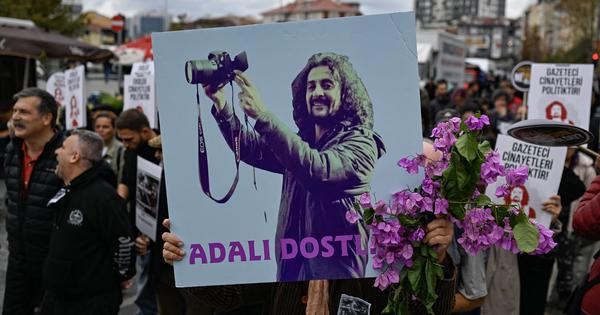
Imagine Turkey is like a big playground where kids used to be able to share their toys and talk about anything.
But lately, some adults are making it harder for them.
Some kids who talk about things the adults don't like have gotten into trouble, and a few have even been hurt.
The adults have also made new rules, like a 'no-talking-bad-stuff' rule that can get people in trouble.
They've also made sure that the toys (like TV channels and newspapers) are mostly owned by friends of the adults, who then tell the stories the adults want told.
It’s like the adults are trying to control what everyone hears and sees.
Because of other grown-ups in charge of different playgrounds (like in Europe and America) who need Turkey's help with big problems, they aren't saying much about what's happening on this playground.
This means the kids who want to share different ideas find it very hard to be heard.

Journalist Hakan Tosun died after a street attack, highlighting the dangers faced by reporters in Turkey.
Turkey ranks 159th out of 180 countries for press freedom, with around 170 journalists killed, detained, or missing since 2013.
The Turkish government employs tactics including forced takeovers, ownership concentration, regulatory pressure, and criminal charges to control media.
Laws like the 2022 disinformation statute allow for prison sentences for publishing 'false' information.
Geopolitical alliances have reduced international pressure on Turkey regarding its media freedom record.
- Who
- Turkish journalists, media outlets, and the Turkish government under President Recep Tayyip Erdoğan.
- What
- Journalists and media outlets in Turkey face increasing pressure, including physical attacks, arrests, legal charges, forced takeovers, ownership concentration, and regulatory/economic pressure, leading to a significant throttling of press freedom.
- When
- The article references events from 2007 to March 2025, highlighting ongoing trends and specific incidents.
- Where
- Turkey, with specific mentions of Istanbul and İzmit.
- Why
- The Turkish government has employed multiple strategies over two decades to tighten control over the media, aiming to amplify its own narrative and constrain critical voices, while geopolitical alliances have reduced international pressure on Ankara regarding press freedom.
Journalists and Press Freedom Advocates
Turkish Authorities
Safety of Journalists
Journalists and Press Freedom Advocates
Journalists face significant danger, including physical attacks and killings, linked to their work. This is evidenced by cases like Hakan Tosun and others, and highlighted by low press freedom rankings.
Turkish Authorities
The government's actions are not aimed at suppressing journalism, but rather at maintaining order and prosecuting those who spread disinformation or engage in illegal activities. The cases cited are related to alleged crimes, not reporting.
Media Control Mechanisms
Journalists and Press Freedom Advocates
The government uses forced takeovers, installations of state-approved trustees, ownership concentration through friendly conglomerates, and regulatory/economic pressure (fines, bans, advertising suspensions, online blocking) to control the media and silence critical voices.
Turkish Authorities
The government aims to manage the media landscape to its advantage and counter 'disinformation'. Takeovers and ownership changes are presented as business or legal processes, and regulatory actions are to enforce laws.
International Scrutiny and Alliances
Journalists and Press Freedom Advocates
Western governments' criticism of Turkey's press freedom has faded due to Turkey's geopolitical importance (NATO, Ukraine war, Middle East, refugee management), creating an environment where domestic crackdowns can persist.
Turkish Authorities
Turkey's strategic importance to Western nations is a matter of international relations, separate from domestic media policies. The government focuses on its own internal affairs and managing its international image.
- Press Freedom Ranking
- 159th out of 180 countries (Reporters Without Borders)
- Journalists Killed/Detained/Missing since 2013
- Approximately 170
- Disinformation Law
- Enacted in 2022, allows up to three years in prison for publishing disinformation
- State Broadcaster
- TRT (including TRT World)
- Key Media Takeovers/Seizures
- Bugün TV, Kanaltürk (2015), Zaman (2016)
- Major Media Group Sale
- Doğan Media Group to Demirören Holding (2018)