

3 weeks ago
Commerce vs Carnival: America and Brazil Experience Football Differently
The FIFA World Cup is a huge football (soccer) tournament.
In 2026, it was played in North America and lasted 39 days.
The morning after the last game, people in New York went to work just like on any normal Monday.
Only a few people stood at the FIFA Store in Times Square, and hardly anyone talked about the World Cup.
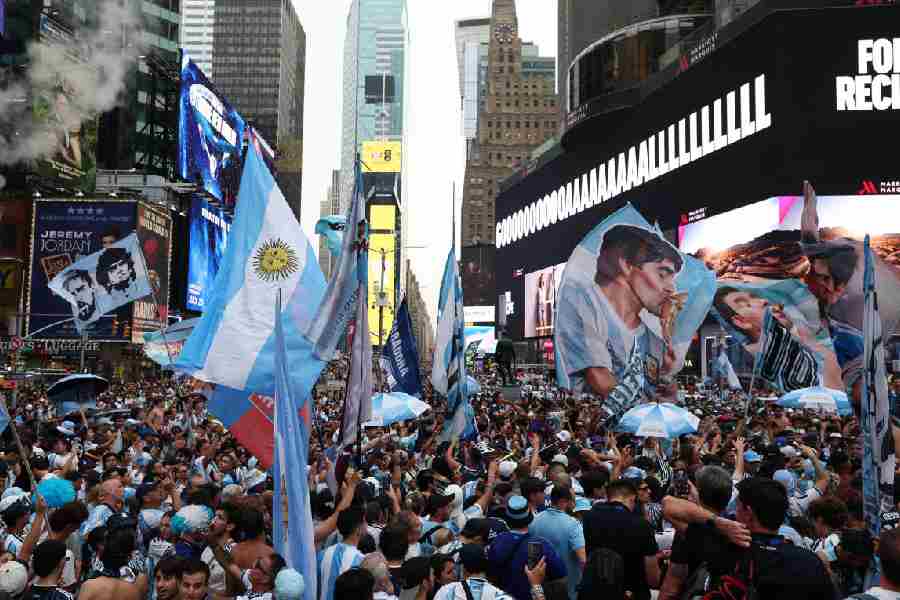
But the night before, restaurants were full of cheering fans, and Times Square looked like a sea of blue and white after Spain scored against Argentina.
The article compares this with Brazil in 2014, when people kept celebrating on Rio de Janeiro's beaches for days after the World Cup ended.
A Brazilian journalist said the US gives 'scale,' with big stadiums and big business, while Brazil gives 'soul.'
It also remembers Pele, who brought football to America in the 1970s by joining the New York Cosmos.
Today, young fans follow Lionel Messi, who plays for Inter Miami.
The story shows that the same sport can feel very different in different countries.

On July 20, the first day after the 39-day FIFA World Cup, New York went about its business like any other Monday, with little World Cup talk on the streets.
The night before, Manhattan restaurants were packed with cheering fans and Times Square was 'a sea of blue and white' after Ferran Torres scored against Argentina, with Spanish supporters celebrating their triumph.
The article contrasts this with Brazil's 2014 World Cup, when Copacabana and Ipanema beaches were 'throbbing' two days after Germany beat Argentina at the Maracana.
A Brazilian journalist in Atlanta said: 'One nation supplies scale, the other supplies soul. The US built billion-dollar stadiums, we created football folklore.'
Former US Soccer Federation president Sunil Gulati cited US diversity and varied weather as challenges, while the piece says Pele's 1970s move to the New York Cosmos planted football's first seeds in America and young fans now follow Messi.
- Who
- New Yorkers and visiting football fans in New York City, a Brazilian journalist in Atlanta, former US Soccer Federation president Sunil Gulati, and, as reference points, Pele's legacy with the New York Cosmos and Lionel Messi of Inter Miami.
- What
- An analysis of how America and Brazil experience football differently, observed the day after the 39-day FIFA World Cup ended in North America.
- Where
- New York City (Times Square and Manhattan), contrasted with Rio de Janeiro, Brazil, and referenced from Atlanta.
- When
- July 20, 2026 — the first day after the World Cup's final — with comparisons to Brazil's 2014 World Cup and Pele's 1970s move to the US.
- Why
- The 2026 World Cup marked the moment football's traditional heartland and its fastest-growing market began sharing responsibility for the sport's future, highlighting the difference between the US 'business of sport' and Brazil's emotional connection to the game.
The 'Soul' View
The 'Scale' View
How football should feel
The 'Soul' View
Football should be lived emotionally, as in Brazil — after the 2014 World Cup people stayed on Rio's beaches for days, and hospitality such as a Rio chef accommodating Muslim and Hindu guests is something money cannot manufacture.
The 'Scale' View
Football in the US succeeds through scale — packed billion-dollar stadiums, mind-blowing viewership and the world's most competitive sporting marketplace — and New York's return to normal the next morning shows people simply minding their own business.
Growing football in America
The 'Soul' View
Many US fans remain aloof from the game; it was mostly migrants and foreign crowds who discussed Argentina's matches or Lamine Yamal's skills, and Pele's legacy survives only through a struggling third-tier New York Cosmos team.
The 'Scale' View
The US is football's fastest-growing market, and the 2026 World Cup marked the sport's heartland and market truly sharing responsibility for its future; former US Soccer president Sunil Gulati notes the US faces different challenges, such as diversity and varied weather, not a lack of engagement.
Key facts
- Event
- FIFA World Cup, a 39-day tournament; the 2026 edition was hosted in North America
- Date observed
- July 20, 2026, the first day after the World Cup final
- Location of report
- New York City (Times Square, Manhattan), with comparisons to Rio de Janeiro, Brazil
- Night-before scene
- Manhattan restaurants full of fans; Times Square 'a sea of blue and white' after Ferran Torres scored against Argentina
- 2014 comparison
- Copacabana and Ipanema beaches 'throbbing' two days after Germany beat Argentina at the Maracana
- Key quote
- 'One nation supplies scale, the other supplies soul. The US built billion-dollar stadiums, we created football folklore.' — Brazilian journalist
- Pele legacy
- Pele joined New York Cosmos in the 1970s; the club now plays in the third tier of US football from Paterson, New Jersey
- Modern icon
- Young fans follow Lionel Messi, the captain of Inter Miami
Quotes
Woman at the Fifa Store counter
A customer service employee at a New York soccer merchandise shop
“"One nation supplies scale, the other supplies soul. The US built billion-dollar stadiums, we created football folklore."”
 telegraphindia.com
“"That’s New York for you,"”
telegraphindia.com

Sunil Gulati
Former president of the United States Soccer Federation
“"We have a very diverse country in many different ways. So challenges are different. Weather in different parts of the country is different. Trying to play year-round outdoor soccer in Minnesota is different from trying to play in Texas year-round."”
telegraphindia.com
Sources
Related news
Indian Traveler Praises US Infrastructure, Misses India’s Airport Hospitality

Kolkata Struggles to Say Goodbye as Messi Retires

India–Brazil Friendly Tickets Go On Sale Ahead Of Kolkata Clash

Bhutia Urges Boycott of Costly India-Brazil Friendly in Kolkata
Lionel Messi’s International Retirement Closes Football’s Greatest Chapter

Subroto Cup turns inward as wars shrink international field
India to Host Brazil in Historic Kolkata Friendly
