

Archive · 26 Jul 2026
Invasive Flowerhorn Cichlids Threaten Philippine Lake Ecosystem
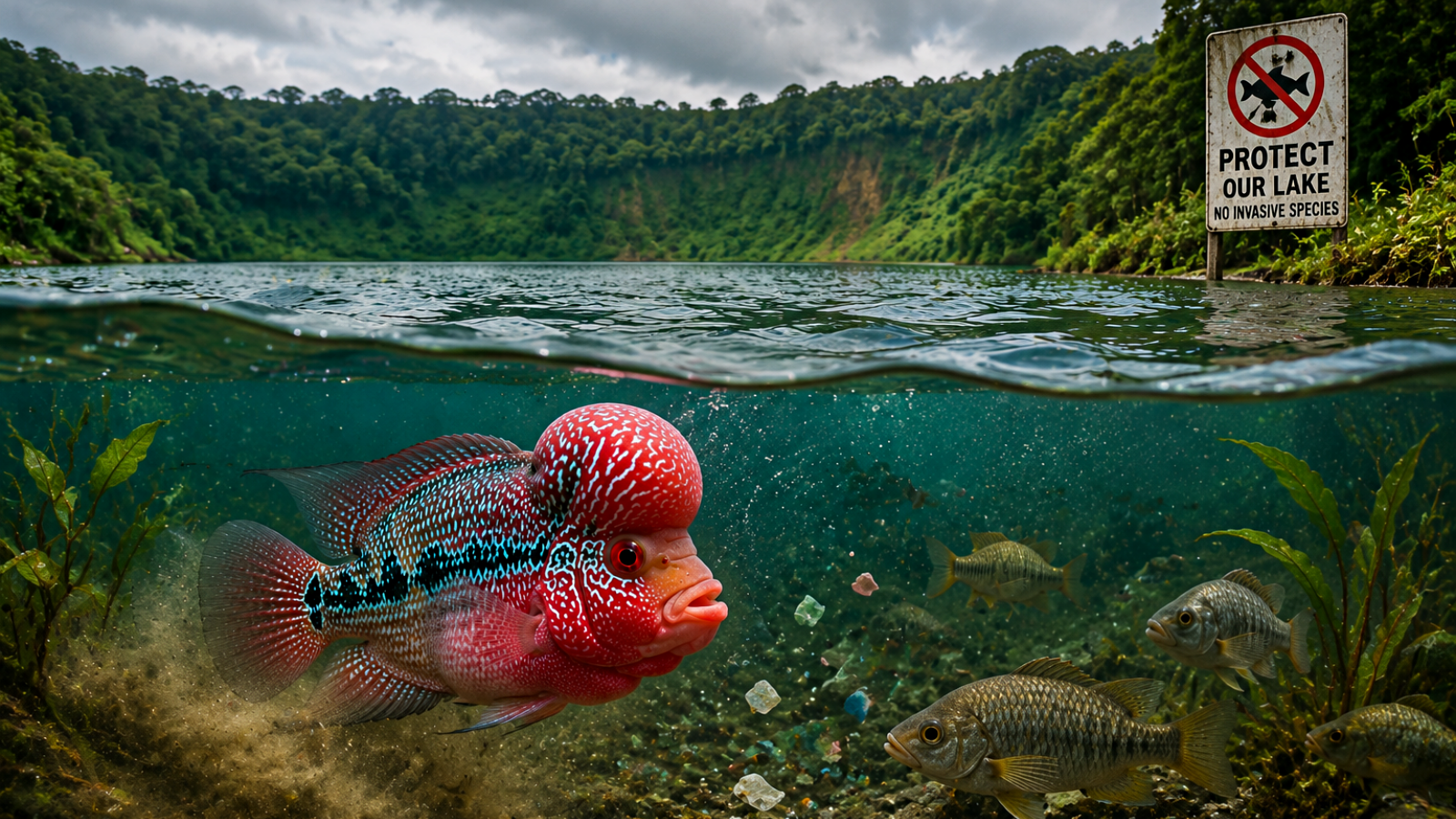
Scientists in the Philippines are worried about a type of colorful fish called flowerhorn cichlids that escaped from breeding places into a lake called Lake Sampaloc.
These fish were made by people for aquariums and were never meant to live in the wild.
Now, they might be hurting the other fish and animals in the lake.
Scientists are also checking if these fish could make people sick, but they are not sure yet.
This shows how important it is to be careful with pets and not let them into the wild.

Flowerhorn cichlids, ornamental fish, escaped into Lake Sampaloc in the Philippines during a typhoon.
Scientists fear they may disrupt the lake's native biodiversity.
These fish were selectively bred for the ornamental fish trade and were not meant to survive in natural ecosystems.
They may compete with native species for food and habitat, and alter the ecological balance.
Researchers are also investigating potential human health risks from parasites the fish might carry.
- Who
- Scientists from Ateneo de Manila University
- What
- Invasive flowerhorn cichlids escaping into Lake Sampaloc
- When
- During a typhoon (specific date not mentioned)
- Where
- Lake Sampaloc, Philippines
- Why
- To study the impact of invasive species on native ecosystems and potential human health risks
Conservationists
Aquarium Enthusiasts
Impact on Native Species
Conservationists
Flowerhorn cichlids pose a significant threat to native species by competing for resources and altering the ecological balance.
Aquarium Enthusiasts
The impact on native species is not yet fully understood and may be overstated.
Human Health Concerns
Conservationists
There is a potential risk that flowerhorn cichlids may carry parasites that could infect humans.
Aquarium Enthusiasts
No concrete evidence has been found to support the claim that these fish pose a direct threat to human health.
- Location
- Lake Sampaloc, Philippines
- Species
- Flowerhorn Cichlids
- Source of Escape
- Breeding facilities during a typhoon
- Research Institutions
- Ateneo de Manila University Department of Biology and the Ateneo Aquatic and Fisheries Resources Laboratory
- Potential Risks
- Disruption of native biodiversity, potential human health concerns