

Archive · 10 Dec 2025
Ancient hanging coffins linked to Bo people
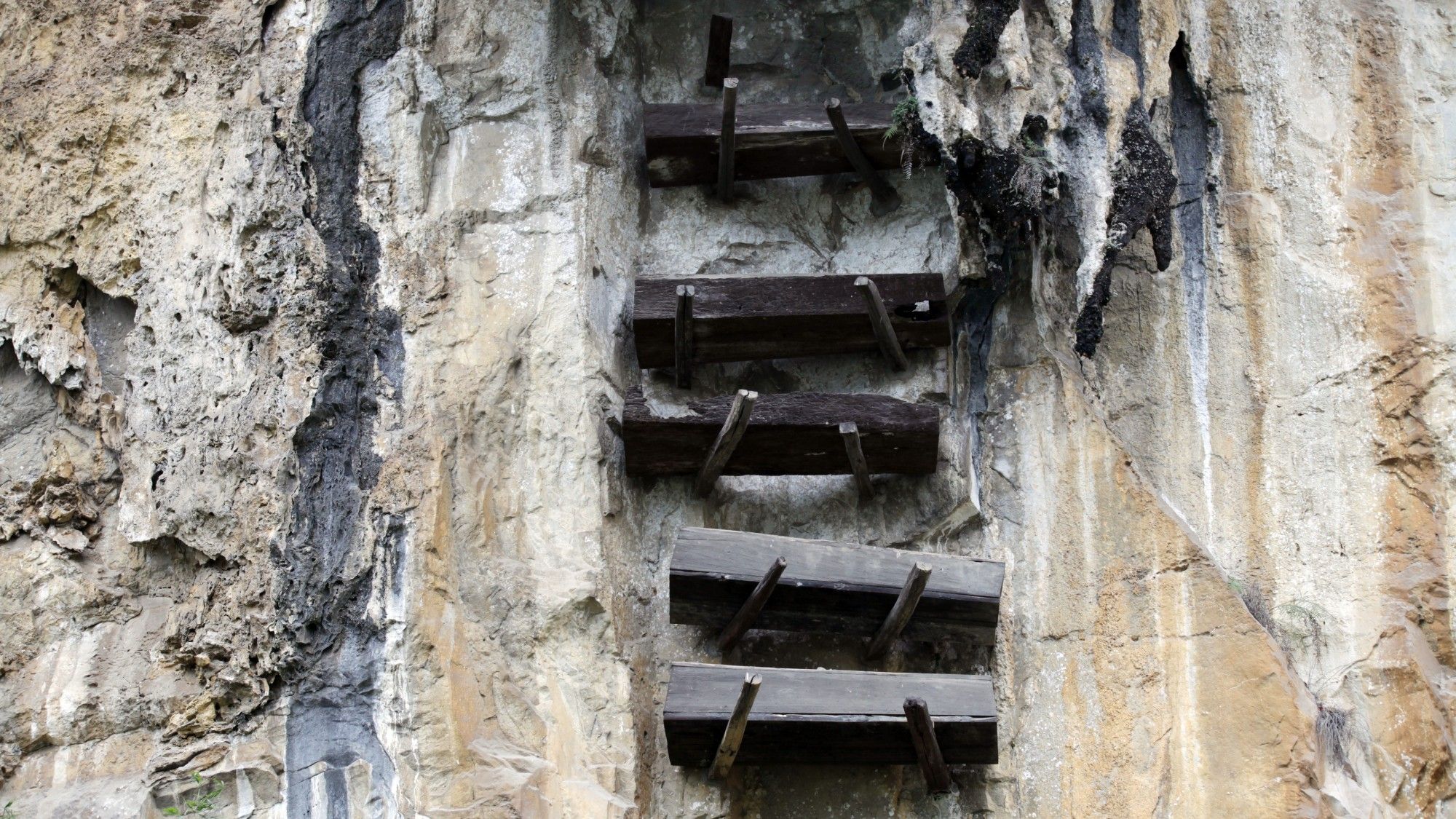
A long time ago, people in southern China used to hang coffins in high cliffs to bury their dead.
This was done by a group called the Bo people, who are still around today.
They used special tools to climb the cliffs and place the coffins.
The higher the coffins were, the more lucky it was thought to be.
Scientists studied old bodies from these coffins and found they were related to the Bo people.
This tradition was also found in other places like Thailand, the Philippines, and Indonesia, where different groups had similar burial customs.

Ancient hanging coffins in southern China were linked to the ancestors of the Bo people.
The practice involved placing wooden coffins in cliff crevices using scaffolding or pulleys.
Higher coffins were considered more auspicious and propitious for the dead.
Genome sequencing confirmed the remains as ancestors of the Bo people, dating back 2,000 years.
Similar burial customs were found in other cultures, such as the Kankanaey in the Philippines and the Toraja in Indonesia.
- Who
- Ancestors of the Bo people, a minority ethnic group in southern China
- What
- Practice of hanging coffins in cliffs for burial
- When
- Up to 2,000 years ago
- Where
- Yunnan and Fujian provinces, China, and possibly Myanmar, Laos, and Thailand
- Why
- Considered auspicious and propitious, with higher coffins being more favorable
- Location
- Yunnan and Fujian provinces, China
- Ethnic Group
- Bo people
- Time Period
- Up to 2,000 years ago
- Study Journal
- Nature Communications
- Burial Method
- Hanging coffins in cliffs
- Other Cultures
- Kankanaey (Philippines), Toraja (Indonesia)