

Archive · 20 Jul 2026
Mumbai's Civic DNA: Wealth vs. Trust
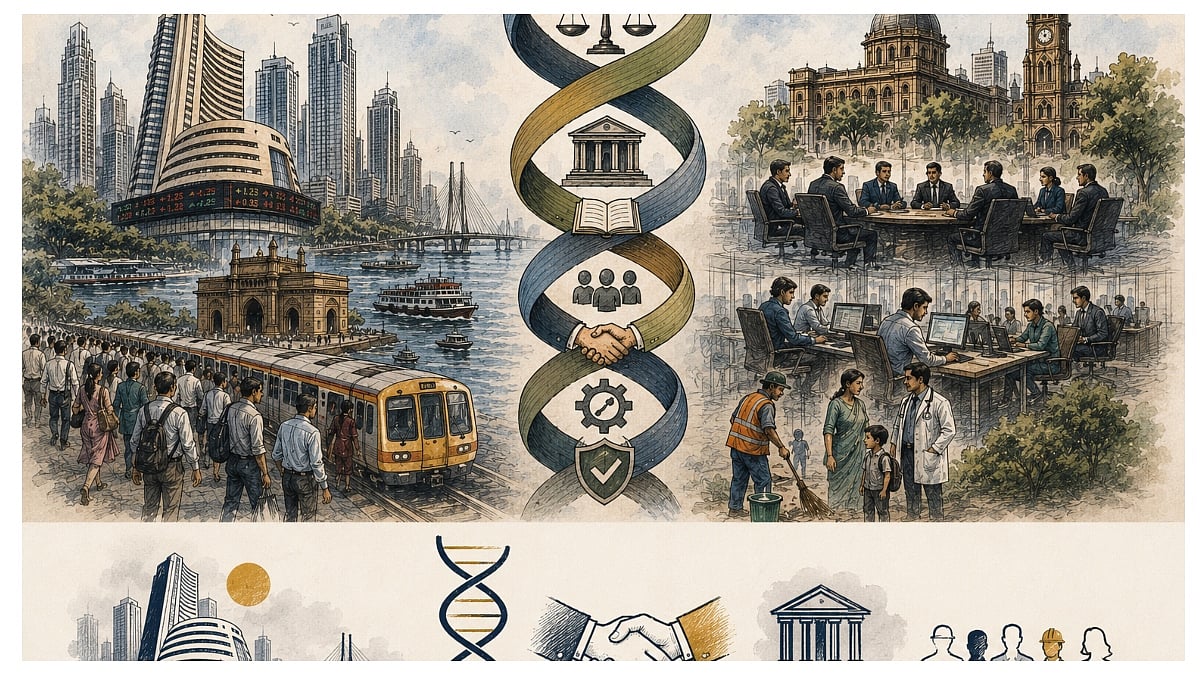
Mumbai is a very successful city in India, known for its financial markets and wealth creation.
However, the article talks about something called 'civic DNA,' which is like the invisible rules that decide how people and organizations behave.
This includes things like trust, merit, and public purpose.
The article says that while Mumbai is doing well economically, it faces challenges like long commutes, high housing costs, and workplace pressure.
It also mentions that stress can affect how people make decisions.
The article suggests that for Mumbai to keep being successful, it needs to focus on building stronger institutions, healthier workplaces, and more transparent governance.
In other words, it's not just about making money, but also about creating a city where people can trust each other and work together well.

Mumbai is India's financial capital, known for its rapid wealth creation.
The city's civic DNA, which includes trust and institutional health, is crucial for sustained prosperity.
Challenges include exhausting commutes, high housing costs, workplace pressure, and organizational politics.
Stress hormones can influence judgment, trust, and conflict, affecting organizational outcomes.
Mumbai's future success should be measured by stronger institutions, healthier workplaces, and renewed public trust, not just economic indicators.
- Who
- Mumbai's residents, entrepreneurs, banks, and institutions
- What
- The city's economic success and the challenges to its civic DNA
- When
- Present day, with historical context
- Where
- Mumbai, India
- Why
- To understand the importance of trust and institutional health in sustaining prosperity
- City
- Mumbai
- Key Economic Measure
- Financial Capital of India
- Key Challenges
- Exhausting commutes, high housing costs, workplace pressure, organizational politics
- Key Philosophical Influence
- Aristotle, Adam Smith
- Key Neuroscience Insight
- Stress hormones influence judgement, trust, fear, and conflict