Archive · 29 Sep 2026
Trump-Xi Summit Shows Pageantry, Few Gains Amid Persistent Tensions

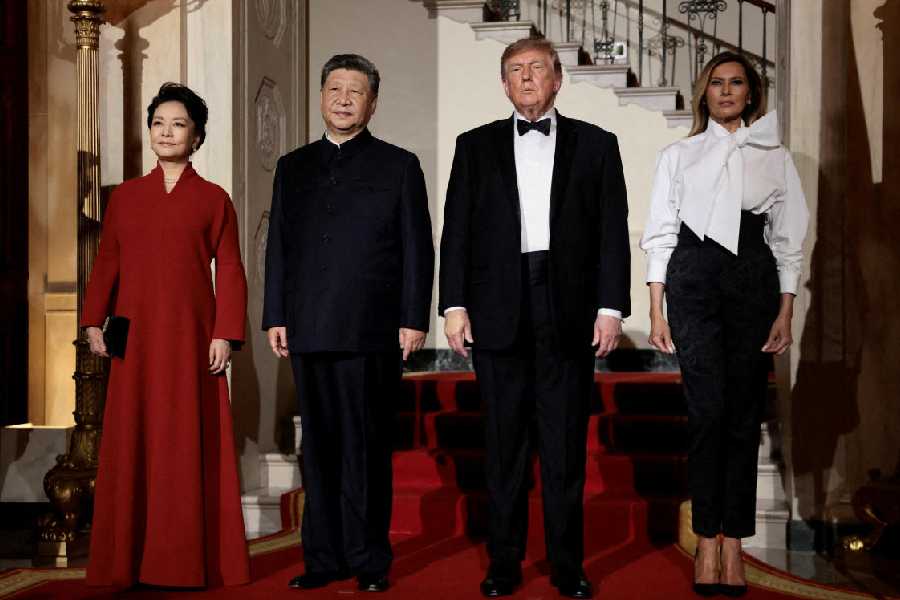
Donald Trump and Xi Jinping met in Washington to discuss disagreements between the United States and China.
The meeting included grand ceremonies and friendly public remarks.
However, the two countries made only limited progress on trade.
They discussed lowering tariffs on some goods, but did not set a date for doing so.
A larger trade agreement was delayed until next year.
China offered possible tariff cuts on some American farm products, but soybeans were not included.
The countries still disagreed about investment, Taiwan, Iran, and other political issues.
Some analysts said the summit was mainly a public-relations success for China.
US officials said continued meetings could help keep relations stable.

The summit produced agreement in principle to lower tariffs on $60 billion of non-sensitive goods, but no implementation timeline was set.
The deadline for a broader US-China trade agreement was postponed until next year.
China proposed reducing tariffs on selected US agricultural products, while soybeans were excluded from the list.
Trump praised his relationship with Xi, but analysts said the meeting did not reduce mistrust or resolve major disputes.
China maintained pressure over Taiwan, while repeated leader-level meetings could delay US arms sales and other actions Beijing opposes.
- Who
- US President Donald Trump and Chinese President Xi Jinping.
- What
- They held a high-profile summit that produced limited trade understandings but did not resolve broader US-China disputes.
- When
- The summit took place in Washington the week before the September 28 reports; further meetings were expected before the end of the year.
- Where
- Washington, United States.
- Why
- Trump wanted to demonstrate his relationship with Xi, while Washington presented continued engagement as a way to keep relations between the two countries stable.
Engagement Advocates
Critical Analysts
Value of the summit
Engagement Advocates
Washington presented repeated meetings between Trump and Xi as useful for keeping relations between the world's two largest economies stable.
Critical Analysts
Analysts said the elaborate ceremony highlighted the lack of substantive progress and gave China a public-relations victory.
Trade progress
Engagement Advocates
The United States could point to proposed Chinese tariff cuts on agricultural goods and reciprocal US reductions on products such as toys, fireworks, and Christmas ornaments.
Critical Analysts
Critics noted that the measures had no implementation timeline, the broader trade deal was delayed, and soybeans were excluded from China's list.
Taiwan and strategic effects
Engagement Advocates
Continued engagement was described as a way to manage relations while Washington considered actions including arms sales to Taiwan.
Critical Analysts
Analysts argued that frequent meetings bought Beijing time against unwanted US actions and represented a strategic gain for China and a loss for Taiwan and regional US partners.
- Tariff discussions
- The two sides said they agreed on lowering tariffs for $60 billion of non-sensitive goods, without setting a timetable.
- Broader trade deal
- The deadline for a wider trade agreement was pushed into the following year.
- US agricultural goods
- China proposed tariff cuts on products including corn and dairy.
- Excluded product
- Soybeans, a major US export, were not included on China's proposed tariff-reduction list.
- Investment
- The absence of a Chinese chief executive delegation cast doubt on a proposed two-way investment scheme.
- Taiwan
- Trump avoided discussing Taiwan publicly, despite a pending $14 billion US arms-sales package.
- Future meetings
- White House officials said Trump and Xi were also expected to meet at international forums in Shenzhen and Miami before the end of the year.