

Archive · 6 Jan 2026
Olive Ridley Turtles Navigate by Earth's Magnetic Map
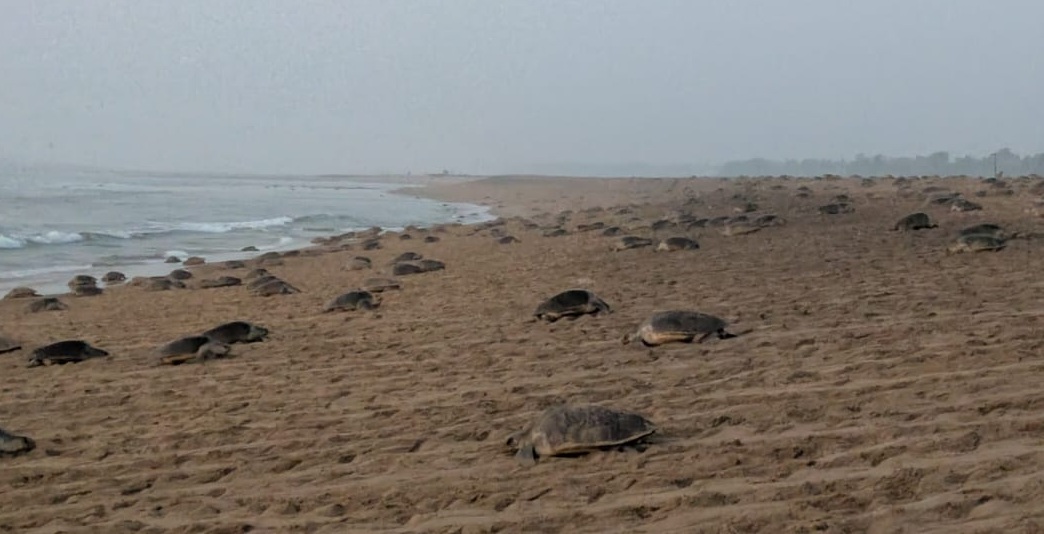
Every year, Olive Ridley sea turtles travel thousands of kilometers across the ocean to return to the same beaches in Odisha, India, where they were born.
They use Earth's magnetic fields like a built-in GPS to find their way back.
In 2025, a record 6,98,718 turtles nested at Rusikulya beach.
Scientists track these turtles to learn more about their amazing journeys.
Local communities and the government work together to protect the turtles and their eggs from predators.
This incredible natural event shows how turtles rely on ancient instincts and a delicate balance of nature to survive.

Olive Ridley turtles use Earth's magnetic fields to navigate back to their natal beaches in Odisha, India.
In 2025, a record 6,98,718 turtles nested at Rusikulya beach, surpassing the previous high of 6.37 lakh in 2023.
Turtles rely on magnetic sensing, ocean currents, and environmental cues to find their nesting sites.
Local communities and the government collaborate to protect turtles and their eggs during nesting season.
Satellite tagging programs have tracked over 12,000 turtles since 2021 to study their migration patterns.
- Who
- Olive Ridley sea turtles
- What
- Mass nesting event and navigation by magnetic sensing
- When
- February 16-24, 2025
- Where
- Gahirmatha and Rusikulya beaches, Odisha, India
- Why
- To lay eggs in their natal beaches using magnetic and environmental cues
- Species
- Olive Ridley sea turtles
- Navigation Method
- Magnetic sensing and ocean currents
- Key Locations
- Gahirmatha and Rusikulya beaches, Odisha
- Mass Nesting Event
- 6,98,718 turtles in 2025
- Tagging Program
- 12,000 turtles tracked since 2021
- Nesting Period
- February 16-24, 2025
- Fencing
- 9 km of beach fenced for protection