

Archive · 30 Jul 2025
Why Indians Were Discouraged from Migrating to Cuba
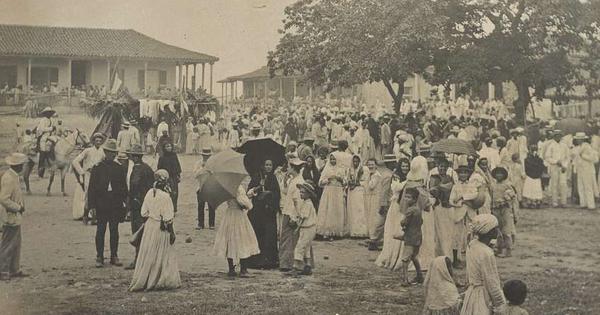
In the early 1900s, the British government told Indian people not to go to Cuba to find work.
They worried that workers would be treated badly and that Cuba wasn't a good place for them.
Many Indians hoped to go to America or Canada by passing through Cuba.
However, they often got stuck because of immigration rules.
The British helped those people return home when they became stranded.
Eventually, it became known that Cuba wasn't a good place to go for Indians to find work or get to North America, so they stopped going.

British authorities discouraged Indian migration to Cuba in the early 20th century.
The Indian government feared poor labor conditions and potential exploitation in Cuba.
Cuba was seen as a transit point for Indians seeking to enter the United States and Canada, but they were often denied entry.
British officials repatriated destitute Indians who had traveled from Cuba, highlighting the hardships they faced.
Increased scrutiny and awareness of these difficulties eventually curtailed Indian migration to Cuba.
- Who
- British and Indian colonial authorities and Indian migrants.
- What
- The discouragement of Indian migration to Cuba.
- When
- Early 20th century, starting in the late 19th century.
- Where
- Cuba and involving British India and the United Kingdom.
- Why
- To protect Indians from poor labor conditions, exploitation, and prevent illegal immigration to North America.
- Primary Issue
- Discouragement of Indian migration to Cuba
- Origin of Migrants
- Primarily Punjab, India
- Reason for Travel
- Seeking work or transit to North America
- Obstacles Faced
- Poor labor conditions, repatriation, and denial of entry into other countries.
- Population Estimate
- 150-200 Indians in Cuba (circa 1917)
- Modern Descendants
- Small community in Cuba, primarily in Guantanamo province