Archive · 6 Aug 2025
Scientists Find Starfish Killer: Vibrio Pectenicida Bacterium
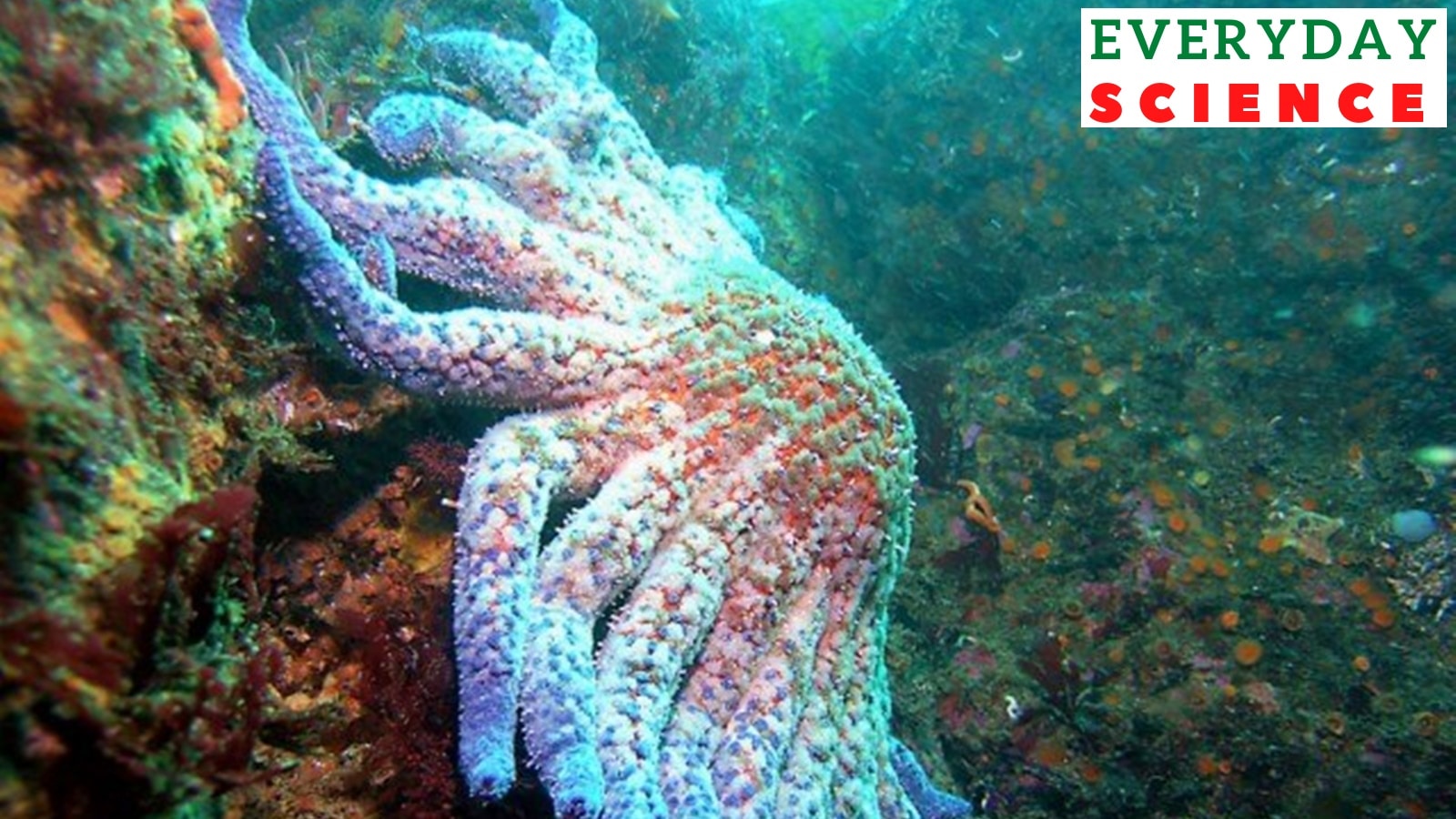
Imagine a disease that makes starfish melt away.
For years, scientists didn't know what caused it, but now they found it!
It's a bacteria called Vibrio pectenicida, similar to a bacteria that causes cholera.
This disease, called Sea Star Wasting Disease, killed billions of starfish, particularly the sunflower sea star.
When starfish disappear, sea urchins, their food, increase and eat kelp forests, which other marine animals need.
Scientists are now trying to find ways to stop the bacteria and save the starfish, like using probiotics.

A bacterium, Vibrio pectenicida, has been identified as the cause of Sea Star Wasting Disease.
The disease has caused mass die-offs of starfish along the North American Pacific coast since 2013.
Over 5 billion starfish are estimated to have died due to the disease.
The worst affected species was the sunflower sea stars, which lost almost 90% of their population.
Scientists are exploring potential treatments, including probiotics and breeding resistant starfish.
- Who
- The bacterium Vibrio pectenicida causes the disease in starfish.
- What
- Sea Star Wasting Disease (SSWD) caused mass die-offs of starfish.
- When
- The disease started in 2013.
- Where
- The North American Pacific coast, from Alaska to Mexico.
- Why
- The bacterium causes starfish to decay and die, which disrupts the marine ecosystem and leads to an overpopulation of sea urchins.
- Disease Name
- Sea Star Wasting Disease (SSWD)
- Causative Agent
- Vibrio pectenicida bacteria
- First Recorded
- 2013
- Affected Area
- North American Pacific coast
- Impact
- Mass die-offs and ecosystem disruption
- Worst Affected Species
- Sunflower sea stars
- Species Decline
- Sunflower sea stars lost nearly 90% of their population