

Archive · 5 Jan 2026
Fixed vs. Floating Home Loans: Key Considerations for Borrowers
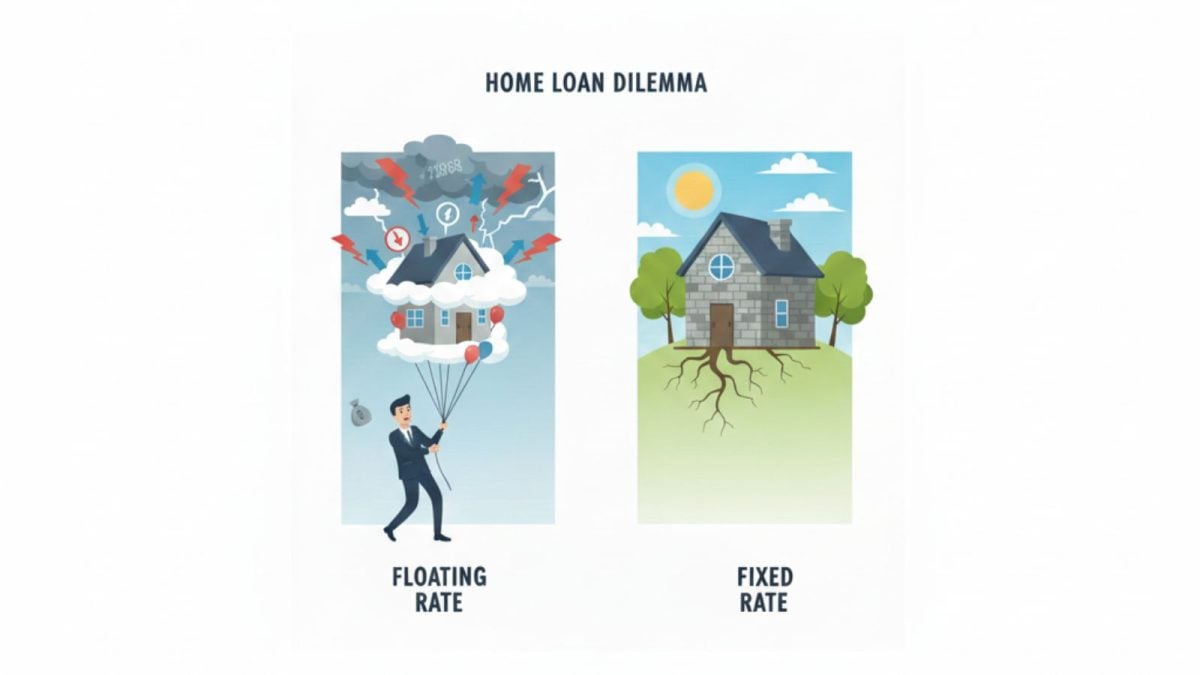
When taking a home loan, borrowers can choose between fixed or floating interest rates.
Fixed rates stay the same, making it easier to plan finances, but they might be a bit more expensive.
Floating rates can go up or down with the market, which can be good if rates drop but risky if they rise.
Experts say the best choice depends on your income, how long you plan to pay the loan, and how comfortable you are with risk.
Some loans even start fixed and then switch to floating, giving a bit of both.
It's important to think about your own situation and not just the interest rates when deciding.

Fixed-rate home loans offer stable EMIs but typically have higher interest rates.
Floating-rate loans can be cheaper initially and benefit from rate drops but carry market risk.
Hybrid loans provide a middle ground by starting with fixed rates and switching to floating.
Experts advise considering income stability, loan tenure, and financial comfort when choosing.
Fixed-rate loans are often recommended for first-time buyers and long-term planners.
- Who
- Home loan borrowers and experts
- What
- Choosing between fixed and floating home loan rates
- When
- January 05, 2026
- Where
- India
- Why
- To ensure financial stability and make informed decisions
- Fixed-rate loans
- Offer predictability with constant EMIs
- Floating-rate loans
- Interest rates fluctuate with market conditions
- Hybrid loans
- Combine fixed and floating rates over time
- Anurag Goel
- Director at Goel Ganga Developments
- Pradeep Kumar Jain
- Chairman and Managing Director at Chintamani Finlease Ltd
- Date
- January 05, 2026
- Source
- News18.com