

Archive · 20 Jan 2026
Ancient pottery reveals early mathematical thinking
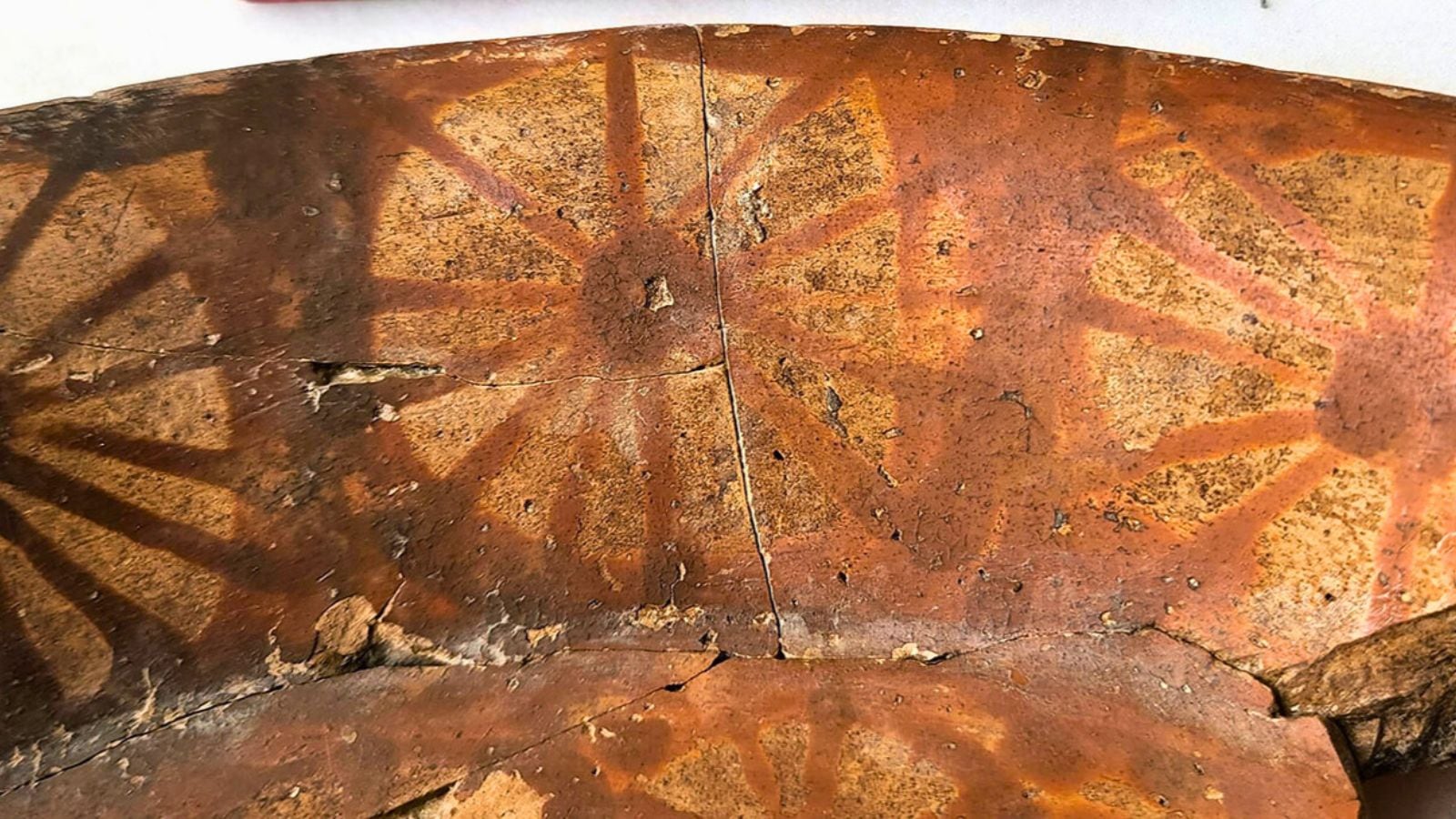
Scientists found old pottery from a place called Mesopotamia.
This pottery is very, very old, maybe 8,000 years!
The people who made it, called the Halafian people, painted flowers on their pots.
The flowers had a special pattern: they had 4, 8, 16, 32, or even 64 petals.
This looks like a math pattern where you double the number.
The scientists think this shows that these people were thinking about math a long, long time before we had numbers or equations.
They might have used this math for things like sharing food or land.
Some other experts think the pattern might just be a simple way to decorate round pots.
But the scientists believe this is a big deal because it shows how people started to think about math and art.
It's like they were practicing math without even writing it down!

Ancient Halafian pottery from 6200 BC to 5500 BC shows flower designs with doubling petal patterns (4, 8, 16, 32, 64).
Researchers studied 375 pottery fragments from 29 sites, finding consistent mathematical patterns.
The patterns suggest early mathematical thinking, possibly used for practical purposes like sharing resources.
Some scholars argue the patterns might simply be decorative rather than evidence of advanced mathematical thought.
The findings contribute to understanding how early humans conveyed mathematical concepts through art.
- Who
- Halafian people, researchers
- What
- Ancient pottery with flower designs showing mathematical patterns
- When
- 6200 BC to 5500 BC, study published December 2025
- Where
- Northern Mesopotamia
- Why
- To understand early mathematical thinking and artistic expression
- Pottery Age
- Up to 8,000 years old
- Culture
- Halafian people
- Location
- Northern Mesopotamia
- Time Period
- 6200 BC to 5500 BC
- Number of Fragments
- 375
- Number of Sites
- 29
- Key Pattern
- Doubling of petals (4, 8, 16, 32, 64)
- Research Publication
- Springer, December 2025