

Archive · 3 Nov 2025
Mexico's Pomuch Bone Cleaning Ritual Draws Tourists, Sparks Debate
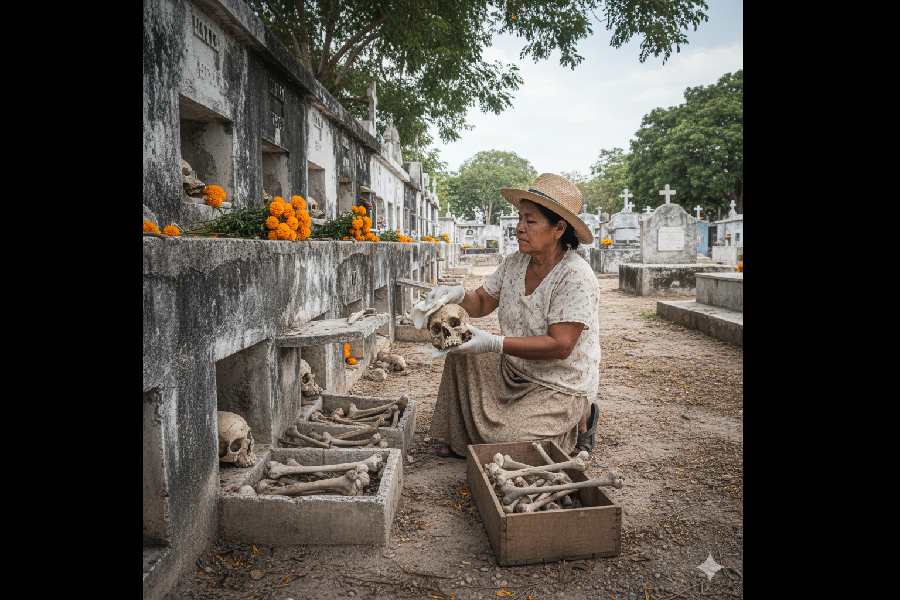
In a small town in Mexico called Pomuch, people have a special way of remembering their family members who have passed away.
A few weeks before a big holiday called Day of the Dead, they go to the cemetery.
There, they carefully take out the bones of their loved ones from special boxes.
They gently clean each bone and skull with a soft cloth.
This is done with a lot of love, like taking care of someone special.
It's a very old tradition that comes from the Maya people and also mixes with Catholic beliefs.
Recently, more and more people from other countries have been visiting Pomuch to see this unique ritual.
This has made some local people worry that their private family tradition might be turned into a show for money.
Town leaders tried to charge a small fee for people to join in, but many residents said no, explaining that it's a sacred and private family moment.
The leaders then decided to change their plan.

In Pomuch, Mexico, residents annually clean the bones of their deceased loved ones in the weeks before Day of the Dead.
The ritual, with roots in Maya and Catholic traditions, involves tenderly dusting and polishing bones as an act of love and remembrance.
This unique tradition has attracted growing numbers of international tourists to Pomuch.
Local officials attempted to capitalize on tourism by offering participation in the ritual for a small fee, sparking criticism from residents.
The plan to commercialize the private ritual was reversed after community backlash, highlighting tensions between cultural preservation and economic opportunity.
- Who
- Residents of Pomuch, their families, and increasingly, tourists.
- What
- A traditional ritual of cleaning and caring for the bones of deceased loved ones.
- When
- Annually in the weeks leading up to Mexico's Day of the Dead holiday.
- Where
- In the cemetery of Pomuch, a town on Mexico's Yucatán Peninsula.
- Why
- To honor and soothe the spirits of ancestors, a tradition rooted in Maya and Catholic beliefs, now also attracting tourists and sparking debate about commercialization.
Pomuch Residents Concerned About Commercialization
Local Officials Seeking Economic Opportunity
Nature of the Ritual
Pomuch Residents Concerned About Commercialization
The bone cleaning is a deeply private, familial ritual intended for honoring ancestors, not for public display or monetary gain.
Local Officials Seeking Economic Opportunity
The tradition is unique and valuable, and sharing it with the world can bring economic benefits to the town, provided it is managed appropriately.
Official Proposal for Participation
Pomuch Residents Concerned About Commercialization
Charging a fee for participation or observation is inappropriate, as it commercializes a sacred and personal family practice and blurs the line between sharing and exploiting.
Local Officials Seeking Economic Opportunity
Offering a small fee for participation is a way to manage tourism and create a controlled opportunity for outsiders to witness and appreciate the tradition, while also generating revenue.
Cultural Preservation vs. Economic Gain
Pomuch Residents Concerned About Commercialization
Prioritizing tourism revenue could degrade the authenticity and sacredness of the tradition, leading to its eventual dilution or loss.
Local Officials Seeking Economic Opportunity
Finding a balance is key; promoting the tradition globally can help preserve it by raising awareness and providing economic incentives for its continuation, while ensuring respectful engagement.
- Location
- Pomuch, Yucatán Peninsula, Mexico
- Ritual Timing
- Weeks leading up to Day of the Dead
- Cultural Roots
- Maya civilization and Catholicism
- Local Official's Proposal
- Offer participation for 30 pesos (approx. $1.60)
- Community Reaction
- Criticism of commercialization, reversal of official plan
- Services Offered
- Bone cleaning services available for a fee (approx. $2)