

Archive · 3 Jan 2026
India's Public Spaces Lack Braille Accessibility
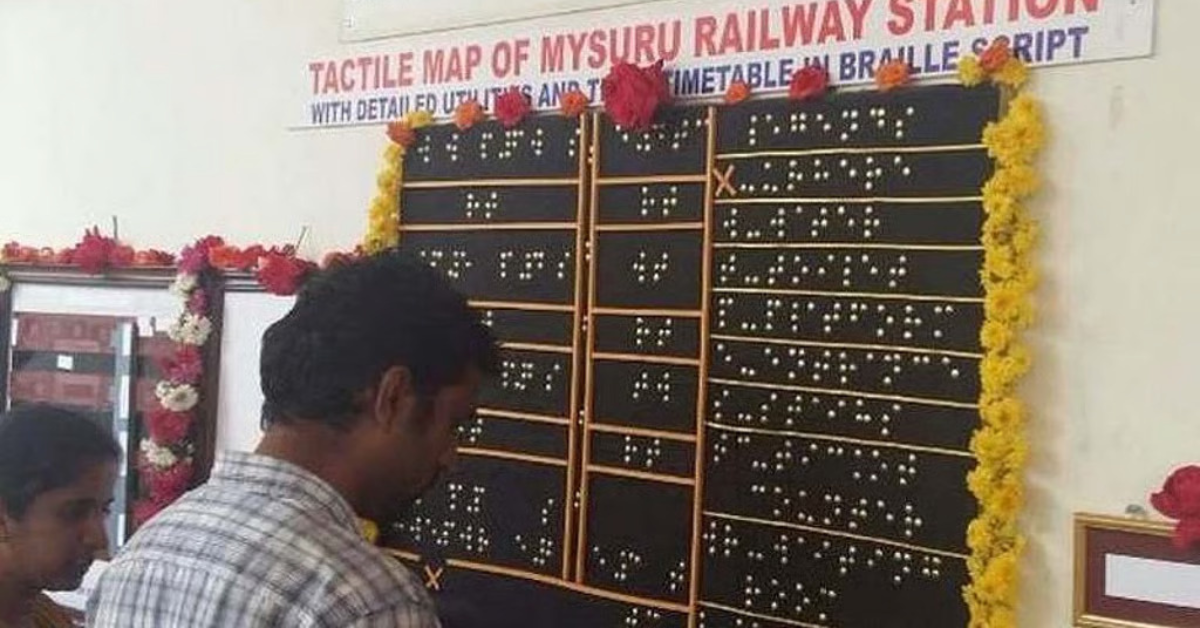
On World Braille Day, we talk about how important Braille is for people who can't see well or at all.
In India, many places like train stations, government offices, parks, museums, and libraries don't have Braille signs.
This makes it hard for visually impaired people to move around and do things on their own.
For example, someone like Vishnu, who became blind as a baby, has to ask for help a lot because there aren't Braille signs to guide him.
Adding Braille signs and tactile maps can make these places more welcoming and help visually impaired people feel independent and included.
It's a small change that can make a big difference in their lives.

India's public spaces lack Braille signage, making it difficult for visually impaired individuals to navigate independently.
Key locations include railway stations, government offices, public parks, museums, and public libraries.
The absence of Braille reduces convenience and independence, forcing visually impaired individuals to rely on assistance.
Braille signage and tactile maps can transform these spaces into inclusive environments, promoting freedom and dignity.
World Braille Day highlights the need for greater Braille accessibility in India's public spaces.
- Who
- Visually impaired individuals in India
- What
- Lack of Braille accessibility in public spaces
- When
- World Braille Day, 4 January 2025
- Where
- India
- Why
- To promote independence and inclusion for visually impaired individuals
- Date
- 4 January 2025
- Key Locations
- Railway stations, government offices, public parks, museums, public libraries
- Primary Focus
- Braille accessibility
- Impact
- Reduced independence and increased reliance on assistance for visually impaired individuals
- Potential Solutions
- Braille signage, tactile maps, and directional cues
- Significance
- World Braille Day
- Example Person
- Vishnu
- Key Message
- Braille can transform public spaces into inclusive environments