

Archive · 2 Oct 2026
US Weighs Third Carrier and 10,000 Troops Near Iran
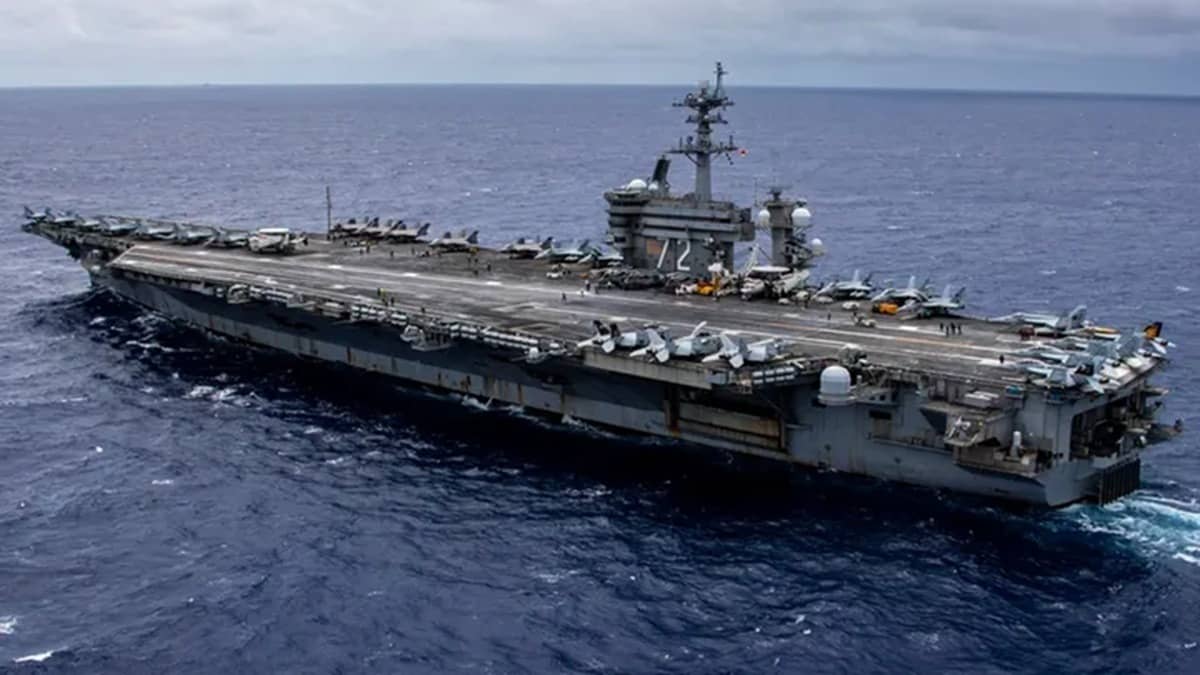
The United States is thinking about sending more ships, sailors, and Marines near Iran.
One ship that may be sent is the aircraft carrier USS Theodore Roosevelt.
If it goes to the region, the United States could have three carrier groups there.
Another group of ships carrying about 2,200 Marines has already left.
The military buildup is happening while fighting has slowed and peace talks are stuck.
Iran has discussed letting nuclear inspectors return to damaged sites if it receives relief from sanctions.
The two sides still disagree about sanctions and control of the Strait of Hormuz.
President Donald Trump said more attacks could happen after the November 3 elections, but no new strikes have been ordered according to the reports.

The Pentagon is considering sending the USS Theodore Roosevelt and up to 10,000 sailors and Marines to the Middle East.
The deployment could give US Central Command three carrier strike groups and more than 20,000 sailors and Marines in the region.
The USS Makin Island amphibious readiness group, carrying about 2,200 Marines, has departed, while the USS Boxer operates near the Strait of Hormuz.
The movements come as US-Iranian strikes have entered a lull and negotiations remain stalled over sanctions, nuclear inspections, and the Strait of Hormuz.
President Donald Trump said intensified bombing after the November 3 elections was possible and rejected Iran's latest ceasefire proposal.
- Who
- The Pentagon, US Central Command, President Donald Trump, Iran, and Iranian Foreign Minister Abbas Araghchi.
- What
- The United States is considering or preparing a major naval and Marine deployment to the Middle East while diplomatic efforts with Iran remain stalled.
- When
- The USS Theodore Roosevelt left San Diego on Sunday, the USS Makin Island group departed on Monday, and the forces are expected to reach the region by the end of November; Trump referred to possible action after the November 3 elections.
- Where
- The Middle East, the Persian Gulf, and waters near the Strait of Hormuz.
- Why
- The deployment would provide US commanders with additional military options as tensions and negotiations with Iran continue.
Military pressure and escalation
Diplomacy and restraint
Additional US forces
Military pressure and escalation
Supporters could view the carrier and Marine deployment as a way to give US commanders more options and increase pressure on Iran.
Diplomacy and restraint
Critics could view the movement of additional forces as escalation while strikes are paused and negotiations are being explored.
Ceasefire terms
Military pressure and escalation
Trump argued that Iran's latest ceasefire proposal did not go far enough and kept the possibility of further bombing open.
Diplomacy and restraint
Iran has proposed steps involving nuclear-inspector access and discussions, while advocates of restraint favor continued negotiations and sanctions relief.
Flydubai incident
Military pressure and escalation
Trump said Iran could face a severe response if an investigation establishes that Tehran was connected to the attempted sabotage of a Flydubai flight.
Diplomacy and restraint
There is currently no official evidence establishing Iranian involvement in the incident.
- Potential deployment
- The USS Theodore Roosevelt and up to 10,000 sailors and Marines may be sent to the region.
- Carrier groups
- The deployment could give the United States three carrier strike groups in the Middle East.
- Existing carrier groups
- The USS George H.W. Bush and USS George Washington carrier strike groups are reported to be in the region.
- Marine deployment
- The USS Makin Island amphibious readiness group includes three amphibious ships and about 2,200 Marines from the 13th Marine Expeditionary Unit.
- Regional force level
- The naval deployment could raise the regional presence to more than 20,000 sailors and Marines, along with hundreds of aircraft.
- Diplomatic proposal
- Iranian Foreign Minister Abbas Araghchi suggested restoring access for nuclear inspectors in exchange for sanctions relief.
- Trump's position
- Trump said intensified bombing after the November 3 elections was possible and rejected Iran's latest ceasefire proposal.
