Archive · 3 Oct 2026
India Trials Airport Body Scanners Amid Security Concerns
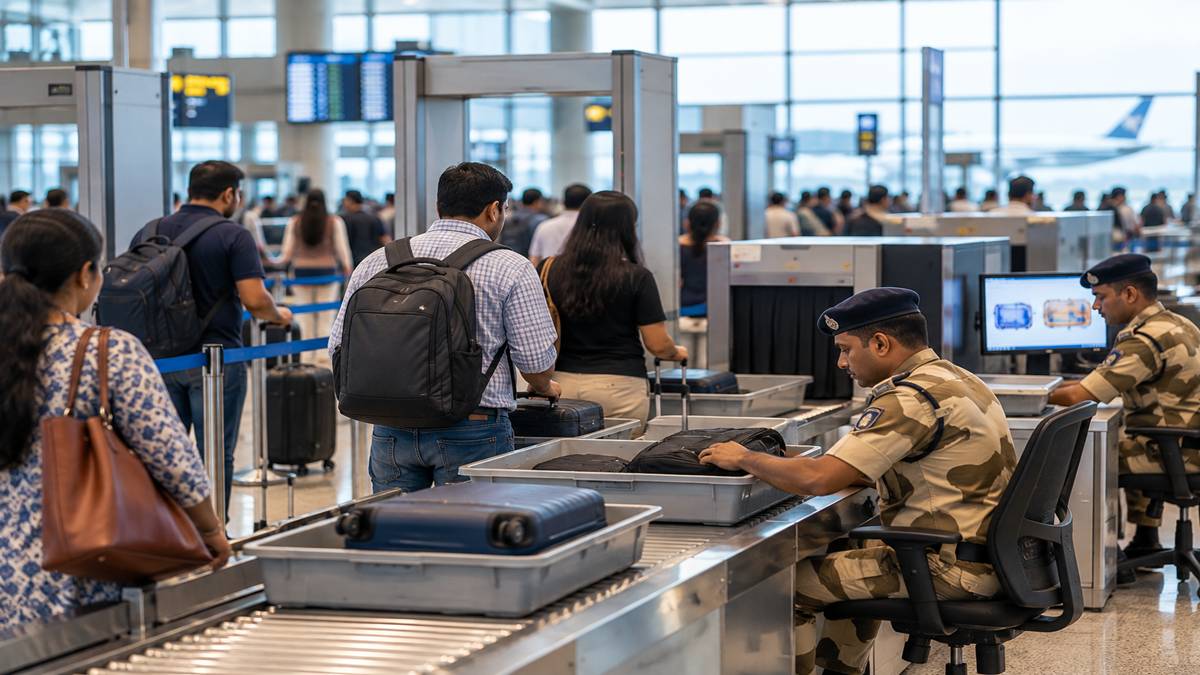
India is testing full-body scanners at Bengaluru and Cochin airports.
Officials are collecting information, including how often the scanners sound an alarm.
They will use the results to decide whether to introduce the scanners at more airports.
The scanners are meant to find suspicious objects carried on a person.
To protect privacy, they are being designed to show a simple model instead of a real body image.
Officials are also adjusting the scanners so everyday ornaments are less likely to cause unnecessary alarms.
This scanner plan began before the recent Flydubai incident.
Separately, BCAS is working on baggage scanners that could let travelers leave electronic devices inside their bags.
It is also exploring AI and facial recognition for airport security.

The Bureau of Civil Aviation Security is collecting trial data from full-body scanners at Bengaluru and Cochin airports.
Trial findings, including alarm rates, will be assessed before officials decide on wider deployment; scanners are mandated for eight airports, and Cochin is not one of them.
BCAS is working to make scanners display a person-shaped model rather than an actual body image, and to refine algorithms that may flag commonly worn Indian ornaments.
The scanner plan predates the Flydubai incident, although the incident has renewed discussion about aircraft security and threats from people already inside a cockpit.
BCAS is also developing specifications for CTX baggage scanners and has issued guidelines on facial recognition and AI in airport CCTV systems.
- Who
- The Bureau of Civil Aviation Security, led by Director General Rajesh Nirwan, is overseeing the scanner trials.
- What
- BCAS is evaluating full-body scanner trials and working on other airport screening and security technologies.
- When
- The trials are ongoing; Nirwan discussed them on Thursday, the day after the Flydubai incident.
- Where
- The full-body scanner trials are at Bengaluru and Cochin airports in India.
- Why
- BCAS is gathering evidence to guide possible deployment and improve screening while addressing privacy and alarm concerns.
- Trial locations
- Bengaluru and Cochin airports
- Mandated airports
- Full-body scanners have been mandated for eight airports; Cochin is not among them.
- Trial data
- BCAS is collecting data including the number of alarms generated.
- Privacy measure
- The scanners are being made image-agnostic to display a model of the person and flag a suspicious area.
- Algorithm refinement
- BCAS is working with vendors and equipment manufacturers to adapt algorithms designed for foreign markets and reduce alarms from common Indian ornaments.
- CTX machines
- BCAS is developing technical specifications; installed CTX machines could allow passengers to keep electronic devices in cabin bags during screening.
- AI and CCTV
- BCAS has issued guidelines on facial recognition and AI in airport CCTV systems, including potential alerts about unclaimed baggage.
- Flydubai incident
- The copilot allegedly attacked the pilot; the full-body scanner proposal predates the incident.