

Archive · 19 May 2025
Controlled Burns Help Nilgiri Tahr, Reduce Human-Animal Conflict
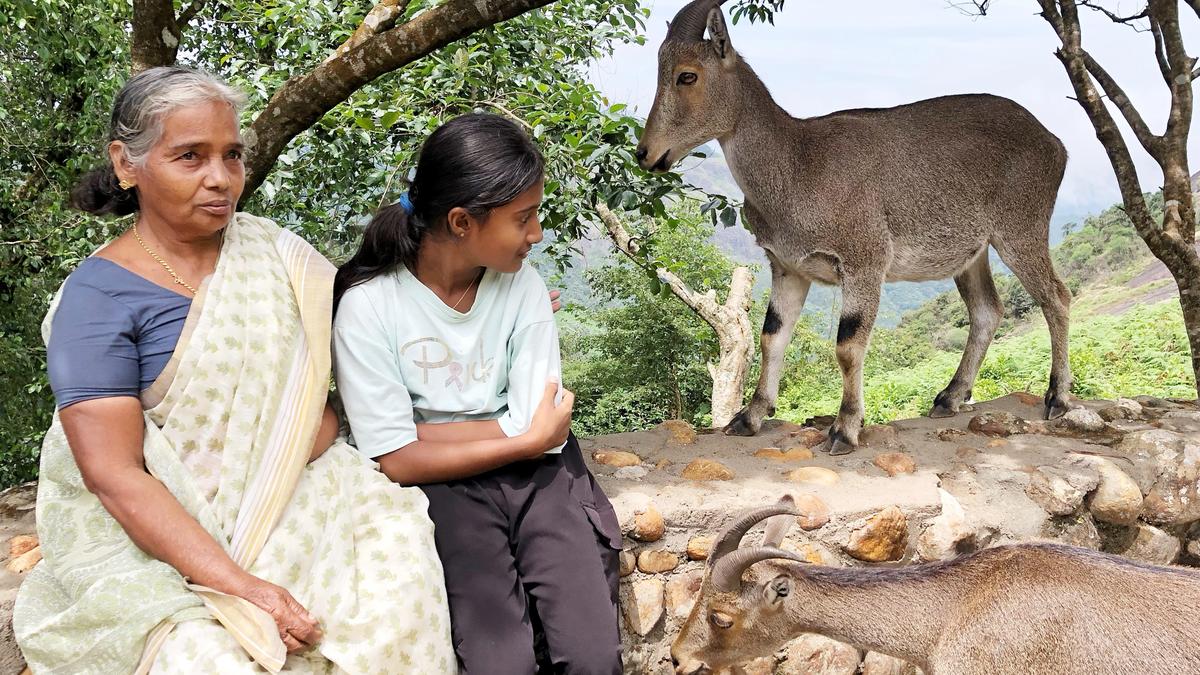
Imagine the hills where the Nilgiri tahr live.
Sometimes the grass they eat gets old and doesn't taste good.
To fix this, people carefully burn some of the old grass.
This makes new, fresh grass grow, like a giant salad for the tahr and other animals!
This also helps keep the animals away from where people live, which makes everyone safer.
The Forest Department works with experts and tribal communities who know how to do this safely, helping both the animals and people around Munnar.
This has been going on for about 30 years, making sure the animals have enough to eat and that people and animals can live together peacefully.

Controlled burning is used in Eravikulam National Park to promote fresh grass growth.
The process helps ensure food security for the endangered Nilgiri tahr and other animals.
Human-animal conflict cases around Munnar are decreasing due to the initiative.
The Forest Department initiated controlled burning around 30 years ago.
The practice is endorsed by tribal communities and supported by scientific research.
- Who
- The Forest department, in association with the Kerala Forest Research Institute (KFRI) and the Scheduled Tribe Development department, conducts controlled burns.
- What
- Controlled burning of grasslands to improve habitat for Nilgiri tahr.
- When
- Controlled burning occurs in December and January.
- Where
- Eravikulam National Park (ENP) in Munnar, Kerala.
- Why
- To ensure food security for Nilgiri tahr and other animals by promoting fresh grass growth, and to mitigate human-animal conflict.
- Location
- Eravikulam National Park
- Animals benefited
- Nilgiri tahr and other animals
- Area burned (approx.)
- 750 hectares
- Burning period
- December - January
- Initiation
- Around 30 years ago