

Archive · 22 Jul 2026
CJP Protest: Legal Debate on Peaceful vs Unlawful Assembly
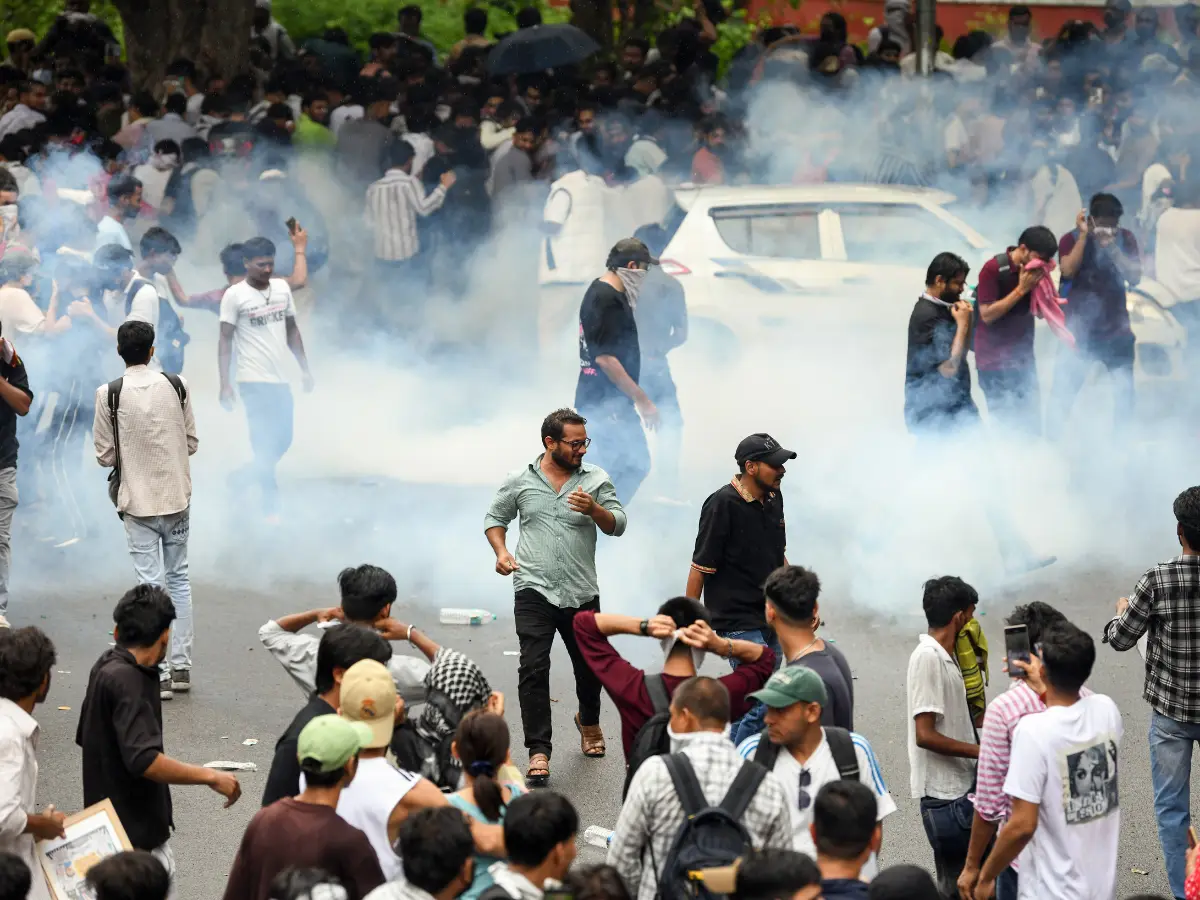
In New Delhi, people are protesting because the NEET UG exam paper was leaked, and some students died by suicide.
They want the Education Minister to resign.
The protest started at Jantar Mantar, and many people joined, including an activist named Sonam Wangchuk.
The police used force to stop the protest, saying it was blocking public areas.
There is a debate about when a peaceful protest becomes illegal.
The law says protests must be in certain places and not block roads.
The Supreme Court has said protests can be regulated to keep public order.

Protesters demand accountability for the NEET UG paper leak and the resignation of the Education Minister.
The protest at Jantar Mantar was met with police force, including batons and tear gas.
The debate centers on the difference between peaceful protest and unlawful assembly under Indian law.
Supreme Court rulings state protests must be in designated areas and not block public thoroughfares.
Justice Surya Kant's comments on unemployed youths as 'cockroaches' sparked outrage and contributed to the protest.
- Who
- Protesters, including CJP members and activist Sonam Wangchuk, and Delhi Police
- What
- Protest demanding accountability for NEET UG paper leak and resignation of the Education Minister
- When
- Protest and police action occurred on July 20
- Where
- Jantar Mantar and Connaught Place in New Delhi
- Why
- To demand accountability and protest against the NEET UG paper leak and comments by Justice Surya Kant
Protesters' Perspective
Government's Perspective
Right to Protest
Protesters' Perspective
Protesters argue that their assembly is peaceful and within their constitutional rights under Article 19(1)(b), demanding accountability for the NEET UG paper leak and resignation of the Education Minister.
Government's Perspective
The government and law enforcement argue that the protest became an unlawful assembly as it blocked public infrastructure and did not adhere to designated protest areas, necessitating police intervention.
Use of Force
Protesters' Perspective
Protesters claim that the police used excessive force, including batons and tear gas, against peaceful demonstrators, violating their rights.
Government's Perspective
Authorities maintain that the use of force was necessary to maintain public order and disperse an unruly crowd that had swelled beyond control.
- Article 19(1)(b)
- Right to peaceful protest under the Indian Constitution
- Section 189 of BNS, 2023
- Defines 'unlawful assembly' as a criminal offence
- NEET UG Paper Leak
- Triggered protests demanding accountability and resignation of the Education Minister
- Jantar Mantar
- Location of the protest and hunger strike
- Supreme Court Rulings
- Protests must be in designated spots and cannot block public thoroughfares
- Justice Surya Kant
- Comments on unemployed youths as 'cockroaches' sparked outrage
- Sonam Wangchuk
- Joined the protest with a hunger strike
- Delhi Police Action
- Used batons and tear gas to disperse protesters