

Archive · 15 Sep 2026
India’s Battle Over Love, Marriage and Family Autonomy
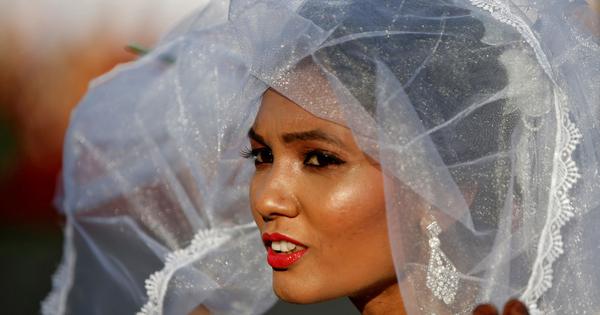
The article says people should be able to choose whom they love and how they build a family.
In India, some families still expect children to marry within their caste or religion.
Parents may worry about what their community will think.
Sometimes this pressure separates parents from their children.
Other parents learn to accept their children’s choices over time.
The article gives examples involving interfaith marriage, unmarried motherhood, in vitro fertilisation and same-sex relationships.
It also remembers Jotirao Phule and Savitribai Phule, who helped women and babies in 1863.
The author says families can take many forms.
She believes love, freedom and support matter more than social rules about honour.

The article argues that caste and patriarchy continue to influence marriage and family decisions in India.
Some parents reject relationships across caste, religion or regional backgrounds, sometimes causing permanent family estrangement.
Examples describe parents eventually supporting unmarried mothers, children born through in vitro fertilisation and queer partners.
Jotirao Phule and Savitribai Phule’s 1863 work in Pune supported women facing pregnancy outside marriage.
The author presents choosing partners, having children and creating diverse families as fundamental aspects of personal autonomy.
- Who
- The article discusses Indian parents, adult children, partners, unmarried mothers, queer people and reformers Jotirao Phule and Savitribai Phule; it is written by law professor Sameena Dalwai.
- What
- It examines conflicts between personal choice in love and family-making and social expectations based on caste, patriarchy, religion and marriage.
- When
- The examples span from the Phules’ work in 1863 to contemporary India.
- Where
- The discussion focuses on India, including Mumbai and Pune, with one personal example involving a woman living abroad.
- Why
- The author argues that caste and patriarchal expectations continue to constrain individual autonomy, while family acceptance can protect relationships and children.
Personal Autonomy
Social and Family Conformity
Choosing a partner
Personal Autonomy
Adults should be trusted to choose partners across caste, religion or regional boundaries.
Social and Family Conformity
Families and communities may expect marriage within caste and view an outside relationship as a threat to honour or tradition.
Parenthood outside marriage
Personal Autonomy
People should be able to have and raise children without marriage, with family support for parents and children.
Social and Family Conformity
Some families fear social judgment and believe children should be born within marriage.
Queer family life
Personal Autonomy
Same-sex people should be accepted, supported and able to build families with partners of their choice.
Social and Family Conformity
Some relatives may initially regard homosexuality as unnatural, temporary or something that can be changed.
- Central issue
- The tension between individual autonomy and caste- and family-based marriage expectations.
- Marriage example
- A Marathi woman from an Other Backward Classes background married a Goan Catholic college classmate in Mumbai.
- Historical reference
- Jotirao Phule and Savitribai Phule started the Balhatya Pratibandhak Griha in Pune in 1863.
- Support for unmarried mothers
- The article describes the Phules’ home as a place where young Brahmin widows could stay and give birth.
- Family forms discussed
- Interfaith marriage, unmarried motherhood, in vitro fertilisation and same-sex partnerships.
- Author’s position
- Making a family is described as a fundamental human right, and families can take many forms.