

3 weeks ago
Namaste, Namaskar, Pranam: When to Use Each Greeting
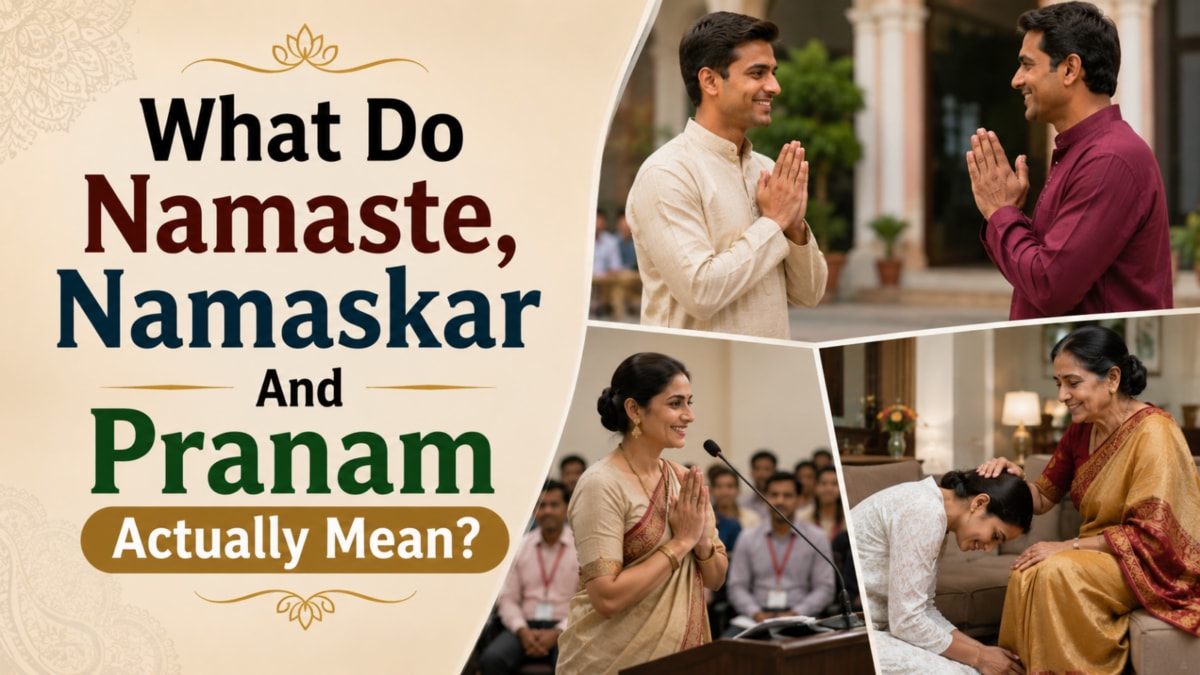
In India, people greet each other in special ways.
There are three common greetings: Namaste, Namaskar, and Pranam.
All three are ways of showing respect.
Namaste is like a friendly hello for friends and people your own age.
Namaskar is more formal and is used at work, meetings, or when greeting a group of people.
Pranam is the most respectful greeting of all.
It is used for parents, grandparents, teachers, and wise elders.
Sometimes people bow down or touch the feet of elders when saying Pranam.
This shows deep love and respect and asks for their blessings.
So, the greeting you choose depends on who you are meeting.

Namaste, Namaskar, and Pranam are common Indian greetings that carry different meanings and levels of formality.
Namaste comes from the Sanskrit words 'namah' (bowing/respect) and 'te' (to you) and is used in everyday, informal interactions.
Namaskar is a more formal and respectful greeting suitable for offices, meetings, public gatherings, groups, and highly respected elders.
Pranam conveys deep reverence and submission, traditionally used for parents, teachers, elders, and other revered figures.
Pranam may involve bowing before an elder or touching their feet to express deep respect and seek blessings.
- Who
- People in India using traditional forms of greeting
- What
- An explanation of the correct usage and differing meanings of Namaste, Namaskar, and Pranam
- Where
- India
- When
- Article last updated August 12, 2026
- Why
- Because the three greetings are often treated as interchangeable even though they carry different meanings and varying degrees of formality and respect
Key facts
- Greetings covered
- Namaste, Namaskar, Pranam
- Origin
- Namaste derives from Sanskrit 'namah' (bowing/respect) and 'te' (to you)
- Namaste usage
- Informal, everyday greetings with friends, colleagues, acquaintances, and people of similar age
- Namaskar usage
- Formal settings, offices, meetings, public gatherings, groups, and highly respected persons
- Pranam usage
- Parents, teachers, elders, and other revered figures; not a routine greeting among peers
- Pranam tradition
- May involve bowing before an elder or touching their feet to seek blessings
- Publication date
- August 12, 2026
- Source
- Image-based explanatory article with 9 slides
Sources
Related news

Why Sudha Murty Spells Her Surname Differently From Murthy
BTS Hindi Greeting Rekindles Speculation About India Visit
Yogi Adityanath’s Selfie With Japanese Children Reveals Cultural Connection
Angmo Urges Government to Treat Education Protests as Wake-Up Call

Anant Ambani Seeks Blessings of Jain Gurudev at Ghatkopar's Parasdham

Chant at IIT Delhi Convocation Was Shikshavalli, Not Gayatri Mantra

Leaders Urge Sanskrit Preservation on World Sanskrit Day
World Sanskrit Day Celebrates Language, Heritage, and Ancient Wisdom

50 Baby Names That Sound Elegant Without Trying Too Hard

Music Teacher Highlights Universal Benefits of Classical Music
